

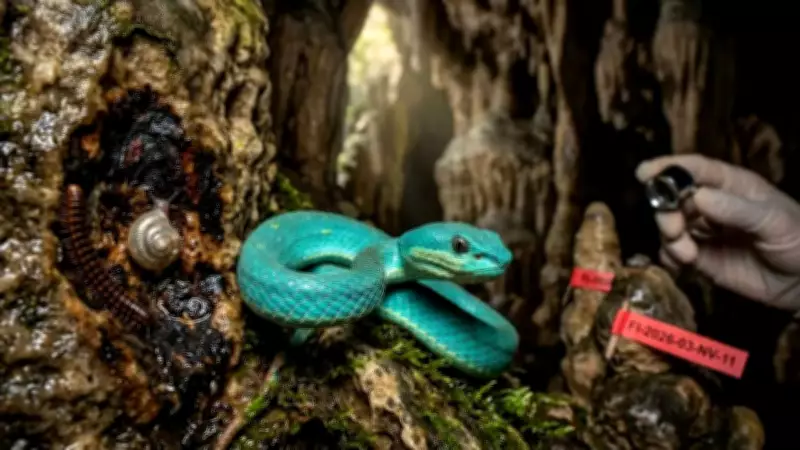
Scientists Discover 11 New Species in Cambodia's Isolated Limestone Caves
In a groundbreaking biological breakthrough, scientists have identified at least 11 species new to science within the rugged limestone formations of Cambodia's Battambang and Stung Treng regions. This discovery underscores the critical importance of these remote ecosystems, which researchers describe as 'evolutionary laboratories' where organisms have evolved independently for millions of years.
Karst Ecosystems: Islands of Biodiversity
The karst ecosystems, comprising limestone hills, plateaus, and cave systems, represent isolated biological islands surrounded by human-altered flat terrain. This isolation has protected unique species from external populations, allowing for distinct evolutionary paths. According to conservationists from Fauna & Flora, these rocky habitats have enabled animals to develop highly specialized adaptations, making them a 'treasure' of biodiversity previously known only to local communities.
Three-Year Survey Unveils Hidden Life
Over three years, researchers conducted an extensive survey of 64 caves across ten mountain ranges in these ecosystems. The study revealed a rich diversity of faunal organisms, illustrating the complexity of cave-dwelling life. Key discoveries include:

- A stunning turquoise pit viper (Trimeresurus sp. nov.) found at the Phnom Prampi Natural Heritage Site.
- An extremely small land-based snail, Clostophis udayaditinus, measuring up to 2 millimeters, marking its first recorded occurrence in Cambodia.
- Three new species of millipedes, highlighting diverse evolutionary paths even among the smallest invertebrates.
Evolution in Isolation: The 'Island Effect'
The 'island effect' driven by karst topography is a primary factor behind the high levels of endemism in these areas. Dr. Lee Grismer from La Sierra University explains that limestone formations act as unique laboratories, where organisms are confined to specific caves or systems and found nowhere else on Earth. This means that destruction of a single mountain could lead to the total extinction of its unique species. Fauna & Flora notes that these creatures are effectively 'trapped' by inhospitable, human-made landscapes, having evolved in complete isolation over millions of years.
Conservation Urgency Amid Threats
This important finding comes amid increasing pressures from limestone mining and habitat fragmentation, which threaten these unique rock habitats. The discoveries serve as a stark reminder of the urgent global challenges in protecting and documenting Cambodia's subterranean biodiversity before it is lost to quarrying activities. The identification of these 11 new species is a significant step toward enhancing biodiversity conservation efforts in Southeast Asia, emphasizing the need for immediate action to preserve these evolutionary islands.






