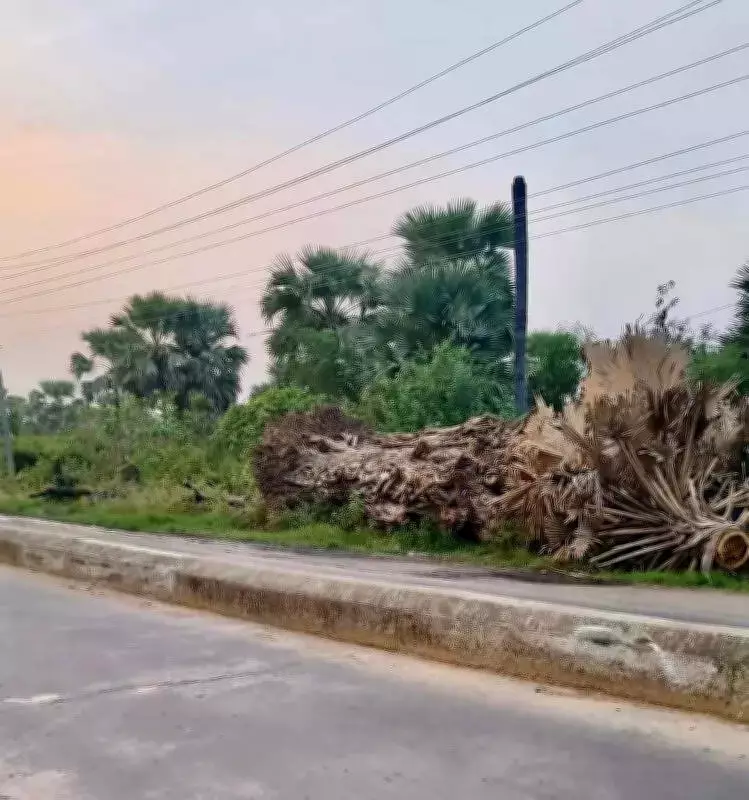
Heritage Banyan Tree Felled in Warangal for Mere Rs 500 Fee
In a shocking incident that has sparked widespread environmental concern, a nearly 200-year-old banyan tree was cut down in Warangal, Telangana, to make way for road widening. The tree was felled after the authorities paid a nominal fee of just Rs 500, drawing sharp criticism from local residents and environmental activists.
Second Tree Temporarily Saved After Public Outcry
Another ancient banyan tree in the area was also marked for removal, but its felling has been temporarily halted following intense public outrage and intervention by forest officials. According to local residents, the second tree was initially scheduled to be cut down without obtaining the necessary clearance from the forest department.
"When we raised concerns, the contractor submitted a request for permission to cut ‘Ravi' trees rather than banyans," said one resident, who requested anonymity. This discrepancy highlights the procedural lapses in the tree removal process.

Forest Department Acknowledges Lapse and Intervenes
Forest officials have acknowledged the oversight and confirmed that they have now stepped in to address the situation. "We have warned them and asked them to follow due procedure. The municipality is carrying out the road widening, and they have filed permission online. A receipt for Rs 1,000 for two trees was generated," said an official from the forest department in Warangal.
The official's statement reveals that while permission was sought, the process was flawed, with the contractor incorrectly identifying the trees in the application. This raises serious questions about the effectiveness of existing regulations meant to protect heritage trees.
Environmentalists Decry Lack of Protection for Heritage Trees
Environmentalists argue that this incident underscores a systemic failure to safeguard heritage trees. Uday Krishna, a prominent environmentalist, expressed his dismay: "Our heritage trees have absolutely no protection. It has become so easy to cut down 80- to 100-year-old trees. Also, the nominal fee structure is problematic. How can we allow the removal of decades-old trees so easily for a fee when it cannot be compensated with money?"
Krishna's comments highlight the broader issue of inadequate legal safeguards and the trivial financial penalties associated with removing trees that hold immense ecological and historical value. The incident has ignited a debate on the need for stronger conservation laws and more rigorous enforcement mechanisms.
Broader Implications for Urban Development and Conservation
The felling of the ancient banyan tree in Warangal is not an isolated case but part of a larger pattern where urban development projects often prioritize infrastructure over environmental preservation. The nominal fee of Rs 500 for such a significant tree has been criticized as grossly insufficient, failing to reflect the tree's ecological benefits, which include carbon sequestration, soil conservation, and providing habitat for wildlife.
Local residents have voiced their frustration, noting that heritage trees like these are irreplaceable and their loss has a lasting impact on the community's cultural and natural heritage. The temporary reprieve for the second tree offers a glimmer of hope, but activists stress that permanent protection measures are urgently needed.
As the controversy unfolds, it serves as a stark reminder of the ongoing tension between development and conservation. The incident in Warangal calls for a reevaluation of policies to ensure that progress does not come at the cost of invaluable natural assets.