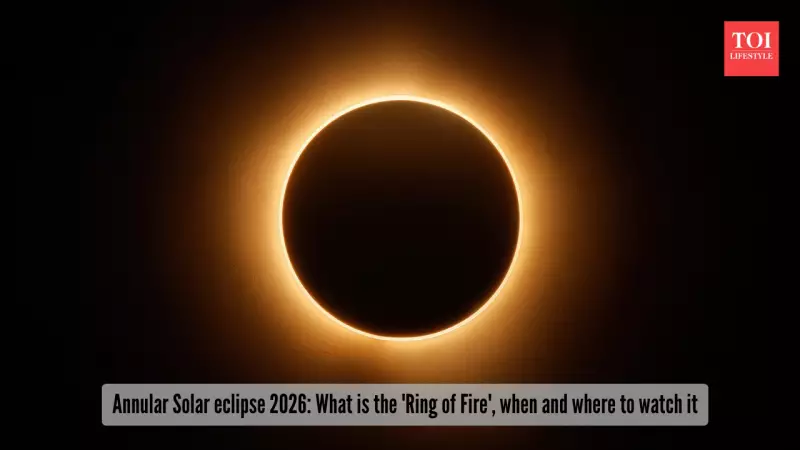
Solar eclipses possess a unique magic, capable of halting the world in its tracks. They transform day into an eerie twilight, sparking universal curiosity. This celestial spectacle is set to return, offering skywatchers a fresh opportunity to witness the breathtaking 'Ring of Fire' effect in the first quarter of 2026.
Understanding the 2026 Annular Solar Eclipse
Following the total solar eclipse that captivated North America in April 2024, enthusiasts are eagerly awaiting the next major solar event. The upcoming spectacle on February 17, 2026, will be an annular solar eclipse, often called the 'Ring of Fire' eclipse.
A total solar eclipse occurs when the Moon passes directly between the Earth and the Sun, completely obscuring the Sun's bright face. This reveals the Sun's outer atmosphere, the corona, as shimmering white tendrils against a darkened sky. In contrast, an annular eclipse happens when the Moon is farther from Earth in its orbit. It appears too small to cover the Sun entirely, leaving a brilliant, glowing ring of sunlight around the Moon's dark silhouette. This creates the stunning 'Ring of Fire' or 'fiery donut' effect, where the Moon covers about 96% of the Sun's disk at maximum.

When, Where, and How to Watch the 2026 Eclipse
The annular solar eclipse of February 17, 2026, will primarily be visible over the remote continent of Antarctica. The path of annularity, where the full 'Ring of Fire' is seen, will begin over the southern Indian Ocean. It will then sweep across coastal regions of Antarctica near the Ronne Ice Shelf before concluding over the southern Atlantic Ocean.
The moment of greatest eclipse is set for 12:11 Universal Time (17:41 Indian Standard Time). At this peak, the annular phase, where the ring is most pronounced, will last for up to 2 minutes and 20 seconds. Partial phases of the eclipse will be visible from southern parts of Africa and South America, as well as over the surrounding oceans.
Will the eclipse be visible in India? Unfortunately, no. The February 17 annular solar eclipse will not be visible from anywhere in India. During the event, which occurs in the late afternoon to early evening IST, the Sun will be below the horizon for the entire Indian subcontinent. The celestial alignment places the show far to the south, making live viewing impossible due purely to geographical reasons.
Essential Safety and Viewing Tips
Observing a solar eclipse requires strict safety measures to prevent permanent eye damage. Never look directly at the Sun without proper protection.
- Use Certified Eye Protection: Always view the partial phases of a solar eclipse using ISO 12312-2 certified solar eclipse glasses. Regular sunglasses are not safe.
- Watch via Live Stream: For the 2026 Antarctic eclipse, the best option for Indian audiences is to follow live broadcasts from major observatories and space agencies like NASA, which provide expert commentary and stunning footage.
- Plan for Future Eclipses: While this annular eclipse isn't visible from India, 2026 will feature other events like lunar eclipses, which are safe to view with the naked eye. Always research the eclipse path and required safety gear well in advance.
While India may miss this particular 'Ring of Fire,' the event marks another exciting chapter in celestial phenomena, reminding us of the wonders of our solar system and the critical importance of safe observation practices.