Rare Annular Solar Eclipse to Illuminate Antarctica in 2026
On February 17, 2026, a rare annular solar eclipse is poised to streak across the icy expanse of Antarctica, offering a breathtaking celestial display. While few will witness the full spectacle in person, the event has already captured the attention of astronomers, photographers, and sky-watchers worldwide.
The Mesmerizing 'Ring of Fire' Phenomenon
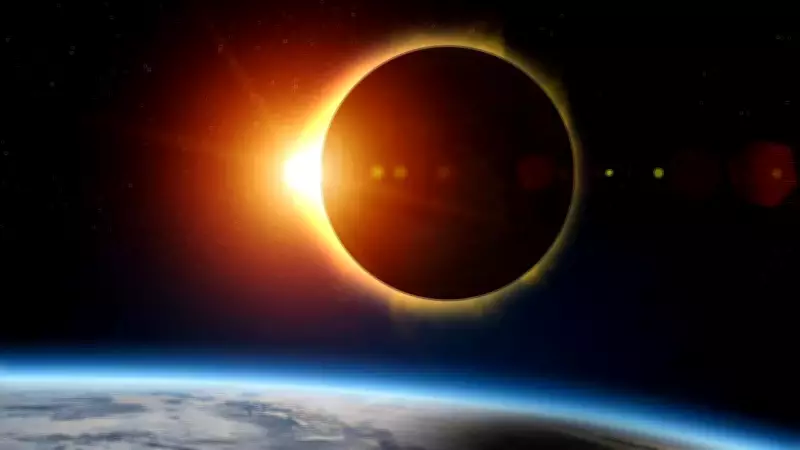
During this eclipse, the Moon will slide in front of the Sun but not completely cover it, creating the famous "ring of fire" effect. This occurs because the Moon is slightly farther from Earth than usual, making it appear smaller. A sliver of sunlight will peek around the edges, forming a bright, glowing circle that seems to hover in the sky. Experts describe the effect as brief, intense, and utterly mesmerizing, capable of inspiring a profound sense of awe even from afar.
Timing and Visibility Details
The eclipse is scheduled to begin at 07:01 UTC, with the peak annular phase lasting approximately two minutes and twenty seconds. According to Timeanddate.com, the annular path spans about 759 kilometers over remote, uninhabited parts of Antarctica, providing the best view. Key locations like Concordia Station and Mirny Station sit directly on the track, with an estimated 80 people at Concordia and 50 to 200 at Mirny potentially witnessing the event.

Outside Antarctica, partial eclipse sightings are expected in regions including southern Africa, South America, the Pacific, Atlantic, and Indian Ocean. For instance, southern Argentina and Chile may glimpse it during sunrise, while parts of southern Africa could have limited views. Notably, North America, Europe, and most of Asia, including India, will largely miss the eclipse, with only the far southern tip of India possibly experiencing a very tiny partial eclipse.
Global Eclipse Visibility Table
The following table outlines countries witnessing the annular or partial solar eclipse, based on data from Timeanddate:
- Antarctica: Annular Solar Eclipse, 06:57 CLST to 18:10 MAWT
- Argentina: Partial Solar Eclipse, 07:04 CLST to 07:59 ART
- Botswana: Partial Solar Eclipse, 14:31 CAT to 15:57 SAST
- British Indian Ocean Territory: Partial Solar Eclipse, 19:07 IOT to 19:37 IOT
- Chile: Partial Solar Eclipse, 07:02 CLST to 08:03 CLST
- Comoros: Partial Solar Eclipse, 16:08 EAT to 17:20 EAT
- Eswatini: Partial Solar Eclipse, 14:19 SAST to 16:02 SAST
- French Southern Territories: Partial Solar Eclipse, 16:32 TFT to 19:26 TFT
- Lesotho: Partial Solar Eclipse, 14:07 SAST to 15:55 SAST
- Madagascar: Partial Solar Eclipse, 15:23 EAT to 17:25 EAT
- Malawi: Partial Solar Eclipse, 14:58 CAT to 16:09 CAT
- Mauritius: Partial Solar Eclipse, 16:38 MUT to 18:27 MUT
- Mayotte: Partial Solar Eclipse, 16:05 EAT to 17:21 EAT
- Mozambique: Partial Solar Eclipse, 14:20 CAT to 16:17 CAT
- Namibia: Partial Solar Eclipse, 14:27 CAT to 15:28 CAT
- Reunion: Partial Solar Eclipse, 16:35 RET to 18:24 RET
- Seychelles: Partial Solar Eclipse, 17:16 SCT to 18:25 SCT
- South Africa: Partial Solar Eclipse, 13:21 SAST to 16:03 SAST
- South Georgia/Sandwich Is.: Partial Solar Eclipse, 08:15 GST to 09:46 GST
- Tanzania: Partial Solar Eclipse, 16:21 EAT to 17:12 EAT
- Zambia: Partial Solar Eclipse, 15:17 CAT to 15:59 CAT
- Zimbabwe: Partial Solar Eclipse, 14:39 CAT to 16:05 CAT
Essential Tips for Safe Viewing
To safely enjoy the eclipse, follow these key guidelines:

- Always use certified eclipse glasses; regular sunglasses are insufficient for protection.
- Consider live streams from observatories and astronomy groups for online viewing.
- If in southern Argentina, Chile, or southern Africa, aim for a clear horizon at sunrise, as clouds may obstruct the view.
- Never look directly at the Sun, as even brief exposure can cause eye damage.
- For photography, use a camera with solar filters and carefully follow instructions.
This rare event underscores the wonders of our solar system, inviting global audiences to engage with astronomy through safe and informed practices.