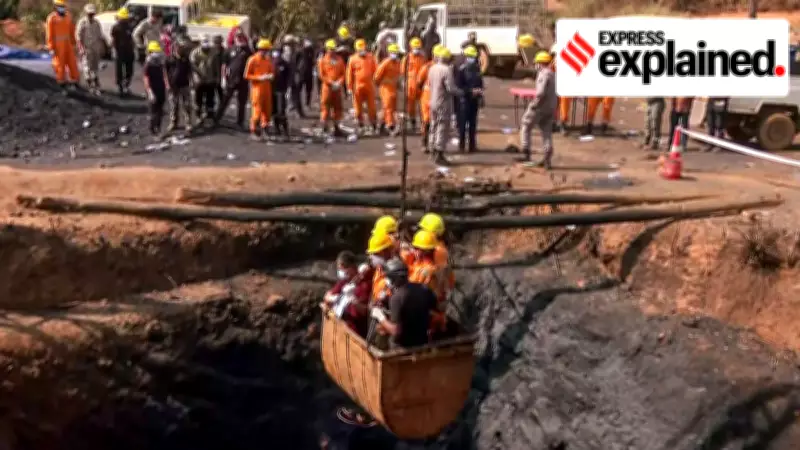
27 Workers Perish in Meghalaya Rat-Hole Mining Disaster
In a tragic incident underscoring the perils of illegal coal extraction, 27 workers have lost their lives following an explosion at an unauthorized rat-hole mine in Thangkso, Meghalaya. Rescue operations are actively underway in the East Jaintia Hills district, with authorities launching a rigorous crackdown on illicit mining activities across the region. The blast occurred on Thursday, and as of Saturday, recovery efforts have retrieved the bodies, though the exact number of individuals trapped remains uncertain, prompting ongoing searches in the area.
Understanding Rat-Hole Mining: A Hazardous Practice
Rat-hole mining is a primitive method of coal extraction prevalent in Meghalaya, which boasts some of the largest coal reserves in Northeast India. This technique involves digging narrow pits, often just wide enough for a single person, into the ground to access horizontal coal seams. Miners typically descend using ropes or bamboo ladders and manually extract coal with basic tools like pickaxes and shovels. The process is notoriously dangerous, lacking essential safety measures such as proper ventilation, structural support, and protective gear for workers.
Environmental experts categorize rat-hole mining into two primary types. Side-cutting entails digging narrow tunnels into hill slopes until coal seams, usually less than 2 meters thick, are located. Conversely, box-cutting involves creating a rectangular opening, ranging from 10 to 100 square meters, followed by a vertical pit dug 100 to 400 feet deep. Once coal is found, horizontal rat-hole-sized tunnels are excavated for extraction. Despite the risks, workers like Parsadhi Lodhi from Jharkhand, with a decade of experience in cities like Delhi and Ahmedabad, often express a lack of fear, citing familiarity with confined spaces as narrow as 600 mm.

Illegality and Environmental Impact
The National Green Tribunal (NGT) outlawed rat-hole mining in 2014, reaffirming the ban in 2015 due to severe safety and environmental concerns. The tribunal noted numerous cases where flooding during rainy seasons led to fatalities among workers. However, enforcement has been lax, with Meghalaya police records indicating at least 477 violations of the NGT order between April 2014 and November 2018. The state government has appealed the ban in the Supreme Court, complicating regulatory efforts.
This mining practice poses significant environmental hazards, including land degradation, deforestation, and water pollution. The unregulated nature of these operations exacerbates risks, as seen in past incidents. For instance, in Assam's Dima Hasao district, nine workers died last year after a mine flooded, and in 2018, 15 miners perished after being trapped for two weeks in a Meghalaya coal mine.
Why Rat-Hole Mining Persists Despite Bans
The continuation of rat-hole mining can be attributed to economic desperation and systemic failures. In northeastern states, where coal layers are thin, this illegal activity offers wages substantially higher than government schemes like MGNREGA, driving local populations to undertake such hazardous jobs. A lack of political will and a nexus between politicians and bureaucrats often turns a blind eye to these operations, allowing them to thrive unchecked.
As highlighted in editorial analyses, effective implementation of the NGT order requires acknowledging the problem and demonstrating the political resolve to address it. The recent tragedy in Thangkso serves as a stark reminder of the urgent need for comprehensive action to safeguard workers and the environment from the dangers of rat-hole mining.