In the vast, frozen expanse of the Arctic, where ice and snow dominate the landscape, the line between life and death often hinges on an animal's ability to become invisible. With few trees or thick vegetation for cover, survival for many species depends on a remarkable evolutionary trick: masterful snow camouflage. This adaptation is not just a convenience but a critical strategy for evading predators and hunting prey in one of Earth's harshest environments.
Masters of Disguise: The Arctic's Invisible Inhabitants
Let's explore three iconic Arctic residents whose lives depend on their phenomenal ability to blend into the white wilderness, a skill now under threat from a changing climate.
The Seasonal Wardrobe of the Arctic Fox
The Arctic fox (Vulpes lagopus) is a quintessential example of nature's ingenuity. As winter blankets the tundra in snow, this clever canine's fur transforms into a bright, pristine white, rendering it nearly indistinguishable from its surroundings. This winter coat serves a dual purpose: it allows the fox to stalk its prey, like lemmings, unseen, while also hiding from larger predators.

When seasons change, so does the fox's attire. Its fur shifts to a brown or grey hue in summer, matching the exposed ground and rocks of the warmer months. This year-round camouflage ensures it remains elusive. Furthermore, its incredibly dense fur provides insulation against temperatures that can plummet to a staggering -50°C.
The Silent Hunter: The Snowy Owl
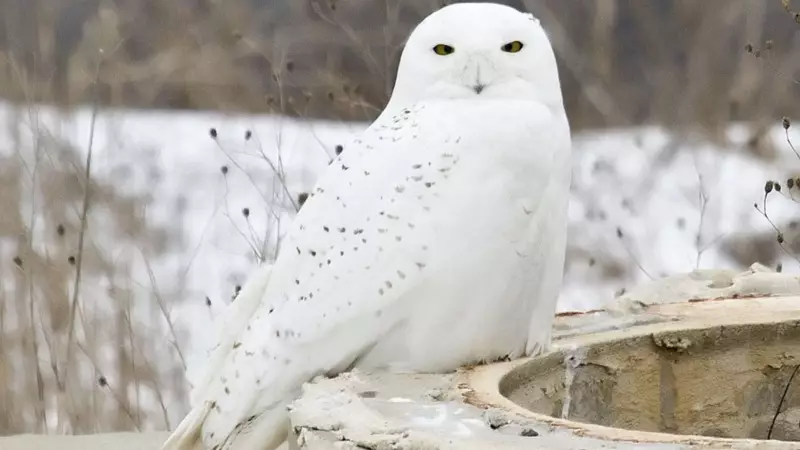
Perched on the open ground, the snowy owl (Bubo scandiacus) is a ghostly presence. Adult males, in particular, are almost completely white, a perfect match for the icy plains. Females and younger owls display more dark spots or barring, which helps them camouflage against patchy snow and rocky terrain.
This white plumage is a powerful hunting tool. It enables the owl to approach its primary prey undetected. Their camouflage also provides essential protection while they nest on the exposed ground, shielding them and their young from potential threats.
The Speedster in White: The Arctic Hare
On the open tundra, where hiding spots are scarce, the Arctic hare (Lepus arcticus) relies heavily on its disguise. Its winter fur turns a brilliant white, allowing it to vanish against the snow. Come summer, the coat changes to a brown or grey, blending with the earth and low-lying vegetation.
This colour change acts as a key defence mechanism for the group. While they are capable of running at high speeds when threatened, their primary defence is often simply not being seen until a predator is dangerously close.
Why Camouflage is a Lifeline in the Arctic
Camouflage in the Arctic is not merely an advantage; it is a necessity for survival. The landscape offers minimal natural cover, making open concealment through colouration vital. This adaptation allows animals to conserve energy by avoiding constant chase and conflict. The seasonal colour shift is crucial because the Arctic environment undergoes a dramatic transformation between the stark white of winter and the darker, exposed ground of summer.
However, this finely tuned survival strategy faces a formidable new challenge: climate change. With winters becoming shorter and snow cover less reliable, animals with white winter coats are finding themselves dangerously exposed against darker, snow-free backgrounds. This increased visibility makes them more vulnerable to predators, disrupting the delicate ecological balance they have depended on for millennia.