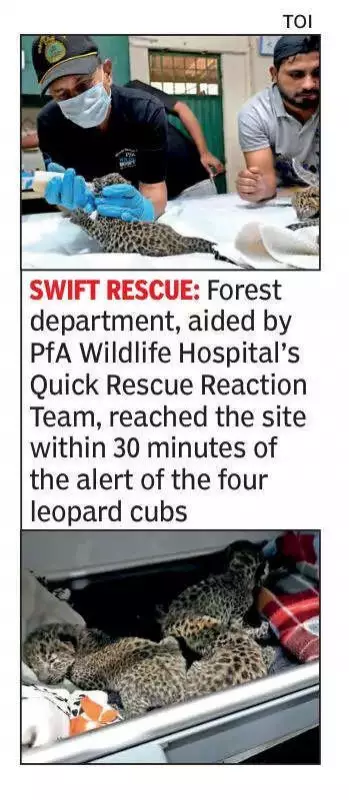
In a delicate wildlife operation, four vulnerable leopard cubs were successfully rescued on Tuesday from an area close to the iconic Dodda Aalada Mara, popularly known as the Big Banyan Tree, on the outskirts of Bengaluru. The intervention became necessary after the newborns were found alone, with authorities suspecting human activity in the vicinity forced their mother away.
A Swift Rescue Operation
The rescue was set in motion after Ravi, the deputy range forest officer, raised an alert. Responding promptly, the Quick Rescue Reaction Team from the PfA Wildlife Hospital sprang into action, reaching the site within half an hour of receiving the call. The forest department and veterinary experts first conducted a thorough scan of the surrounding area, hoping to find signs of the mother leopard's return. Only when it was clear she would not come back did they decide to intervene and secure the cubs.
Condition and Care of the Newborns
The rescued cubs, estimated to be just five to seven days old, comprise three females and one male. Upon examination, they were found to be suffering from dehydration, having missed several crucial nursing cycles. They were immediately transferred to the PfA Wildlife Hospital for a comprehensive evaluation. Medical checks, including ultrasonography, revealed no internal injuries. The veterinary team then focused on stabilizing the cubs and providing them with essential nutritional support.

Experts Hope for a Reunion
Colonel Dr Navaz Shariff, the chief wildlife veterinarian at PfA Wildlife Hospital, emphasized that leopard mothers rarely abandon their young voluntarily. He stated that such situations are typically triggered by human presence and disturbance. "Our responsibility is to intervene only when required, and then step back to let nature reconnect. We are working to give the mother the best chance to return to her cubs," Dr. Navaz added. The team's approach underscores a critical balance between immediate rescue and fostering the possibility of a natural reunion, which is always the preferred outcome for young wildlife.
This incident near a famous Bengaluru landmark highlights the ongoing challenges of human-wildlife conflict as urban spaces expand. It also showcases the coordinated efforts between the state forest department and dedicated wildlife rescue organizations in Karnataka to protect the region's precious fauna.