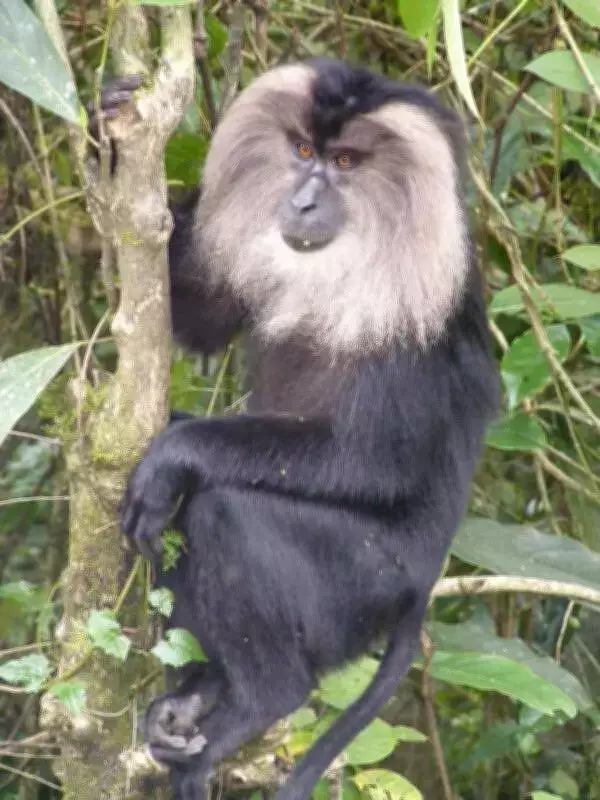
Four-Decade Study in Anamalai Hills Uncovers Hidden Fragility of Lion-Tailed Macaques
A comprehensive 40-year study conducted in the Anamalai hills of the Western Ghats has delivered a critical warning about the endangered lion-tailed macaque. While population growth outside protected areas might appear encouraging at first glance, researchers caution that this trend could be masking deeper vulnerabilities rather than signaling a true recovery.
Long-Term Monitoring Reveals Complex Demographic Patterns
Researchers meticulously tracked lion-tailed macaque groups across fragmented forests for four decades, documenting 37 distinct groups with a combined population of approximately 800 individuals. The long-term assessment uncovered a surprising finding: mean group sizes were actually larger in non-protected areas compared to those within protected forests. However, this apparent surge comes with significant caveats that challenge optimistic interpretations.
The study warns that higher growth rates observed in some non-protected fragments may be primarily shaped by proximity to human settlements and increased access to anthropogenic food sources. Additionally, reduced canopy continuity and rising negative human-primate interactions are contributing factors. In essence, the increasing numbers may be driven by conditions that elevate long-term risks rather than sustainable habitat improvements.

Research Collaboration and Multigenerational Insights
Titled 'Differential demographic responses of lion-tailed macaques to habitat fragmentation: Four decades of population monitoring in the Anamalai Hills, Western Ghats and perspectives of management and conservation', this research represents a collaborative effort involving Professor Mewa Singh from the University of Mysore and G Umapathy of LaCONES (Laboratory for the Conservation of Endangered Species). The findings also reflect remarkable continuity across three generations of dedicated researchers engaged in this vital conservation work.
Growth at a Cost: Anthropogenic Threats and Vulnerability
According to the study, groups inhabiting non-protected fragments are likely to face greater long-term vulnerability due to persistent anthropogenic disturbance. The research flags multiple threats including road mortality and electrocution, alongside the twin pressures of habitat fragmentation and growing dependence on human-linked food sources.
Within these non-protected landscapes, high growth in specific fragments—particularly the Puthuthottam population—appeared to stem from local ecological context rather than any broader landscape-level recovery. Researchers emphasize that such population spikes should not be mistaken for signs of long-term viability, especially when short-term demographic 'success' is tied to human-associated food and interactions that heighten conflict and risk.
Healthier Patterns Within Protected Areas
In contrast to the volatile patterns observed outside protected zones, groups within protected areas remained largely stable over the four-decade study period. While birth rates did not vary significantly across different fragments, the analysis revealed a negative correlation between group size and canopy height—a finding that underscores the importance of forest structure for these primates.
Protected fragments supported a higher proportion of adult females to immatures, and adults to immatures overall, than non-protected fragments. This demographic structure is described by the study as healthier than that observed outside protected settings, suggesting that quality habitat management contributes to more sustainable population dynamics.
Conservation Implications and Future Directions
The broader takeaway from this four-decade investigation is unequivocal: rising numbers alone do not tell the complete story of species recovery. For the lion-tailed macaque, true conservation success may depend less on visible population growth and more on the quality, security, and connectivity of the habitat that sustains these endangered primates.

This research highlights the critical need for conservation strategies that address both protected area management and the challenges of human-wildlife coexistence in fragmented landscapes. The findings serve as a reminder that demographic indicators must be interpreted within their ecological and anthropogenic contexts to avoid misleading conclusions about species recovery.