507-Year-Old Clam Shatters Scientific Records, Reveals Centuries of Ocean Secrets
While the cold Atlantic waters rarely make headlines, a single clam specimen pulled from the seabed near Iceland has dramatically rewritten scientific records. In 2006, researchers collected a clam that would later be named Ming. Initially, growth rings on its shell suggested an age of approximately 405 years, already placing it among the oldest animals ever documented. However, a subsequent reassessment in 2013, employing more precise counting techniques, astonishingly extended that estimate to 507 years.
Guinness World Record Holder and Scientific Marvel
The species, known as the ocean quahog (Arctica islandica), now officially holds the Guinness World Record for the oldest non-colonial animal. Unlike corals, which consist of colonies of many polyps, this clam lived as a single, solitary organism. Its extraordinary lifespan has since profoundly influenced research into ageing processes, climate history, and deep-sea survival mechanisms.
Ming the clam's story is one of scientific refinement. Scientists determine age by counting annual growth bands in the shell, a method analogous to analyzing tree rings. During the initial examination, researchers inadvertently miscounted some of the early bands. Advanced techniques later corrected this error, solidifying the figure at 507 years. The shell itself remains a crucial part of the scientific archive, offering a physical, layered timeline of shifting ocean conditions over more than five centuries.

The Anatomy of an Ancient Survivor
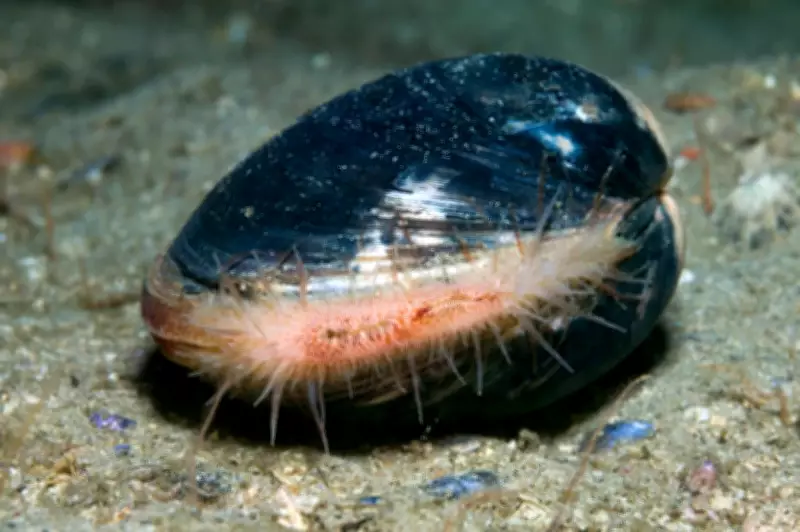
Among animals that live as individuals, the ocean quahog stands unparalleled in longevity. For comparison, the Greenland shark is frequently cited as the next longest-lived vertebrate, with lifespan estimates hovering around 400 years. An ocean quahog may not appear remarkable at first glance—it is a rounded clam with two hinged shell halves, or valves. When alive, its outer surface is covered by a dark layer called the periostracum, giving it a black or mahogany hue.
Older specimens, like Ming, can measure over 13 centimetres across and more than 5 centimetres thick. Most people never encounter them alive, as they bury themselves in sediment at depths between 400 and 500 metres in the North Atlantic. While empty shells occasionally wash ashore, the living animal remains largely hidden from view.
A Life of Slow, Steady Endurance
Life at such depths is characterized by extreme slowness. Water temperatures remain consistently low, light scarcely penetrates the seabed, and growth is steady rather than rapid. The ocean quahog sustains itself through filter feeding, a simple yet highly efficient process. It draws seawater in through an inhalant siphon, where tiny, hair-like structures called cilia generate a current that carries water across its gills. Mucus then traps algae and organic particles, directing food toward the mouth while filtered water exits through a separate opening.
This rhythmic process repeats almost constantly. Environmental fluctuations, such as changes in water temperature or currents, may occasionally interrupt the routine, but otherwise, the clam persists quietly. This steady, energy-efficient lifestyle, maintained over centuries, is a key factor enabling the ocean quahog's remarkable endurance.
The record lifespan of Ming serves as a powerful reminder that in the natural world, longevity often hinges on patience and resilience rather than speed. Each layer of its shell meticulously records shifts in temperature and chemistry, making the species invaluable not only for its age but also as a living archive of our planet's climatic past.