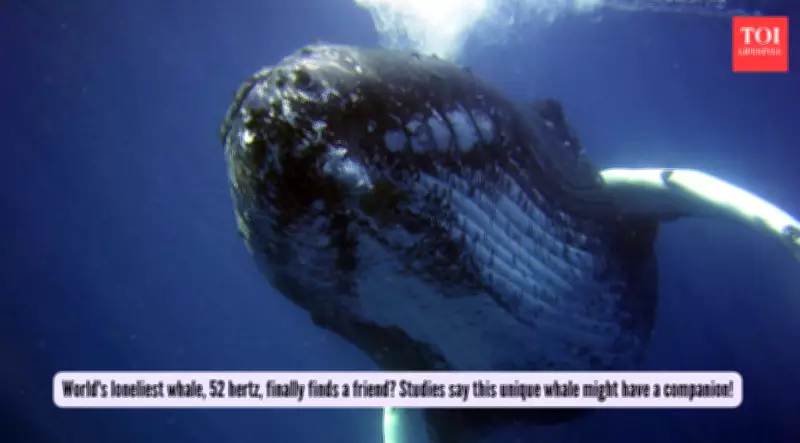
The 52-Hertz Whale: From Lonely Legend to Scientific Mystery
Deep within the vast, silent expanse of the ocean, whales communicate through haunting, melodic calls that can travel for miles underwater. The image of a whale singing might evoke scenes from animated movies, but for one particular whale, this reality has become a global phenomenon. This unique creature produces a high-pitched song at 52 hertz, significantly above the normal range for its kind, sparking tales of isolation, inspiring songs and documentaries, and fueling endless wonder.
A Discovery That Captured the World's Imagination
Back in 1989, researchers from the prestigious Woods Hole Oceanographic Institution made an extraordinary discovery while scanning the Pacific Ocean. They detected an odd whale call registering at 52 hertz, which is much higher than the typical blue whale songs that range from 10 to 39 hertz, with dominant tones between 16 and 28 hertz, according to data from Cornell University's Bioacoustics Research Program. Although the whale's migratory path resembled that of blue whales, its distinctive voice did not match any known species.
"This sound source has been the only one with this call structure in the entire listening area," Woods Hole noted in a comprehensive 2000 report. "We have been tracking this call since 1992 and have not identified the whale species," they added, suggesting the possibility that "perhaps it is a hybrid." Remarkably, tracked for years, this whale continues to sing strongly, demonstrating that its uniqueness has not hindered its survival in the marine environment.

Debunking the Myth of Loneliness
Recently, social media posts have claimed that the "world's loneliest whale" has finally found a friend at 52 hertz. However, no fresh scientific evidence currently supports this assertion. This speculation likely relates to detections made in 2010 off the coast of California, where distant sensors captured similar acoustic patterns, hinting at the presence of multiple whales. Yet, nothing conclusive has emerged in the subsequent twelve-plus years of monitoring.
Despite the viral nature of the story, which spawned a Twitter parody account and inspired BTS's hit song "Whalien 52," experts argue that the whale might not be as isolated as previously believed. Christopher Clark, the director of Cornell's Bioacoustics Research Program, provides a compelling perspective. "The animal's singing with a lot of the same features of a typical blue whale song," Clark explained in a 2015 NPR interview. "Blue whales, fin whales, and humpback whales: all these whales can hear this guy, they're not deaf. He's just odd." He further noted that whale dialects vary by region, making this individual quirky rather than alien.
Inspiring Art and Documentary Exploration
The enigmatic 52-hertz whale has transcended scientific circles to inspire artistic creations and cinematic endeavors. The 2021 documentary film The Loneliest Whale: The Search for 52, directed by Joshua Zeman, embarked on a quest to unravel the legend. Initially told that the whale was likely dead after years of acoustic silence, Zeman's team was astonished to hear the distinctive call anew off the coast of Los Angeles, reigniting curiosity and hope.
This ongoing scientific and cultural fascination raises profound questions: Is this whale truly alone, belting out notes that no one answers? Or does the deep sea hold secrets and companions that we cannot yet hear? As research continues, the 52-hertz whale remains a symbol of mystery in the marine world, challenging our understanding of whale communication and reminding us of the ocean's hidden wonders.