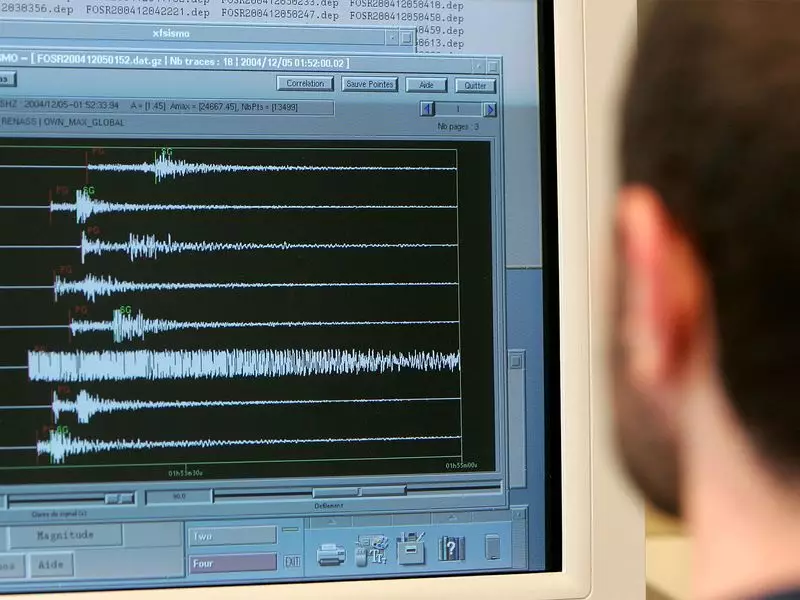
A significant earthquake with a preliminary magnitude of 6.4 struck the southern Mexican state of Guerrero on Thursday, sending tremors that were felt hundreds of kilometers away in the capital, Mexico City. The seismic event has put the region's emergency services on alert, though initial reports suggest no major damage or casualties.
Details of the Seismic Event
The United States Geological Survey (USGS) reported that the quake occurred at a depth of approximately 25.1 kilometers (15.6 miles). Its epicenter was located roughly 11 kilometers (6.8 miles) south-southwest of San Marcos, a community in Guerrero. The tremor was recorded at around 1:39 pm local time (1939 GMT). This region is part of Mexico's Pacific coast, an area notoriously active and prone to seismic activity due to tectonic plate interactions.
Mexico's own National Seismological Service initially pegged the magnitude slightly higher at 6.5, a common discrepancy due to different measurement methodologies. The quake's relatively moderate depth meant the shaking was felt across a wide area. Residents in Mexico City, located over 300 kilometers away, reported feeling buildings sway for several seconds. The city's unique location on an ancient lakebed often amplifies seismic waves, making even distant quakes perceptible.

Immediate Response and Public Reaction
Following the tremor, Mexico City's earthquake early warning alarms were activated, prompting many to evacuate buildings as a precautionary measure. This system, which relies on sensors along the coast, provides crucial seconds of warning for the densely populated capital. Social media platforms were quickly flooded with posts from residents sharing their experiences and checking on loved ones.
Local authorities in Guerrero and Mexico City immediately initiated standard protocols, with emergency crews surveying infrastructure for any signs of damage. Civil protection units were deployed to assess the situation in the areas closest to the epicenter. As of the latest updates, there have been no immediate reports of significant structural damage or injuries. The absence of early, dire reports is a positive sign, but comprehensive assessments in rural areas near the epicenter often take time.
Context and Seismic History of the Region
The state of Guerrero sits atop the complex boundary where the Cocos tectonic plate is forced beneath the North American plate, a process known as subduction. This makes it one of the most seismically active zones in Mexico. The region has a long and devastating history with earthquakes, including the catastrophic 1985 quake that killed thousands in Mexico City and a powerful 7.1 magnitude temblor in 2021.
Thursday's event serves as a stark reminder of the ever-present seismic threat. It underscores the critical importance of the country's early warning system and ongoing public preparedness drills. While this quake did not result in a major disaster, it reinforces the need for constant vigilance, robust building codes, and effective disaster response planning in a country that lives on shaky ground.
Experts will continue to analyze aftershock data and the quake's characteristics in the coming days. Residents are advised to remain cautious, as smaller aftershocks are always a possibility following an event of this magnitude. The successful activation of alarms and the orderly public response highlight the lessons learned from past tragedies, demonstrating that preparedness can save lives when the earth moves.