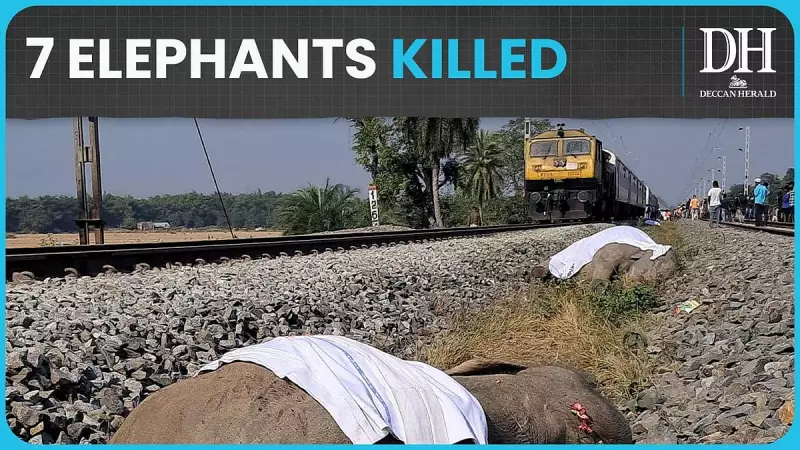
A devastating incident unfolded in Assam on Thursday night, resulting in the tragic death of seven elephants. The majestic animals were struck by the Guwahati-bound Rajdhani Express, highlighting the persistent conflict between railway infrastructure and wildlife in the region.
The Tragic Collision in Morigaon District
The accident occurred near the Mikirgram area in Morigaon district at approximately 9:30 PM on Thursday, February 13. According to railway officials, the speeding train, numbered 12423 and traveling from Delhi to Guwahati, hit a herd of elephants as they were crossing the tracks. The impact was immediate and fatal for seven members of the herd.
Local authorities and railway personnel rushed to the site following the collision. The scene was described as heartbreaking, with the bodies of the pachyderms lying near the tracks. Preliminary reports suggest the herd was attempting to move through their natural corridor when the high-speed train approached.

Immediate Aftermath and Official Response
The collision caused significant disruption to rail services. The Rajdhani Express was detained at the site for several hours as officials conducted preliminary assessments and cleared the tracks. This led to delays for subsequent trains on the route, affecting passenger schedules.
Forest department officials from Assam swiftly arrived to manage the situation. An investigation into the precise circumstances of the accident has been initiated. Authorities are examining factors such as the train's speed, visibility conditions at the time, and whether the standard protocols for known elephant corridors were being followed.
This is not an isolated event. Assam's railway lines, which cut through dense forests and key elephant habitats, have been the site of numerous such tragedies over the years. Each incident sparks renewed debate about the effectiveness of existing mitigation measures, like speed restrictions in sensitive zones and early warning systems for train drivers.
Broader Implications for Wildlife and Railway Safety
The death of seven elephants in a single strike is a massive blow to Assam's elephant population. It underscores the critical need for more robust and consistently enforced safety mechanisms. Wildlife conservationists and local communities have long advocated for elevated corridors or underpasses for animals at high-risk sections, along with better monitoring of herd movements.
Railway authorities often cite the challenges of balancing operational efficiency with wildlife protection. However, activists argue that preventive investments are crucial to avert such losses. The tragic event in Morigaon is likely to reignite demands for a comprehensive, technology-aided solution to this ongoing problem, potentially involving sensors, drones, and coordinated communication between forest and railway departments.
The incident has cast a pall over the region, serving as a grim reminder of the cost of human-wildlife conflict. It calls for urgent introspection and collaborative action to ensure the safety of both India's treasured wildlife and the passengers on its railways.