While the United Kingdom may not boast the vast biodiversity of isolated rainforests, it is home to a fascinating collection of animal species found nowhere else on Earth. These unique creatures, often confined to specific islands or fragmented woodlands, have evolved in isolation due to geographical barriers, specialised diets, or a historical absence of predators. Their existence highlights how even smaller nations can harbour incredible wildlife diversity. Here are seven such remarkable animals exclusive to the British Isles.
Scotland's Exclusive Mammals and Birds
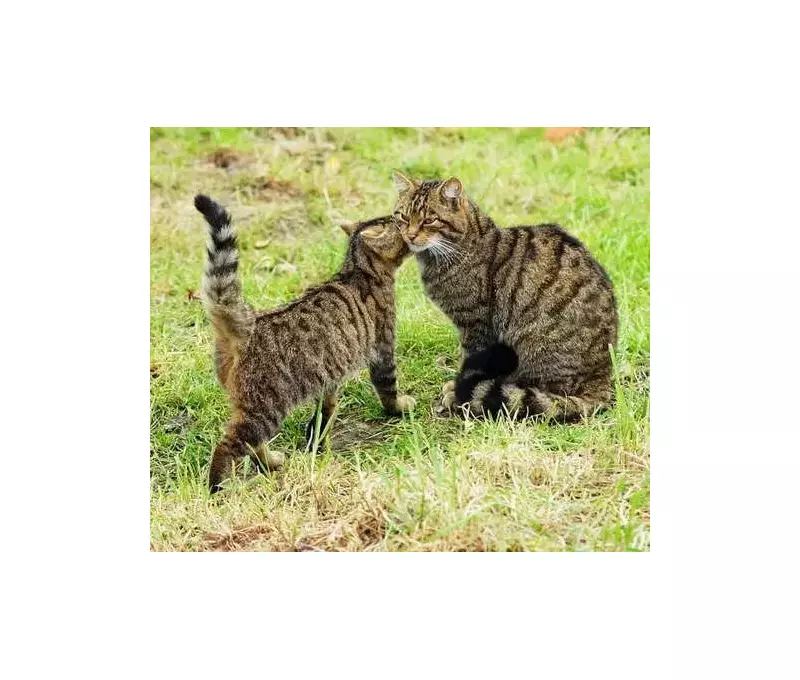
The Scottish wildcat stands as the UK's last native wildcat, a critically endangered subspecies clinging to survival in the remote Scottish Highlands. With an estimated 100 to 300 individuals left in the wild, it faces severe threats from hybridisation with domestic cats. Conservationists use genetic testing and managed breeding programmes, training young wildcats for release into protected zones. Their survival hinges on stable populations of prey like rabbits and voles, but habitat changes from forestry continue to shrink their territory.
Further north, the Orkney Vole thrives solely on the Orkney Islands. Larger than its mainland relatives, this subspecies arrived over 5,000 years ago, likely with Neolithic farmers. Genetic links trace it to continental Europe, not mainland Britain. Active by day, it is a crucial food source for birds of prey like hen harriers. Changes in farming reduced its numbers, but traditional management of rough grass along field boundaries helps its populations persist.

On the windswept St Kilda archipelago, the St Kilda Wren has carved out its niche. This larger, darker subspecies of the Eurasian wren possesses a stronger bill and a louder song adapted to pierce through the island's constant wind. Feeding on insects in rocky crevices, its population fluctuates with storms and nesting cover availability, showcasing evolution in extreme isolation.
Specialised Insects and a Rare Spider
Some of the UK's unique species are easy to overlook. The Lundy cabbage flea beetle is one such insect, living exclusively on Lundy Island in the Bristol Channel. It depends entirely on the native Lundy cabbage, feeding on its leaves and laying eggs at the plant's base. The beetle's life cycle, from larva to adult, is tightly synchronised with the plant's growth, making it vital to the island's coastal plant community health.
Even more elusive is the horrid ground-weaver spider, a UK native with a tragically small habitat. This tiny spider, barely over a tenth of an inch long, is found only in a few sites within Plymouth, southwest England, primarily in old limestone quarries. It hides under stones and feeds on springtails. With one original site already lost to development, conservation focuses on protecting its remaining rocky, undisturbed habitat from human activity.
Wales' Lone Lake Fish and Scotland's Pine Specialist
In the waters of Llyn Tegid (Bala Lake) in north Wales, the gwyniad fish has survived for millennia. This freshwater whitefish is found in no other lake worldwide, typically dwelling in deep waters and moving to gravel shallows to spawn in winter. Its population has suffered from pollution and increased nutrient runoff, but improved water purification efforts are slowly aiding its recovery, though progress remains delicate.
Finally, the Caledonian pine forests of northern Scotland are the exclusive domain of the Scottish crossbill. This finch, measuring 6 to 6.5 inches, is uniquely adapted with a crossed bill tip to expertly extract seeds from Scots pine cones. Concentrated in the Cairngorms, these birds rely on older pine cones and often remain in the same forests for years, their loud calls echoing through the woods as a signature sound of this unique habitat.
Together, these seven species underscore the UK's significant, though often fragile, natural heritage. Their continued survival depends on dedicated conservation efforts, habitat protection, and public awareness of these irreplaceable native treasures.