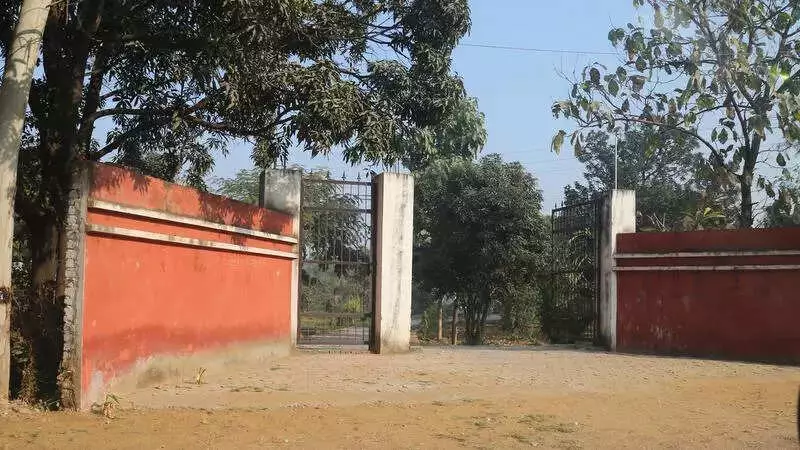
A recent survey conducted by the Haryana Department of Forest and Wildlife has uncovered alarming development pressure on one of Delhi-NCR's prime birdwatching havens. The investigation identified 74 unauthorised constructions within the legally protected eco-sensitive zone of Sultanpur National Park.
Widespread Violations Around Protected Wetland
The encroachments are not limited to the park's immediate buffer. Officials noted that several farmhouses and buildings have illegally sprung up within just one kilometre of the park boundary. Sultanpur, recognised as a Ramsar site in 2021 for its international importance as a wetland, is legally entitled to a 5-kilometre no-construction buffer zone. A separate departmental survey found an additional 158 illegal structures along regulated corridors in nearby areas, bringing the total count of violations to 232 constructions.
Legal Crackdown and Environmental Risks
All these structures violate the Punjab Scheduled Roads and Controlled Areas Restriction of Unregulated Development Act, 1963. Specifically, they breach Section 6 and sub-section (i) of Section 7, as they are located in areas notified as controlled zones under Section 4 of the Act. District Town Planner (Enforcement) for GMDA, R S Batth, has issued show-cause notices under Section 12(2) of the Act to all violators. The notices direct an immediate halt to all unauthorised work, warning that failure to comply will lead to demolition and restoration of the land.

Officials warn that these illegal constructions pose a severe threat. They could lead to increased pollution and heighten human-animal conflict, destabilising the delicate ecosystem. The park is a crucial part of the Central Asian Flyway, a major migratory route for birds.
Parallel Action on Green Belts
In a related action, the Gurugram Metropolitan Development Authority (GMDA), acting on directions from the National Green Tribunal (NGT), surveyed green belts along three key roads: Farukhnagar-Gurgaon Road via Dhanawas, Pataudi-Gurgaon Road (NH-362W), and Farukhnagar-Gurgaon Road via Sultanpur. This survey, part of the Gurgaon-Manesar Urban Complex 2031 plan, also found 158 illegal structures along these regulated corridors.
Calls for Stronger Protection Measures
Batth stated the enforcement drive aims to protect eco-sensitive zones and green belts that act as vital buffers for wildlife and planned urban growth. He urged residents and developers to seek all required permissions before starting any construction.
Environmentalists, however, demand more robust action. Activist Vivek Kamboj emphasized that construction around such protected areas is illegal and damages the environment, compromising the integrity of an internationally recognised national park. The findings highlight the ongoing tension between urban development pressures and the urgent need to conserve critical ecological habitats in the rapidly expanding National Capital Region.