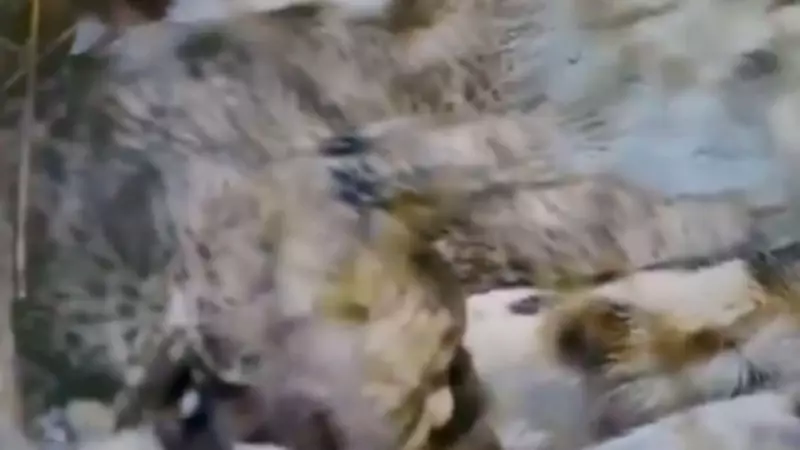
Aasha the Cheetah Welcomes Five New Cubs at Kuno National Park
In a significant milestone for India's ambitious cheetah reintroduction program, Aasha, a cheetah brought from Namibia, has given birth to five cubs at Kuno National Park. This event marks her second successful litter and represents a major step forward in the nation's efforts to reestablish a viable cheetah population.
Eighth Successful Litter Since Program Launch
Union Environment Minister Bhupender Yadav announced the birth, which occurred on February 7, 2026, describing it as a crucial achievement for India's cheetah recovery initiative. This litter represents the eighth successful cheetah birth since the reintroduction program began, bringing the total number of surviving Indian-born cubs to an impressive 24.
The current cheetah population in India now stands at 35 animals, demonstrating steady growth since the program's inception. Officials have confirmed that both Aasha and her newborn cubs are under continuous observation through remote surveillance and field monitoring systems, with human intervention kept to a minimum unless medically necessary.

Aasha's Reproductive Success Story
Aasha belongs to the founding group of cheetahs translocated from Namibia when India launched Project Cheetah in September 2022. After undergoing quarantine and acclimatization periods, she was released into Kuno National Park and has since emerged as one of the most stable and reproductively successful females in the population.
This marks Aasha's second successful litter, following her first delivery of three cubs on January 1, 2024. Those cubs, now two years old, have reached an age where they can hunt alongside their mother and survive independently in the wild. Aasha and her first litter spent over a year in captivity before being released into their natural habitat in February 2025.
Long-Term Project Goals and Future Prospects
While the growing number of cubs has improved overall population statistics, project officials emphasize that long-term success will depend on several critical factors:
- Survival rates of young cheetahs into adulthood
- Ability to establish territories in open forest conditions
- Successful breeding in natural environments
Senior officers involved with the project have noted that Aasha's ability to successfully raise cubs twice within a relatively short timeframe indicates strong adaptation to Indian conditions. The survival of her previous cubs in the wild represents a positive development that suggests the cheetah population at Kuno may soon experience significant growth.
Background of India's Cheetah Reintroduction Program
India initiated its cheetah reintroduction project on September 17, 2022, when Prime Minister Narendra Modi released eight cheetahs from Namibia at Kuno National Park. The program expanded the following year with the arrival of twelve additional cheetahs from South Africa.
Madhya Pradesh Chief Minister Mohan Yadav recently announced that eight more cheetahs are scheduled to arrive from Botswana later this month as part of the next phase of population augmentation. The state government has conducted detailed discussions with the Union Environment Ministry regarding:
- Logistical arrangements for new arrivals
- Veterinary preparedness and healthcare protocols
- Tourism planning around conservation areas
- Expansion of reserve forest territories
This comprehensive approach aims to ensure the sustainable growth and long-term viability of India's reintroduced cheetah population, with Kuno National Park serving as the primary conservation hub for this historic wildlife restoration effort.