Albania's Decades of Isolation: A Nation Behind Concrete Walls
For nearly half a century, Albania existed as one of the world's most isolated nations, where daily life unfolded under strict regulations and pervasive fear. The communist regime that took power in 1944 created a society where travel restrictions were severe, and information from beyond Albania's borders rarely reached ordinary citizens. This period created an environment where every aspect of life felt monitored and controlled, shaping generations of Albanians who lived with constant uncertainty.
The Concrete Legacy: Bunkers That Dot the Landscape
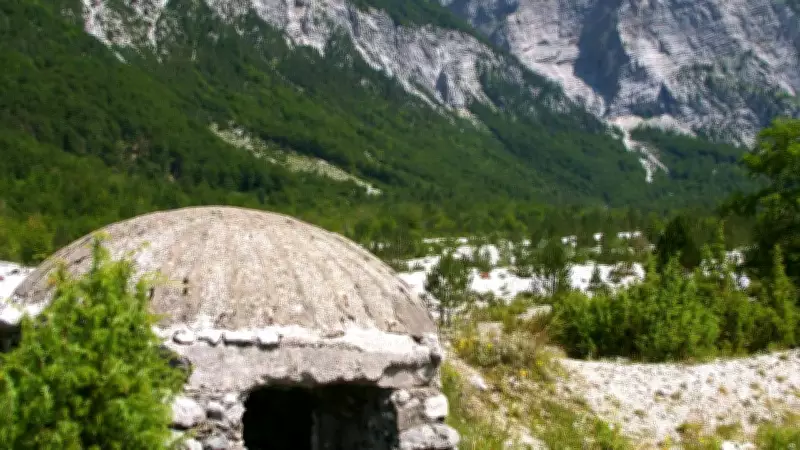
Today, visitors to Albania encounter visible remnants of this era scattered across the country. Most prominent are the concrete bunkers built under orders from Enver Hoxha, who ruled Albania with an iron fist from 1944 until his death in 1985. Constructed over approximately 40 years, these defensive structures were designed to withstand foreign invasion, with estimates ranging from 200,000 to as many as 700,000 bunkers nationwide.
Each bunker was typically built to accommodate one or two soldiers, armed and prepared for combat. This massive construction project reflected the regime's obsession with perceived external threats, creating a physical landscape of fear that still defines parts of Albania today. Some bunkers now stand forgotten in fields, while others have been painted or repurposed, serving as silent monuments to a turbulent past.

The Communist Transformation and International Alignments
When communists seized power in 1944, Albania underwent rapid transformation. Industry was nationalized, private property was confiscated, and the middle class virtually disappeared as the country became a Soviet-style state. Following a rift with the USSR in the 1960s, Albania realigned with China, though this foreign partnership brought limited relief from the nation's profound isolation.
Experts note that this combination of internal fear, strict control, and shifting international alliances kept Albania effectively locked away from Europe for decades. Despite receiving some foreign aid, the country remained largely closed to outside influence, creating what some historians have called "splendid isolation."
Daily Life Under Surveillance and Control
The regime maintained power through constant surveillance and severe restrictions on personal freedoms. Borders were sealed, foreign cultural influences were eliminated, and all media—including books, music, and films—were tightly controlled by the state. In 1967, Albania took the extraordinary step of declaring itself the world's first officially atheist state, banning all religious practices and closing churches and mosques.
Surveillance extended to all segments of society, including writers, teachers, workers, and even Communist Party members themselves. Between 1973 and 1975, purges targeted intellectuals and artists, leaving little room for creative or academic development. The government attempted to control not just territory, but minds and spirits as well.
Cultural Survival Against All Odds
Remarkably, despite decades of repression, Albanian traditions endured. The communist system, while rigid in its ideological framework, could not completely erase deep-rooted cultural practices. Hospitality remained a cornerstone of Albanian society, local customs persisted in modified forms, and family ties strengthened as one of the few reliable support systems available to people.
It appears that while the government successfully controlled physical movement and information flow, it could not fully suppress the Albanian spirit. This cultural resilience would prove crucial when the isolation finally ended.
Transition and Transformation in Modern Albania
Following Hoxha's death in 1985, his successor Ramiz Alia introduced slightly gentler policies, though fundamental change remained limited. By 1990, young Albanians began risking their lives seeking asylum in foreign embassies, signaling growing discontent with the regime. Political pluralism arrived in 1990, followed by elections in 1991 that marked the beginning of Albania's emergence from isolation.

The nation faced tremendous challenges: a weakened economy, societal disruption, and depleted intellectual leadership. Yet walking through Albania today reveals remarkable resilience. The bunkers that once symbolized fear and control have found new purposes—some house museums like Bunk'Art 1 near Mount Dajti and Bunk'Art 2 in central Tirana, featuring exhibitions on surveillance, dictatorship, and repression. Others have been transformed into cafés, art spaces, or even hotel rooms.
Albania's journey from isolation to gradual integration continues, with the physical remnants of its communist past serving as both historical markers and symbols of adaptation. The country that was once almost completely closed to the world is now quietly reclaiming its identity, piece by piece, while preserving the cultural traditions that survived against considerable odds.