Nagpur's Ambazari Lake Crisis: Experts Warn No Quick Fix Without Halting Sewage Inflow
The National Environmental Engineering Research Institute (NEERI) has delivered a stark assessment to the Nagpur Municipal Corporation regarding the persistent crisis at Ambazari Lake. According to the expert body, there exists no magical solution for the lake's severe pollution and weed infestation—only a continuous, brute-force clean-up operation can serve as a temporary measure until the inflow of untreated sewage is completely stopped.
The Root of the Problem: Unchecked Pollution Sources
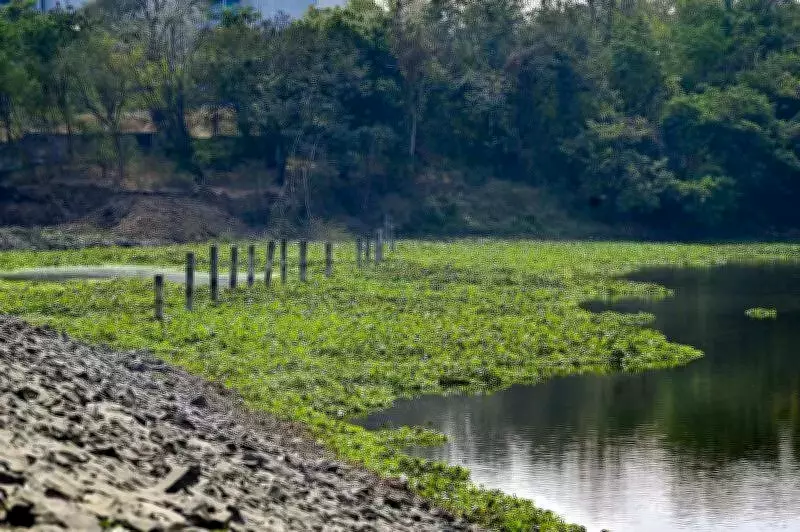
NEERI's analysis exposes the fundamental flaw in all previous attempts to rehabilitate Nagpur's largest lake, which spans nearly 15.4 square kilometers. The relentless discharge of untreated sewage from neighboring Wadi Municipal Council areas, combined with industrial effluents from Hingna units, has created a perfect storm for environmental degradation. This continuous pollution acts as a nutrient-rich fuel, triggering an uncontrollable explosion of water hyacinth and other aquatic weeds.
Environmental experts emphasize that Ambazari Lake has become a textbook case demonstrating how source pollution can undermine even the most aggressive cleanup campaigns. The high nutrient content from sewage creates ideal conditions for hyacinth to multiply rapidly, with populations sometimes doubling within mere days. Without addressing this core issue, every remediation effort becomes part of an endless and expensive cycle.

Failed Experiments and Sobering Outcomes
The Nagpur Municipal Corporation's Public Health Engineering department has exhausted numerous approaches in its battle against the lake's deterioration. Superintending Engineer Shweta Banerjee detailed the extensive efforts: "Several measures were initiated to save the lake from weeds. We deployed cutters in the past and utilized various mechanized systems."
Among the most publicized attempts was the deployment of the 'Jaldost' floating weed-removal machine on two separate occasions—first when NEERI provided its own unit, and later when NMC independently hired the equipment. The civic body also experimented with chemical solutions, engaging a Bengaluru-based firm to spray chemicals across the lake surface at considerable cost. Additionally, workers attempted to drag thick ropes from one end of the lake to the other to pull floating weed mats ashore.
Yet each intervention produced disappointing results. Banerjee admitted a particularly sobering discovery: "During the cutting of weeds, NMC realized that the weed growth actually doubled," highlighting the powerful nutrient-driven regeneration within the polluted waters. The chemical treatment merely discolored portions of the weed temporarily before fresh growth overwhelmed treated areas, while the rope-pulling method proved equally ineffective.
Sustained Manual Efforts Outpaced by Weed Regrowth
Even heavy machinery has been pressed into service as a last resort. The solid waste management team of Dharampeth zone deployed specialized crews armed with poclain excavators to manually remove weeds from accessible lake edges. Since 2023, the zone has conducted uninterrupted removal drives in a determined effort to reclaim the water body.
Despite these sustained manual efforts, the relentless weed growth continues to outpace removal operations. This persistent imbalance underscores NEERI's central warning: physical weed removal represents the only workable stop-gap solution, but it cannot provide permanent relief while pollution inflows continue unabated.
Expanding Environmental Consequences
The crisis at Ambazari Lake now threatens to spill beyond its immediate boundaries, creating broader environmental concerns. Water hyacinth has spread across the Nag River basin, choking the channel from the lake's overflow point to Shankar Nagar and further downstream. This expansion raises serious alarms ahead of the monsoon season, with officials fearing that floating weed masses could:

- Block natural water flow paths
- Exacerbate flooding risks during heavy rains
- Further degrade water quality throughout the affected areas
A senior official privately conceded the inevitable reality: "You can keep removing weeds, but as long as sewage enters the lake, the problem will keep returning." This admission reflects the growing recognition that temporary measures cannot substitute for addressing root causes.
A Symbol of Reactive Governance
For Nagpur, Ambazari Lake has transformed into a symbol of reactive governance—where crores of rupees are spent on machines, manpower, and contracts, yet no permanent solution emerges because the fundamental problem originates outside the lake itself. NEERI's unambiguous warning leaves little room for illusion: until sewage discharge from Wadi is stopped and treated at its source, Ambazari will remain locked in a losing battle against weeds, fought one machine, one contract, and one season at a time.
The institute's assessment serves as a crucial wake-up call for municipal authorities, emphasizing that sustainable solutions require addressing pollution at its origin rather than merely treating symptoms. As the monsoon approaches, the urgency for comprehensive action intensifies, with the health of Nagpur's water systems hanging in the balance.