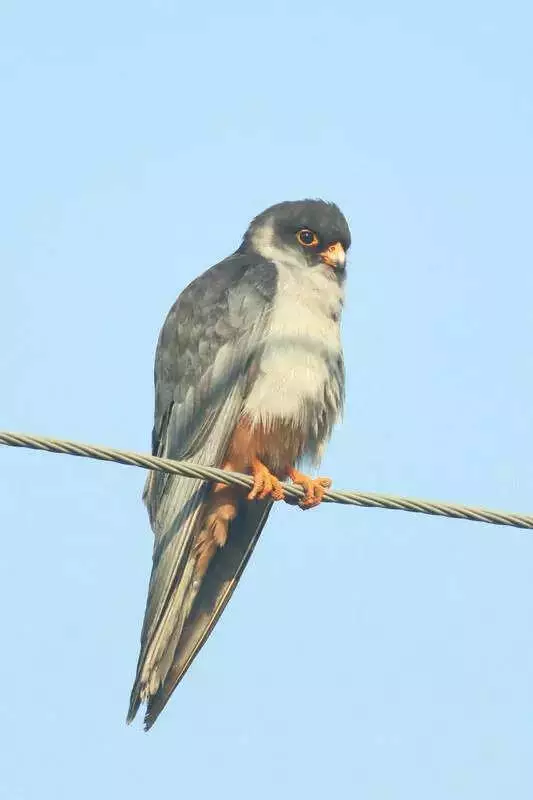
The arduous transcontinental journey of the Amur Falcon, a remarkable raptor, finds a critical refueling station in the coastal state of Goa. Birders and conservationists emphasize that the preservation of specific habitats like grasslands and plateaus is essential for the survival of this long-distance traveler.
The Epic Transcontinental Journey
The Amur Falcon, named after its breeding grounds in Russia's Amurland region of south-east Siberia, undertakes one of the most grueling migrations in the avian world. After breeding in areas that also include northern China, these birds embark on a spectacular flight spanning thousands of kilometers to reach their wintering grounds in southern and eastern Africa.
Goa, with its unique landscape, serves as a vital pit stop on this exhausting route. "Considering the birds' migration route and the immense distance travelled, Goa is an important stopover for them along India's west coast," stated Parab, a local expert. This pause is not merely a rest but a crucial period for the falcons to gather energy for the next leg of their journey.

Nature's Synchronized Feast on the Plateau
The survival strategy of these raptors involves a fascinating natural phenomenon. Justino Rebello, a birder based in Verna, describes a scene of synchronized abundance. "Like a wonder of nature, dragonflies appear on the plateaus just as the raptors arrive. Feeding on them fortifies the birds, providing the essential energy needed to undertake the daunting crossing of the Arabian Sea," Rebello explained.
This highlights the intricate balance of the ecosystem. The open lateritic plateaus, grasslands, and fallow fields adjoining khazans (traditional reclaimed agricultural land) are not just scenery; they are vital feeding grounds that directly support this international migration.
Conservation: From Carnage to Community Success
The story of the Amur Falcon also carries a powerful conservation lesson from recent history. In 2012, the world was shocked by the mass killing of thousands of these falcons for food in Pangti village, Nagaland. This carnage brought global attention and condemnation.
However, this tragedy was followed by a transformative and successful community-led conservation project. The same village later earned international praise for its efforts in protecting the falcons, demonstrating how awareness and local involvement can reverse ecological damage.
Goa's Sirlim Ecosystem: A Barometer of Health
The presence of these apex predators is a key indicator of a thriving environment. Parab, along with fellow birder Chawla who spotted the raptor, pointed to the ecological richness of the Sirlim grasslands and the adjoining mangroves near the Sal river.
"They are critical to the health of the Sirlim-Chinchinim landscape," Chawla said, emphasizing the area's rich flora and fauna. "Raptors, being at the top of the food chain as predators, indicate that this ecosystem here is healthy." Their presence signals a functioning and biodiverse habitat below them.
The call from experts is clear and urgent. "These habitats should be conserved, as they are important feeding grounds for these birds," Parab stressed. Protecting the grasslands and plateaus of Goa is not just a local environmental concern but a contribution to safeguarding a global migratory marvel. The Amur Falcon's journey, connecting continents, depends on these pockets of ecological security along its route.