

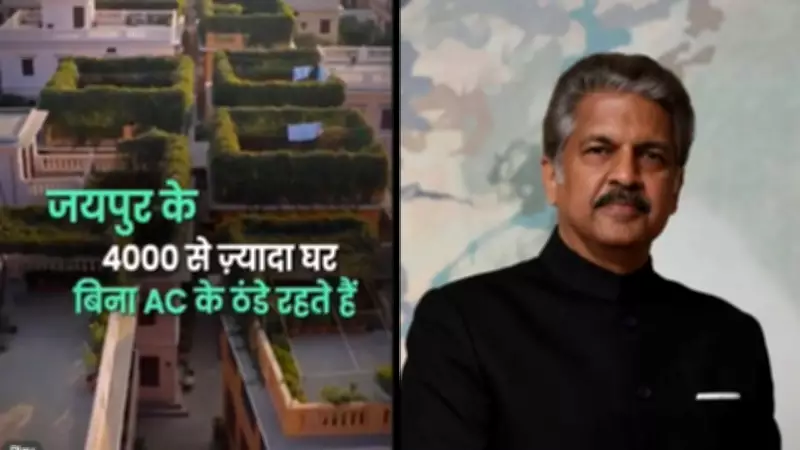
The summer season in India is at its peak, and for the first time in years, the country feels like it is burning up in flames. People are staying indoors with air conditioners running all day, while those outside often end up in hospitals. In this context, Indian business tycoon Anand Mahindra has praised the growing rooftop farming movement in Jaipur. In a video shared on X (formerly Twitter), he highlighted how residents are adapting to increasingly harsh summers by transforming their rooftops into green spaces using simple farming systems.
Mahindra's Message on Climate Adaptation
“We still don’t know enough about the full consequences of climate change,” Mahindra wrote. “But we do know this: intense heat waves in India are no longer exceptions. They’re becoming a way of life.” He added that homeowners are changing their lives by creating homes that are cooler, more sustainable, and productive enough to grow their own food. “That’s the kind of adaptive thinking we’ll increasingly need in the years ahead. Trailblazers,” he wrote.
How Jaipur Homes Stay Cooler Naturally
The idea gaining recognition was developed by Living Green Organics, a Jaipur-based startup. In a city where summer temperatures often exceed 40°C, rooftops absorb heat, making homes unbearable and increasing reliance on air conditioners. However, the startup’s rooftop farming systems offer a practical solution. The company provides portable rooftop gardening setups that are easy to install and maintain, including leak-proof containers, drip irrigation, and proper drainage. This allows families to grow vegetables and plants on their terraces without major structural changes. The greenery reduces direct heat absorption on rooftops, keeping rooms noticeably cooler.

Growing Sustainability Across Jaipur
What began as a small sustainability experiment has now spread to more than 4,000 homes across Indian cities. Many families are benefiting not only from fresh vegetables and herbs but also from lower indoor temperatures and reduced electricity usage during peak summer months. The concept has resonated with people, especially as Indian cities face longer and more intense heat waves.
Social Media Reactions
Mahindra's post garnered appreciation for the natural initiative and the acknowledgment that heat waves are becoming harder to ignore. One user wrote, “Pratik didn't fight the Indian summer; he put it to work. One rooftop. Three returns: insulation, organic vegetables, and market income. Pure first-principles thinking. India has millions of such minds. They just need to be made visible. Thank you Anand Mahindra ji.” Another added, “A lot can be done to reduce this heat by way of unnecessary decorative lighting which nowadays has become the norm in many big cities where light poles are lit up with LED or other lights which add to the heat.” A third user reminded, “The consequences of climate change are grave. Loss of species. Loss of food chain. Loss of seasons and certainty of climate. Loss of productivity. Loss of humans, birds and animals. Loss of greenery. Loss to economy. Loss to our only home, the blue planet. There is no planet B.”






