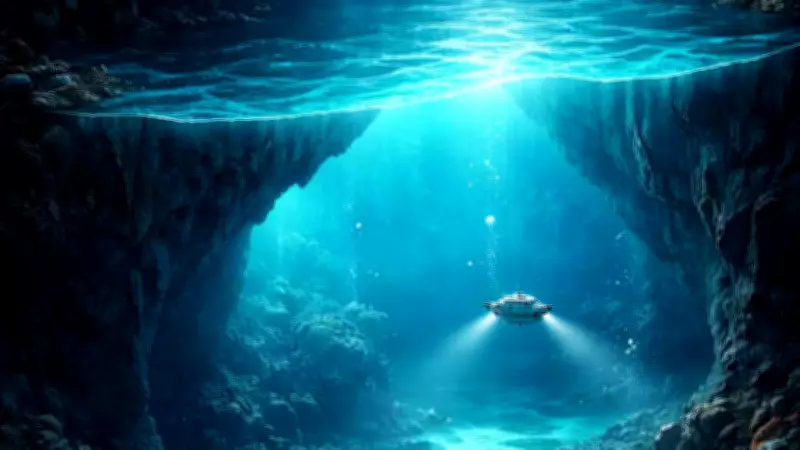
Scientists Uncover Vast Ice Age Freshwater Reservoir Hidden Beneath Atlantic Ocean
For generations, the notion seemed more like legend than reality. Deep beneath the Atlantic Ocean's waves, off the eastern coastline of the United States, fresh water has been resting undisturbed. Historical geological surveys occasionally hinted at something unusual, but the fragmented data were often dismissed or overlooked.
Then, in 2025, researchers revisited those forgotten coordinates, uncovering what appears to be far more than a minor geological curiosity. Scientists have now confirmed the existence of an enormous underwater aquifer, formed approximately 20,000 years ago during Earth's last ice age. Initial estimates suggest this freshwater reservoir could potentially supply a metropolis the size of New York City for hundreds of years.
From Cold War Archives to Modern Discovery
The story reportedly traces back to Cold War-era archives. Old United States geological records contained faint indications of freshwater signals beneath saltwater sediments near the New Jersey coastline. While researchers suspected trapped glacial meltwater, conclusive evidence remained elusive for decades.

Interest surged anew when an international scientific team launched Expedition 501 in 2025. Utilizing the specialized liftboat L/B Robert, researchers drilled three strategic holes off the coasts of Martha's Vineyard and Nantucket between May and August. This ambitious operation successfully retrieved more than 13,000 gallons of water from depths reaching approximately 400 meters below the seafloor.
Ancient Water Preserved for Millennia
The leading scientific explanation points to the last glacial maximum around 20,000 years ago. During this period, sea levels were significantly lower, and massive ice sheets covered substantial portions of North America. The tremendous pressure from these glaciers forced meltwater deep into coastal sediments.
As sea levels rose and flooded the continental shelf, these freshwater deposits became buried beneath layers of clay and silt. These marine sediments created a natural seal that appears to have preserved the reservoir remarkably intact for thousands of years. Scientists analyzing isotopic signatures and noble gases believe the water likely represents a mixture of glacial melt and ancient rainfall trapped during that distant climatic period.
Water Quality and Environmental Considerations
One of the most compelling aspects involves water quality. Since the aquifer formed long before industrialization, researchers suggest it may be free from modern contaminants such as PFAS chemicals and agricultural runoff that plague many contemporary water sources.
However, scientists urge measured caution. Some experts theorize the water has interacted with surrounding rocks for millennia, potentially increasing dissolved mineral content. This could necessitate treatment before any potential human consumption or municipal use.
Legal and Technical Challenges Ahead
The reservoir resides within the United States Exclusive Economic Zone, a maritime area where the federal government controls natural resources. While oil, gas, and minerals are regulated here, freshwater extraction exists in a legal vacuum. No specific permitting frameworks, environmental review guidelines tailored to subsea aquifers, or precedents for ownership and management currently exist.
Even if legal hurdles were resolved, substantial technical barriers remain. Accurately estimating the reservoir's total size requires complex modeling of sediment porosity, hydraulic connectivity, and geological structure across a formation that potentially stretches from New Jersey to Maine. Scientists continue analyzing core samples in laboratories worldwide.
Extraction itself presents significant risks. Pumping operations could potentially trigger saltwater intrusion from above, destabilize sediments, or disrupt delicate seabed ecosystems. Conventional groundwater techniques do not translate easily to these challenging marine environments.
This remarkable discovery represents both a potential resource and a complex scientific puzzle—a frozen memory of Earth's climate history now demanding careful consideration for humanity's future.