

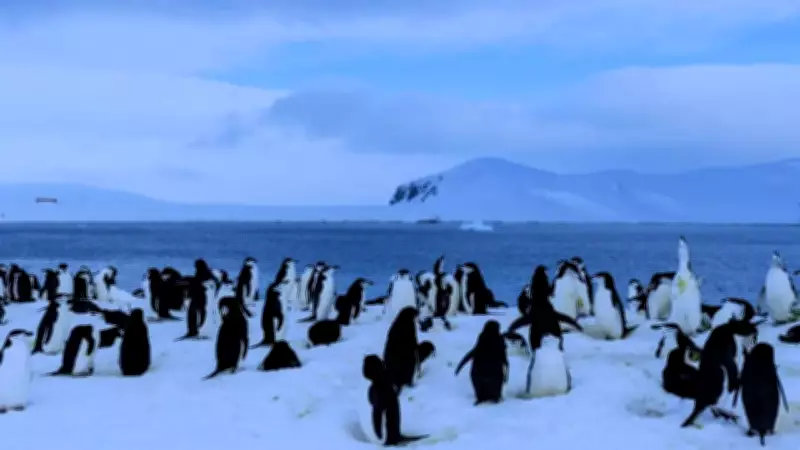
Antarctica: The Only Continent Without Permanent Human Residents
What sets Antarctica apart from all other continents on Earth is its complete lack of permanent settlements or indigenous populations. While every other continent hosts permanent residents who have built civilizations over centuries or millennia, Antarctica remains uniquely devoid of any long-term human habitation. This stark contrast highlights a fundamental difference in how humans interact with this frozen landmass.
No Towns, Cities, or Indigenous Settlements
Unlike continents where human societies have flourished for ages, Antarctica has no towns, cities, or villages that are permanently inhabited. There are no native populations, and historical evidence shows no signs of indigenous settlements ever existing on the continent. The key distinction lies in the transient nature of human presence: people come and go for specific purposes, but no one stays indefinitely. In essence, while Antarctica is inhabited at times, this habitation is strictly temporary, tied to short-term tasks before individuals return to their home countries.
Why Antarctica Has No Permanent Residents
The absence of permanent residents is primarily due to the continent's role as a hub for scientific research. Various nations have established research stations where scientists and technicians conduct studies on climate change, ice movement, geology, atmospheric conditions, and wildlife. These stations are not designed as permanent homes; instead, they operate on a rotational system based on seasonal changes.

During the summer months, when weather conditions are relatively moderate, the population at these stations increases significantly. However, as winter approaches with its harsh cold and prolonged darkness, the number of people dwindles. Despite this seasonal ebb and flow, the individuals stationed there are not permanent residents—they spend limited periods, often just a few months, before departing back to their nations of origin.
Environmental Conditions That Prevent Permanent Habitation
The lack of a stable population is directly linked to Antarctica's extreme environmental conditions. As the coldest continent on Earth, temperatures frequently plummet far below zero for extended periods. Vast regions, especially in the southern parts, experience total darkness for weeks or even months during the winter season. Strong winds and frequent blizzards further complicate survival, making daily life exceptionally challenging.
Moreover, the interior areas of Antarctica are highly isolated, with limited accessibility due to a lack of developed infrastructure. The continent also lacks sufficient natural resources to support a permanent community. Agricultural activities are not viable, meaning all essential supplies—from food to equipment—must be imported, adding to the impracticality of long-term settlement.
Scientific Value of Antarctica in Studying Earth's Climate History
Human activity in Antarctica is almost exclusively focused on scientific research. The continent serves as a pristine natural laboratory for studying climate change, ice dynamics, and Earth's historical atmospheric conditions. Its minimal urban development allows researchers to gather invaluable data that is difficult to obtain elsewhere.
Studies conducted here contribute significantly to global understanding of critical issues like rising sea levels, global warming, and broader environmental shifts. Scientists also explore unique ecosystems adapted to extreme cold, including microbial life and marine species. However, all research is carried out under strict regulations to minimize environmental impact, with no intent to establish permanent settlements.
In summary, Antarctica's status as the only continent without permanent human residents underscores its unique role in global science and its inhospitable environment. While people temporarily inhabit it for groundbreaking research, the continent remains a place of passage, not permanence, preserving its wild and untouched character for future generations to study and appreciate.






