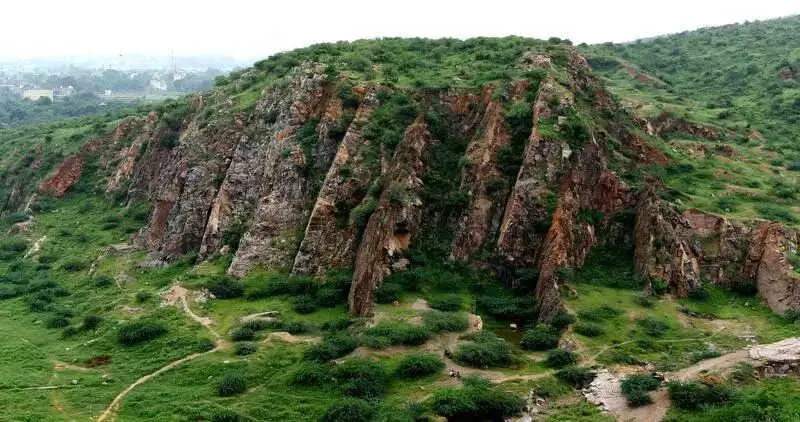
At a seminar in Hisar, a stark warning was issued about the future of the ecologically critical Aravalli mountain range. Advocate Rajesh Jakhar, speaking as the keynote speaker on Sunday, cautioned that implementing a proposed 100-metre criterion to define the Aravalli Hills could result in the loss of protection for nearly half of the fragile landscape.
The Flawed Metric: A Cement Pillar vs. a Living Ecosystem
Addressing the gathering at Sarvodaya Bhawan, Jakhar emphasized that the Aravallis are far more than a collection of hills. He described them as a complex, living ecological system that sustains a vast diversity of life, not a "dry tree" that can be simply cut down and replaced. The range supports 120 species of birds, 31 species of mammals, national parks, grasslands, forests, and vital water streams. "This ecosystem cannot be assessed by the height of a cement pillar," he argued, critiquing the simplistic height-based definition.
Jakhar explained that following a Supreme Court ruling which stated that only hills measuring 100 metres or more would be classified as Aravallis, the Union government had claimed only 2% of the area would be affected. However, he presented studies that starkly contradict this assertion.

Shocking Data: Thousands of Peaks Left Vulnerable
Citing a detailed analysis by the Centre for Science and Environment (CSE) that used Shuttle Radar Topographic Mission (SRTM) data, Jakhar revealed the potential scale of devastation. Applying the 100-metre definition to the entire 31,414 square kilometre Aravalli range would leave 15,589 sq km—approximately 49%—unprotected and open to mining and exploitation. Only 15,825 sq km would retain protected status.
He further bolstered his argument with a Forest Survey of India (FSI) study. This research found that across the 962-km-long range, there are 12,081 peaks. Under the 100-metre rule, only 1,048 of these peaks would qualify for protection, leaving over 11,000 peaks—and the ecosystems they host—completely vulnerable.
A Call for Scientific Definitions and a Warning on Minerals
Jakhar asserted that measuring hill height from its highest face is a flawed methodology. He advocated for more scientific approaches, such as using sea-level measurements or, crucially, slope-based definitions. "If slope angle is considered, even hills as low as 30 metres can be protected," he stated, noting that international mining norms comprehensively factor in slopes, valleys, forests, water bodies, and vegetation.
The advocate also highlighted a key factor driving the threat: the Aravalli range holds significant reserves of valuable minerals like graphite, molybdenum, nickel, lithium, and rare earth elements. This mineral wealth, he suggested, increases the risk of exploitation, especially when policy decisions appear influenced by corporate interests with little regard for long-term environmental consequences.
Concluding with a grave reminder, Jakhar cited Intergovernmental Panel on Climate Change (IPCC) warnings that human activity is pushing nearly 50% of species towards extinction. "In the name of development, we are now threatening human survival itself," he warned, urging for a rethink of policies that could irreparably damage one of North India's most vital natural barriers and ecological hubs.