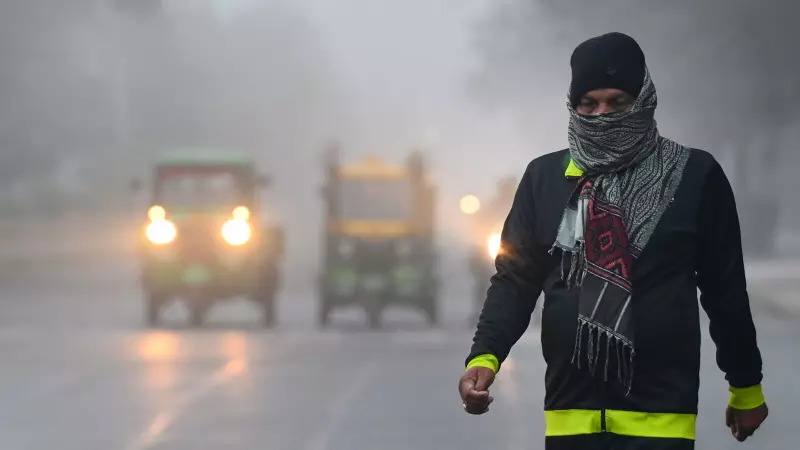
As 2025 draws to a close, North India faces a stark environmental reckoning, framed by a contentious Supreme Court judgment on the Aravalli hills and government data confirming years of unbreathable air. This dual crisis forces a urgent reflection on the region's sustainable future.
The Aravalli Verdict and Its Fallout
The final week of the year saw intense public agitation across Rajasthan, Haryana, Delhi, and Western Uttar Pradesh. The trigger was a Supreme Court order from 20 November 2025, which ruled that only hills 100 metres or higher would be legally classified as part of the Aravalli range. The court accepted the government's argument that a clear definition was needed for administrative ease in formulating development policies.
Environmentalists swiftly condemned the decision, labeling it a 'death warrant' for the range, arguing it threatened up to 90% of the Aravallis. In response, Union Environment Minister Bhupender Yadav clarified that only 0.19% of the range would be open to mining, with assurances for the conservation of the entire ecosystem. Subsequently, on 24 December, the government imposed a ban on any new mining leases in the Aravallis.

This range is ecologically critical, acting as a natural barrier against the expansion of the Thar Desert and fostering the green landscapes of Northern India. Despite this, the region has suffered prolonged neglect.
The Unending Smog: A Data-Driven Reality
Parallel to the Aravalli debate, official data presents a grim picture of atmospheric health. For several consecutive years, residents of North India have not experienced a single day of clean air. The situation is particularly severe in Delhi and the National Capital Region (NCR).
In the past year alone, the most severe stages of the Graded Response Action Plan (GRAP)—GRAP 3 and GRAP 4—were enforced for a staggering 40 days, over a month of extreme pollution measures. The environmental degradation extends to water; the Yamuna river, once a perennial source of fresh water for Delhi, is now polluted to a degree where its water is considered unfit for bathing.
This chronic pollution is catalyzing a significant urban exodus. According to Savills India Research, the demand for a cleaner life is so high that luxury villas in Goa are priced between ₹7 crore and ₹10 crore, rivaling premium apartments in South Delhi or South Mumbai. This shift has driven a 65% year-on-year increase in real estate prices in Goa. Similar trends are visible in other serene locales like Dehradun, Nainital, and Haridwar, as residents of major metros seek refuge.
Echoes of History: Lessons from the Indus Valley
This modern-day flight from polluted cities finds a haunting echo in ancient history. A recent study published in Communications Earth and Environment explores the decline of the advanced Indus Valley Civilization. This society, flourishing six millennia ago, boasted meticulously planned cities like Harappa and Mohenjo-Daro with sophisticated drainage, water purification at sites like Dholavira, and advanced agriculture.
The research suggests that the complexities and pressures of urban life were a key factor in driving populations away from major centers to smaller hamlets, contributing to the civilization's gradual decline. The parallel with today's post-COVID migration trends—observed in India, Europe, and Africa—is striking. Stories of Italian towns like Cammarata and Locana offering free housing to new residents underscore a global pattern of seeking simpler, cleaner living.
As jurist Benjamin N. Cardozo once noted, history illuminates both the present and the future. The converging crises of ecological protection and livability pose the most significant challenge for 2026. Celebrating the 25th year of the 21st century rings hollow without a committed and urgent effort to restore the environment, ensuring the century's golden jubilee can be met with a legacy of health and sustainability.