In a move that has alarmed environmentalists, a recent redefinition of the Aravalli mountain range by the central government, subsequently accepted by the Supreme Court, threatens to remove crucial legal protections from nearly 90% of its expanse. An internal assessment by the Forest Survey of India indicates this change could open up vast stretches of the ancient hills to mining and developmental activities, jeopardizing their irreplaceable ecological role.
The New Definition: A Potential Hammer Blow
The contentious definition, proposed by the Centre on October 13 and accepted by the Supreme Court on November 20, classifies the Aravallis as comprising landforms with an elevation of 100 metres or more above the local relief. Critics argue this narrow criterion excludes the majority of the range's smaller hillocks and degraded sections, which are ecologically vital. Following the court's order, the Centre on Wednesday directed states to comply, ensuring no new mining leases are granted until a sustainable mining management plan is finalized.
However, the court has also accepted the Centre's recommendation to make an exception for critical minerals, setting the stage for potential conflict. The Aravallis are a known repository of metals like lead, zinc, and copper, and critical minerals such as lithium, graphite, and rare earth elements, deemed strategic for energy transition and national security.

More Than Hills: The Aravalli's Priceless Shield
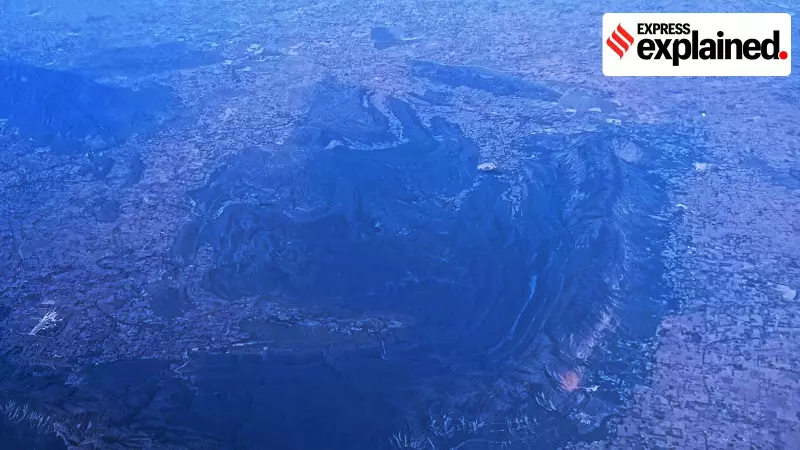
Stretching over 700 km across Gujarat, Rajasthan, Haryana, and Delhi, the billion-year-old Aravallis are among the world's oldest mountain ranges. Despite severe degradation, they perform functions critical to North India's survival.
Firstly, they act as a formidable natural barrier, halting the eastward march of sand from the Thar Desert. Ecologists warn that weakening this shield could have disastrous consequences for air quality in the Delhi-NCR region, already grappling with severe pollution. The hills also influence rainfall patterns, supporting agriculture and drinking water needs.
Secondly, their unique geology is key to water security. Vijay Dhasmana, ecologist and curator of the Aravali Biodiversity Park in Gurgaon, explains that the range's fractured and porous rocks allow rainwater to percolate deep underground, recharging vast aquifers. "This vast but invisible reserve is crucial for the water security of rapidly growing towns and cities such as Faridabad, Gurugram, and Sohna," Dhasmana said. Mining and construction threaten this delicate recharge system.
The range is also a major watershed, separating the drainage systems of the Bay of Bengal and the Arabian Sea, and sustains key lakes like Sambhar and Pushkar.
Biodiversity and Livelihoods at Stake
The Aravallis provide a unique dry deciduous habitat for a rich array of wildlife. The landscape hosts 22 wildlife sanctuaries, including famed tiger reserves like Ranthambore, Sariska, and Mukundra. Species such as leopards, sloth bears, hyenas, and blackbuck depend on these fragmented forests.
Opening smaller hillocks for mining would shrink vital wildlife corridors and accelerate habitat loss. "The ecological richness is rapidly declining... The Aravallis also sustain local livelihoods, and communities depend on fuelwood, fodder, fruits, vegetables, and medicinal plants," Dhasmana added.
The government's own 'Aravalli Green Wall' action plan acknowledges the severe threats: "Mining activities have damaged aquifers, dried up lakes, and reduced the range’s ability to support wildlife." It notes that desertification is exacerbating as sands move eastward, compromising areas like Gurugram and Alwar.
With the new definition in place and pressures from mining and real estate looming, the call for stricter protection of this stressed ecological shield has never been more urgent. The coming months will test the balance between resource extraction and environmental preservation for one of India's most vital natural assets.