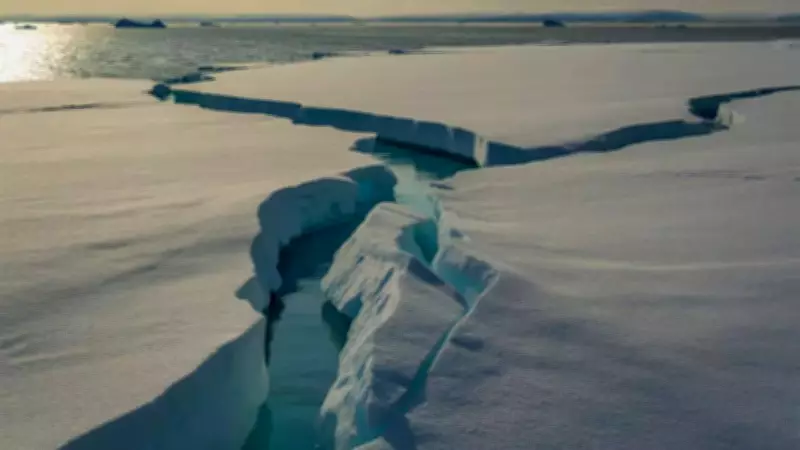
Arctic Climate Shifts from Gradual Warming to Dangerous Extremes
The Arctic region is undergoing a profound transformation that extends far beyond simple temperature increases. Scientists are now observing that this fragile environment is beginning to exhibit new and dangerous behaviors that pose significant threats to its delicate ecosystems. For many decades, researchers primarily monitored average climatic changes across the Arctic—slightly warmer summer seasons, shorter winter periods, and modest increases in rainfall replacing snowfall. However, this conventional understanding has proven incomplete and insufficient for capturing the current reality.
Extreme Weather Events Accelerate Across the Arctic
What matters more today, and what is changing at an alarming pace, is the frequency and intensity of extreme weather phenomena. A comprehensive study analyzed daily and hourly weather data spanning the entire Arctic region from 1950 through 2022. The research focused not merely on temperature readings but on conditions that directly impact plant and animal life with devastating consequences. These include sudden winter thaws, rainfall events that freeze upon snow-covered surfaces, unprecedented heatwaves in traditionally cold areas, and droughts occurring in regions where moisture was once reliable.
The findings reveal that these extreme events are becoming increasingly common, more severe, and more geographically widespread throughout the Arctic. This acceleration has been particularly noticeable over the past three decades, marking a significant departure from historical patterns.

Ecosystems Vulnerable to Sudden Climate Shocks
While many Arctic plants and animals possess some capacity to adapt to slow, gradual warming trends, they lack the resilience to withstand sudden climatic shocks. For instance, a few days of winter rain that subsequently freezes can create an impenetrable ice layer over the ground. This prevents reindeer and other grazing animals from accessing vital food sources while simultaneously suffocating plant life beneath the ice. Entire grazing areas can become non-functional within a single season under such conditions.
Similarly, brief but intense heatwaves can rapidly dry out tundra soils that have evolved over millennia to remain cold and moist. This causes root systems to suffer, halts plant growth, and in some locations leads to vegetation that never fully recovers. The study titled "A new era of bioclimatic extremes in the terrestrial Arctic" demonstrates that these events are no longer rare occurrences. In fact, approximately one-third of Arctic land areas are now experiencing extreme weather phenomena that were essentially nonexistent during the mid-20th century.
Regional Variations in Arctic Climate Changes
The Arctic does not represent a single, uniform climate system. The research divided the region into six distinct climate types, each exhibiting unique transformation patterns. High Arctic islands are experiencing more powerful heatwaves, even though overall summer warmth remains constrained by persistent sea ice. Continental regions such as Siberia are confronting stronger combinations of drought and heat—a particularly damaging pairing. Coastal areas of Europe and Scandinavia are witnessing increased rain-on-snow events and winter warming episodes.
While mild winters might sound benign, they often prove most destructive to Arctic ecosystems. Some regions demonstrate significant alterations in seasonal patterns, while others show sudden spikes in extreme events. In certain locations, both phenomena are occurring simultaneously, creating what researchers identify as climate risk hotspots requiring special attention.

A New Climate Regime Emerges in the Arctic
One of the study's most crucial findings reveals that many extreme weather events have only begun appearing in recent years. These are not gradual intensifications of existing patterns but represent entirely new phenomena. This means Arctic ecosystems have no historical experience with these conditions, no inherent resilience mechanisms, and insufficient time to develop adaptive responses. This fundamental shift is why researchers conclude the Arctic has entered what they term a new era of bioclimatic extremes—characterized not merely by warmer temperatures but by fundamentally different climatic behaviors.
Implications for Arctic's Future
The research carefully avoids making specific predictions about exact outcomes, maintaining scientific caution in its approach. However, the implications are unmistakably clear. Ecosystem changes already observable across the Arctic—including vegetation greening and browning patterns, along with species distribution shifts—may be driven less by gradual warming and more by sudden damage from extreme weather events. If these events continue accelerating at rates observed in recent decades, the Arctic will progressively move into increasingly unfamiliar climatic territory.
These transformations will occur unevenly across different regions and at speeds that exceed the adaptive capacities of many Arctic ecosystems. The study underscores the urgent need for continued monitoring and research to better understand and potentially mitigate the consequences of this new climate reality in one of Earth's most vulnerable regions.