

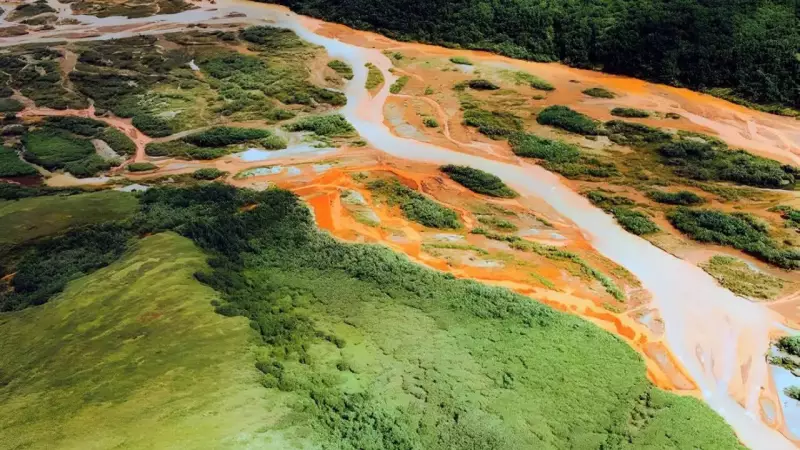
A dramatic and unsettling transformation is unfolding in the remote wilderness of northern Alaska. Several rivers and streams, once clear and pristine, have taken on a shocking orange hue, a visible symptom of a deeper environmental shift driven by climate change. This discolouration, recently detailed in a significant study published in Nature Communications Earth and Environment, is not a surface-level anomaly but a direct chemical consequence of thawing permafrost releasing long-trapped metals into the waterways.
The Hidden Cache: How Permafrost Acts as a Natural Vault
For millennia, the permanently frozen ground known as permafrost has acted as a natural seal, locking away minerals and metals within its icy sediments. This frozen barrier has contained substances like iron, zinc, copper, and nickel, preventing them from interacting with the environment. However, a prolonged period of rising Arctic temperatures is breaking this seal. As the permafrost thaws, these mineral-rich soils are exposed to oxygen, water, and microbes for the first time in centuries.
The result is a rapid chemical reaction. Iron-bearing minerals, in particular, oxidise upon exposure—a process similar to the rusting of metal. This oxidation dissolves the iron into the meltwater and groundwater, which eventually feeds into rivers. The suspended rust-coloured particles are what give the water its distinctive and alarming orange colour.

Beyond Colour: The Chemical and Ecological Domino Effect
The change is far more than cosmetic. The mobilisation of metals fundamentally alters the water's chemistry, increasing its acidity. Streams that were once low in minerals are now becoming saturated. Crucially, this phenomenon is not linked to local industrial pollution or mining, making it a diffuse and landscape-scale challenge that is difficult to control or reverse.
The ecological implications are severe. Fish species adapted to cold, clean waters face stress from increased acidity and metal content. Iron can clog fish gills, and as it settles, it can smother crucial spawning grounds. Invertebrates, the foundation of freshwater food webs, are highly sensitive to such chemical changes, risking a cascade effect throughout the ecosystem.
The threat extends to human communities. Indigenous and rural populations across the Arctic depend on these rivers for drinking water, fishing, and transportation. While iron itself is not highly toxic, its presence signals the concurrent release of other trace metals, some of which can be poisonous in high concentrations. With minimal water treatment infrastructure in these isolated areas, the degradation of natural water quality poses a direct and growing health concern.
A Climate Feedback Loop Accelerating Change
The rusting rivers of Alaska are a stark indicator of climate feedback loops accelerating across the Arctic. Thawing permafrost causes ground subsidence, which can divert water flow and create new channels, exposing even more mineral surfaces. Warmer summers and increased rainfall further enhance the transport of metals from soils into the aquatic network.
Researchers warn that this discolouration could become a widespread feature of a warming Arctic. They are now employing satellite imagery, field sampling, and chemical modelling to identify vulnerable watersheds before visible changes occur. The orange hue is merely the most visible sign of a profound re-engineering of Arctic freshwater systems, where the interplay of thawing ground, shifting chemistry, and ecosystem health will have lasting consequences far beyond a change in colour.
The study underscores that these changes are directly tied to long-term permafrost degradation, not short-term weather events, marking a likely permanent alteration to the region's hydrology. As monitoring efforts intensify, the vivid transformation of these rivers serves as a clear, flowing signal of the hidden changes climate change is unlocking from the frozen earth.






