Bahrain's National Oil Company Invokes Force Majeure Following Iranian Attack on Major Refinery
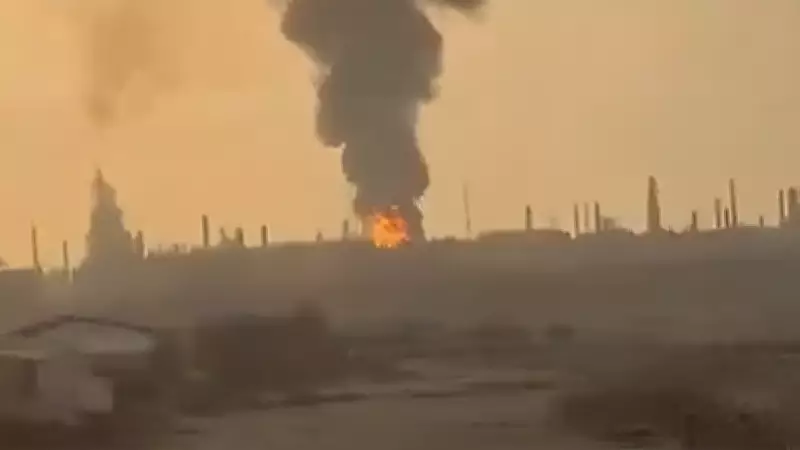
In a significant development that underscores the escalating volatility in the Middle East, Bahrain's state-owned oil and gas company, Bapco, officially declared force majeure on its shipments this Monday. This legal move comes directly in response to a targeted Iranian strike that ignited a substantial fire at the nation's largest oil processing facility, the Al-Ma'ameer refinery complex. The declaration effectively releases the company from its contractual delivery obligations due to what it describes as "extraordinary circumstances" stemming from the ongoing regional conflict.
Attack Triggers Fire and Material Damage at Key Facility
The Bahrain News Agency, the official state media outlet, reported that the strike resulted in a significant outbreak of fire at the Al-Ma'ameer facility, leading to confirmed material damage. Emergency response teams were swiftly deployed to the scene and successfully managed to contain the blaze. Importantly, initial assessments indicate that there were no casualties reported from the incident. The agency explicitly attributed the aggression to Iran, marking a direct escalation in the simmering tensions between Gulf states and Tehran.
"Our operations have been affected by the ongoing regional conflict in the Middle East and the recent attack on our refinery complex," the company stated through the official news channel. This attack represents the latest in a concerning series of assaults on critical energy infrastructure throughout the Gulf region, a pattern that has intensified alongside the widening geopolitical standoff involving Iran, Israel, and the United States.

Domestic Supply Security Maintained Despite Export Disruption
Despite the severe disruption to its export capabilities, Bapco was quick to reassure the Bahraini public and market observers. The company emphasized that all domestic fuel and energy needs within the kingdom remain fully secured and will continue without any interruption. This continuity is being supported by proactive contingency plans and strategic reserves that the company had in place. The force majeure declaration specifically applies to international shipments and contractual obligations with foreign partners, not to the internal supply chain.
Broader Regional Impact and Global Market Reaction
The incident occurs against a backdrop of severe regional strain. Concurrently, Iran's increasing military control and surveillance over the Strait of Hormuz have brought tanker traffic through this crucial maritime chokepoint to a near standstill. This strait serves as the primary passage between the Arabian Gulf and the Gulf of Oman, facilitating the transport of approximately one-fifth of the entire world's daily oil supply. The compounding disruptions are sending shockwaves through global energy markets.
The international benchmark for oil prices, Brent crude, reacted sharply to the news, surging past $114 per barrel on Monday. This price point represents an increase of roughly 60 percent compared to levels observed when the initial rounds of strikes between Israel, the U.S., and Iran began. The market's volatile response highlights the fragility of global energy security in the face of persistent Middle Eastern instability.
This declaration of force majeure by a national oil company is a stark indicator of how regional conflicts are directly impacting global economic fundamentals. It underscores the interconnected nature of Gulf security and worldwide energy stability, with every attack on infrastructure posing a direct threat to the flow of resources that power economies across the globe.