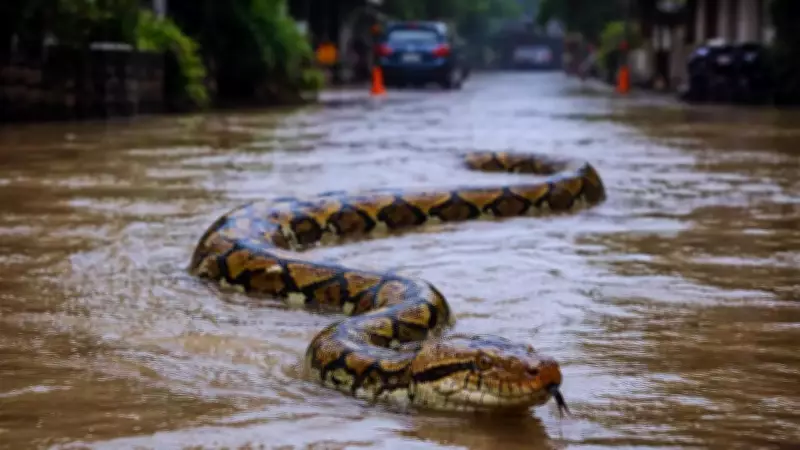
Bali Submerged: Floodwaters Bring Massive Pythons Into Residential Streets
After nearly three days of relentless rainfall, extensive regions of Bali have been transformed into vast waterways, with roads resembling rivers and numerous residential neighborhoods partially submerged. Amidst this widespread inundation, residents have reported a startling phenomenon: enormous snakes navigating through the floodwaters.
Python Sightings Amidst Rising Waters
Videos shared by local inhabitants on social media platforms, including a notable post from @nexta_tv on X, depict massive pythons swimming through flooded streets, villa courtyards, and residential lanes. Some of these reptiles were observed calmly traversing waterlogged areas as the rain continued to pour down.
Why are these snakes appearing in floodwaters? Bali is home to several species of large snakes, most prominently the reticulated python, which ranks among the longest snake species globally. Reticulated pythons are proficient swimmers, and during heavy rainfall and flooding events, they are compelled to evacuate their natural habitats in search of higher ground, shelter, or food sources.

As water levels surge, these snakes are displaced from vegetation and other shelters, often ending up in temporarily flooded human habitations. Such sightings are not unusual during severe floods in tropical regions, as snakes, like many other animals, are forced out by rapidly rising waters and may appear in residential spaces until conditions normalize.
Severe Flooding Across the Island
Bali is currently experiencing the peak of its rainy season, characterized by intense downpours, high humidity, and significant flooding in low-lying areas. The wet season officially spans from November to March, but this year has witnessed particularly severe weather conditions.
The torrential rains have elevated water levels sufficiently to inundate villas, homes, and streets. Reports indicate that in multiple towns and villages, parked motorcycles have been partially submerged, and key roadways have become impassable.
According to a report published by The Bali Sun on February 25, weather alerts have been issued across all major tourist destinations, including:
- Kuta
- Legian
- Jimbaran
- Seminyak
- Uluwatu
- Nusa Dua
- Sanur
- Canggu
- Ubud
Rescue teams have deployed rubber boats to evacuate residents from flooded neighborhoods. Emergency personnel are actively assisting affected communities and securing vulnerable zones. Officials have strongly advised both residents and tourists to avoid walking or driving through flooded streets due to significant safety risks.
Despite the widespread python sightings, authorities have reported no snakebite incidents thus far.
Weather Warnings and Broader Implications
As detailed in The Bali Sun report, Indonesia’s Meteorology, Climatology and Geophysics Agency (BMKG) has issued alerts for several districts in and around Bali. Indonesia, an archipelago situated along the Pacific "Ring of Fire," frequently encounters natural disasters such as floods, landslides, earthquakes, and volcanic eruptions. The country's tropical climate makes it particularly susceptible to flooding, especially during monsoon seasons.
While the images of swimming pythons have captured global attention, they also highlight a more extensive issue: the impact of extreme weather on both human and animal habitats. Floods not only disrupt infrastructure and tourism-dependent economies like Bali's but also displace animals that typically avoid human contact.
As rainfall persists, authorities are advising people to:
- Remain indoors whenever possible
- Avoid flooded areas entirely
- Report any animal sightings to officials rather than attempting to handle them personally
The ongoing situation underscores the urgent need for preparedness and adaptive measures in regions vulnerable to climate-induced natural disasters.