

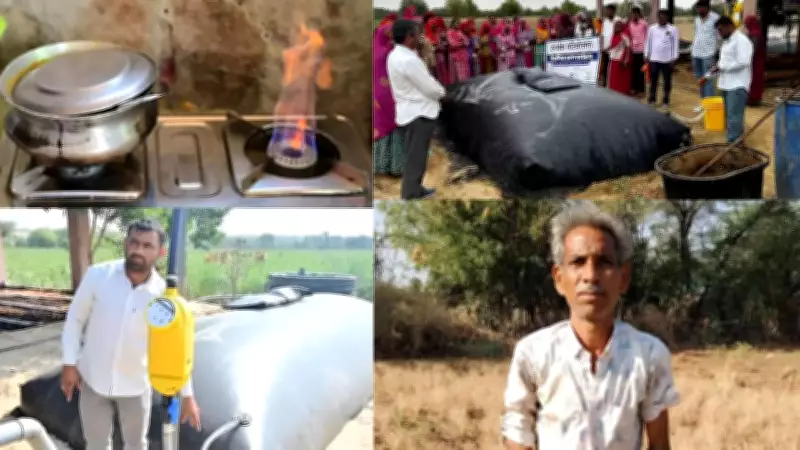
Barmer Villagers Beat LPG Crisis with Biogas from Cattle Dung
As the ongoing Iran-Israel conflict triggers an LPG supply crisis affecting India and other nations, a remarkable story of self-reliance has emerged from the border district of Barmer in Rajasthan. Here, more than 50 families have turned to biogas produced from cattle dung as a sustainable and eco-friendly cooking fuel, bypassing the shortages plaguing conventional gas cylinders.
A Farmer's Four-Year Success Story
In Janpaliya village, progressive farmer Hariram has been using a biogas plant for the past four years. All meals in his household are cooked using gas generated from cow and buffalo dung. He installed the plant with a subsidy of ₹40,000, and after additional financial assistance from an NGO, his personal expenditure was only around ₹15,000 to ₹17,000.
The biogas is supplied directly to the kitchen through a pipeline, eliminating the need to book or transport LPG cylinders. "While the country faces a gas shortage, my household remains unaffected," Hariram stated proudly. He also utilizes the leftover slurry from the plant in his fields for gardening and farming, which has replaced chemical fertilizers entirely.

Widespread Adoption Across Villages
Similar biogas plants have been set up in numerous villages across Barmer district, including:
- Ishrol, Leelsar, Kaparau, Alamsar
- Mahavir Gaushala (Chohatan), Sedwa, Bisasar, Bhanwar
- Bhuniya, Gudamalani, Adel, Arjun ki Dhani
- Dimdi, Sindhari, Sawau Padam Singh, Baytu, Nokhra, and Dhorimanna
Explaining the process, Hariram detailed that a mixture of dung and water is fed into an airtight tank. In the absence of oxygen, bacteria decompose the organic matter and produce methane gas, which is then piped to the kitchen for cooking.
Environmental and Agricultural Benefits
Dr. Narayan Singh, Joint Director of the Animal Husbandry Department, emphasized that biogas is not only a low-cost fuel but also environmentally friendly. "In rural areas where livestock rearing is common, this technology can significantly reduce dependence on LPG," he noted.
He added that the slurry produced from biogas plants is rich in nitrogen, phosphorus, and potassium, which enhances soil fertility. Many farmers reported that this organic byproduct has effectively replaced chemical fertilizers like urea and DAP, performing as efficiently as vermicompost.
Accessibility and Practicality
Local residents highlighted that even households with just two cattle can establish a biogas plant. The gas generated meets kitchen needs, while the residual waste proves highly beneficial for agricultural use. This initiative underscores how rural innovation and traditional resources can offer practical solutions to modern energy challenges, promoting sustainability and self-reliance in the face of global disruptions.
The story from Barmer serves as a powerful example of how communities can leverage local resources to achieve energy independence, reduce environmental impact, and enhance agricultural productivity, all while navigating the uncertainties of international conflicts affecting fuel supplies.






