Belagavi Tree Felling Scandal: No Official Action After Week of Public Outrage
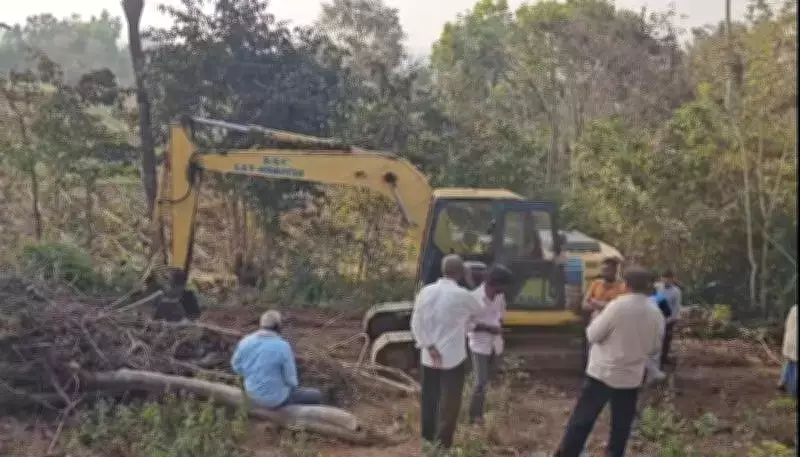
More than a week has passed since the massive tree felling operation in Badal Ankalagi village was exposed, yet authorities have failed to initiate any meaningful action against the responsible officials or contractors. The extensive destruction has ignited widespread anger among environmental activists, local farmers, and social organizations across the region.
Solar Project Triggers Environmental Destruction
The large-scale deforestation occurred on revenue department land within the Belagavi Forest Range, where numerous trees were cleared to make way for a solar plant project. Environmentalists have pointed fingers at both the revenue and forest departments, emphasizing that forest officials have a fundamental duty to protect natural resources regardless of land ownership status.
"Even sandalwood trees were reportedly cut down and removed from the site," according to local activists who have demanded an immediate and impartial investigation into the matter. The Bharatiya Janata Party (BJP) has joined the chorus of criticism, questioning how such extensive deforestation could proceed without any oversight or intervention from authorities.

Official Response Falls Short
Deputy Conservator of Forest Kranti NE confirmed to media that a First Information Report (FIR) has been registered and one accused person has been arrested in connection with the incident. "The assistant conservator of forest issued a notice to the Belagavi tahsildar and range forest officer seeking an explanation," he stated. However, activists argue these measures represent only superficial responses to a much deeper systemic problem.
Pattern of Unaccountability in Belagavi Division
The Badal Ankalagi incident is not an isolated case but rather part of a disturbing pattern of unaddressed violations within the Belagavi forest division. Recent months have witnessed multiple alleged irregularities where no accountability was established:
- No disciplinary action was taken following the electrocution deaths of two elephants in the Nagargali range in November 2025
- The death of 32 blackbucks at Bhutaramanahatti zoo raised serious questions about supervision and accountability
- Renovation works at the Belagavi Forest Complex and Inspection Bungalow costing over Rs 1 crore proceeded without proper tender procedures
- Vehicles were procured using Corporate Social Responsibility (CSR) funds from a private wind energy company currently facing allegations of Forest Act violations
- Authorities failed to regulate trespassing at Vajrapoha falls within the eco-sensitive zone
Additional Concerns and Violations
Further investigations have revealed additional questionable activities within the division:
- Alleged sub-standard entrance arch work at Hemmadaga in Bhimgad Wildlife Sanctuary
- Payment of relocation compensation to ineligible beneficiaries in Talewadi
- Illegal drone operations at Vajrapoha and Chikhale Falls within protected areas
Systemic Failures and Lack of Political Will
Despite repeated representations to higher authorities, including Forest Minister Eshwar Khandre, activists claim that responses have largely remained on paper with no visible disciplinary proceedings actually taking place. Wildlife conservationist Giridhar Kulkarni highlighted how weak implementation of the Transfer Counselling Management System (TCMS) within the department has contributed to widespread indiscipline and lack of accountability.
"A senior officer in the Circle has continued in the same post for four years," Kulkarni noted, raising concerns about the concentration of authority and weakened internal checks that enable such violations to occur repeatedly without consequence.
The Belagavi tree felling scandal has exposed not just an environmental crime but a deeper crisis of governance within Karnataka's forest management system, where accountability appears to be systematically avoided despite clear evidence of wrongdoing.