

Bengal Grapples with Escalating Lightning Fatalities Amid Climate Crisis
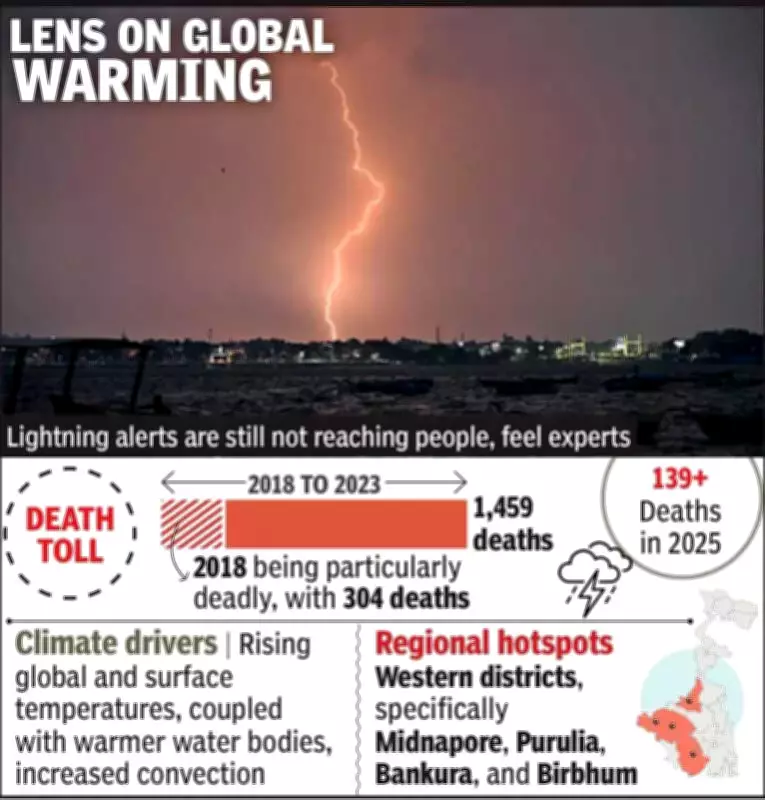
Kolkata: The state of Bengal is confronting a dire public safety challenge as lightning strikes, intensified by climate change, result in a staggering loss of life. Recent data reveals that over 139 fatalities have been recorded in 2025 alone, with a total of 1,459 deaths reported between 2018 and 2023. Multiple scientific studies have identified Bengal as a significant lightning hotspot within India, highlighting the urgent need for intervention.
Minister Calls for Enhanced Prevention Strategies
On Wednesday, Javed Ahmed Khan, the disaster management and civil defence minister, expressed profound concern over the rising death toll. Speaking at a Unicef workshop focused on climate-induced disaster risk reduction, Khan emphasized that while advancements in forecasting, evacuation protocols, and the establishment of multi-purpose cyclone shelters have successfully reduced casualties from storms and floods, lightning-related deaths remain persistently high.
"Early lightning alerts are still not reaching people in the fields, on the roads, or in rivers in time to prevent fatalities," Khan stated. He noted that despite developing robust standard operating procedures for evacuations and building numerous disaster shelters, finding effective ways to prevent lightning deaths is a critical next step. "We now have to find our way out in preventing lightning deaths," he added, urging a more targeted approach.

Scientific Insights into the Lightning Surge
Scientists attribute the increase in lightning incidents to global warming. Habibur Rahaman Biswas, a scientist from the India Meteorological Department, explained that rising global and surface temperatures, along with warming water bodies, are destabilizing the atmosphere. "This instability leads to the formation of more intense thunderstorms and frequent lightning activity," he said. Nationally, lightning accounts for more than 35% of all deaths caused by natural hazards, underscoring its widespread impact.
Experts Highlight Communication and Awareness Gaps
Experts at the workshop stressed that infrastructure and forecasting improvements alone are insufficient. Last-mile communication, community awareness, and behavioral changes are essential to reducing fatalities in a warming world. Officials observed that climate change is reshaping Bengal's risk profile, with previously rare events like prolonged heatwaves, intense hailstorms, and extreme rainfall becoming more frequent.
Rajesh Sinha, principal secretary of disaster management and civil defence, described Bengal as a "microcosm of India" in terms of disaster exposure. "Bengal faces almost every type of disaster that the country does. This means our mitigation model can serve as a national template — it only needs to be scaled up," he remarked, suggesting that lessons from Bengal could benefit broader national strategies.
Additional Environmental Concerns Raised
The workshop also addressed other environmental issues, such as frequent oil spills in the Bay of Bengal caused by unseaworthy barges. Indian Coast Guard DIG Asish Sinha highlighted the ongoing ecological damage, noting, "We are witnessing serious ecological damage on a daily basis." This adds to the complex challenges faced by the region in managing climate-related disasters.
In summary, Bengal's battle against lightning deaths underscores the critical intersection of climate change and public safety, calling for immediate, coordinated efforts to enhance early warning systems and community preparedness.






