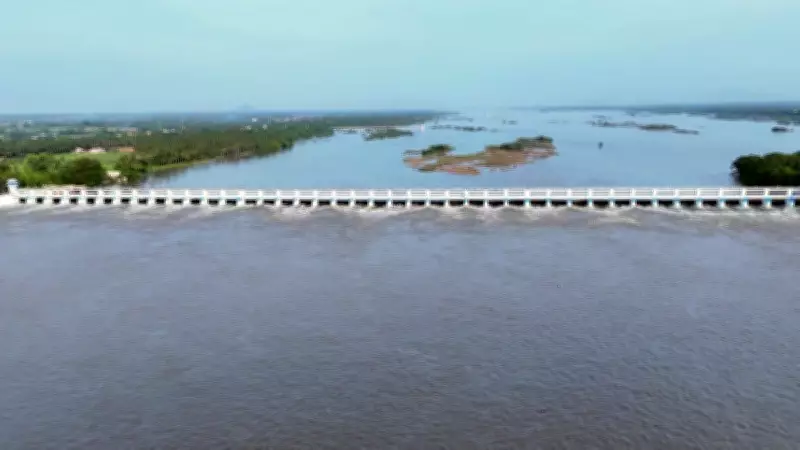
Bengaluru, India's tech hub, depends on the Cauvery River for 60% of its water supply, even though the city has several reservoirs. This reliance stems from rapid urbanization, population growth, and inconsistent rainfall that have rendered local water sources insufficient.
Why Cauvery is Crucial
The Cauvery River, located about 100 kilometers from Bengaluru, provides approximately 1,450 million liters per day (MLD) to the city. In contrast, local reservoirs like Thippagondanahalli and Hesaraghatta contribute only around 200 MLD combined. According to the Bangalore Water Supply and Sewerage Board (BWSSB), the city's total water demand is about 2,100 MLD, meaning the Cauvery supplies nearly 70% of the required water.
Historical Context
In the 1970s, Bengaluru relied heavily on groundwater and local lakes. However, rapid urbanization led to the loss of over 90% of its lakes, reducing groundwater recharge. By the 1990s, the city began drawing water from the Cauvery, with successive projects increasing capacity. The first Cauvery Water Supply Scheme in 1974 brought 135 MLD, while the fifth stage, completed in 2021, added 775 MLD.

Impact of Urbanization
Bengaluru's population has grown from 3 million in 1981 to over 12 million today, straining water resources. The city's built-up area expanded from 69 sq km in 1973 to over 1,200 sq km in 2020, reducing percolation zones. As a result, groundwater levels have dropped by 50% in many areas, forcing dependence on the Cauvery.
Challenges and Future
The Cauvery is a shared resource among Karnataka, Tamil Nadu, Kerala, and Puducherry, leading to disputes. Climate change has also reduced rainfall in the Cauvery basin, affecting supply. BWSSB officials have stated that without the Cauvery, Bengaluru would face a severe water crisis. The city is exploring alternatives like treated wastewater reuse and rainwater harvesting, but these currently meet only a fraction of demand.
According to a 2023 report by the Bengaluru Water Supply and Sewerage Board, the city's water demand is projected to reach 2,500 MLD by 2030, necessitating further augmentation from the Cauvery or alternative sources.