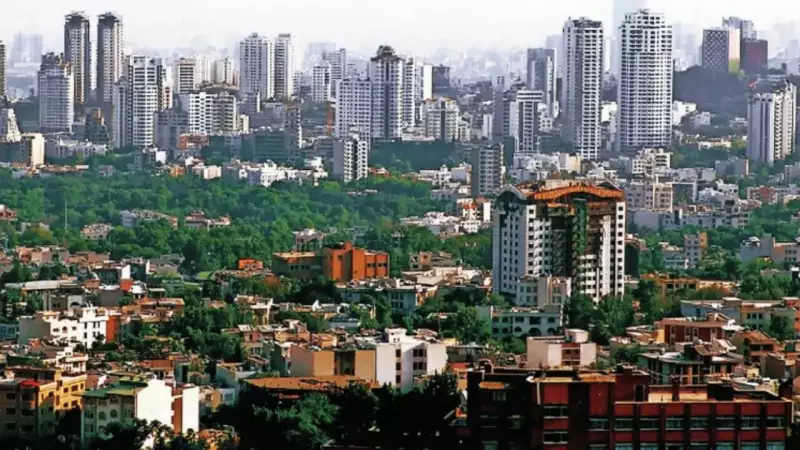
The future identity of Bengaluru hangs in the balance as the city approaches 2035. Will it remain a metropolis grappling with relentless traffic, shrinking water bodies, and ecological stress, or can it reinvent itself as a model of sustainable, people-centric urban growth? The answer, according to urban planners, researchers, and community advocates, lies in the critical choices being made today, from individual neighbourhoods to overarching policy frameworks.
Reimagining Mobility and Road Infrastructure
A road is not merely asphalt and paint; it is the lifeline connecting livelihoods, memories, and daily experiences. Yet, a fundamental truth is often overlooked: Bengaluru's roads are currently not walkable, safe, or inclusive for all citizens. Abdul Aleem, President of Changemakers of Kanakapura Road, emphasises that governments must recognise roads are not meant for cars alone. Streets must be designed for everyone – children, the elderly, persons with disabilities, cyclists, and pedestrians. For Bengaluru to progress, it must first ensure dignified movement for all.
By 2035, significant advancements in road infrastructure are anticipated. Investments in white-topping, elevated corridors, scientific junction redesign, and integrated mobility corridors are expected to enhance durability and streamline traffic flow. However, Unni Krishnan, a member of the Jalahalli Residents Welfare Association (RWA), notes that the city's growth and rising vehicle numbers will demand continuous adaptation. The success of these efforts hinges on smarter traffic systems, better inter-agency coordination, and stronger integration with public and shared transport. Sustained action could finally lead to an efficient, predictable, and commuter-friendly road ecosystem.

Building Climate Resilience and Sustainable Habitats
Bengaluru is already feeling the heat of climate change, having warmed by 2°C over the past three decades – a clear sign of the Urban Heat Island effect. With over 2,000 apartment complexes and 10,000 commercial buildings, and these numbers set to rise sharply, the city is struggling with climate stress. Srinivas Ravindra, a researcher at the Centre for Sustainable Technologies, warns that Bengaluru has exceeded sustainability limits in water, roads, waste, and energy. Depleting green cover, especially on the periphery, is alarming. The way forward requires infrastructure guided by sustainability indicators, not traditional master plans that ignore ecological boundaries.
The vision for 2035 involves a dramatic transformation of the built environment if climate resilience becomes a central priority. Buildings could be cooler, greener, and designed for efficiency. Features like solar rooftops, rainwater harvesting, food forests, and native gardens must become standard. The use of low-carbon materials and passive design can cut energy demand, while intelligent facades on large buildings may even generate surplus energy. Swarna Venkatraman, a member of Change Indiranagar, advocates for neighbourhoods with permeable surfaces to recharge groundwater and reduce flooding. Every locality should steward a carbon sink, be it a mini-forest, lake, or arboretum. With strong enforcement and political will, Bengaluru can shift from chaotic, carbon-heavy urbanisation to a model of sustainable growth.
Harnessing Water Networks and Strengthening Governance
By 2035, Bengaluru has the potential to become a global model for water-positive urbanism, but only if its raja kaluves (stormwater drains) are treated as the super-infrastructure of the future. Naresh Narasimhan, an architect and urban planner, believes these natural networks form the city's ecological backbone. Restored as green corridors, they can hold monsoon flows, cool neighbourhoods, support biodiversity, and strengthen pedestrian and cycling networks, turning ecological risk into resilience.

Ram Prasad, founding member of Friends of Lakes, adds that by 2035, stormwater drains must run purely with rainwater and serve as powerful flood-mitigation systems, doubling as vibrant public spaces. Every drain must be desilted, interconnected, and treated as a rainwater harvesting asset, with zero sewage flow. Critically, the Vrishabhavathi River must be restored and honoured as a living river system, not a forgotten drain.
Underpinning all these changes is the urgent need for governance reform. Vishnu Prasad, a member of the Save Bellandur Forum, points out that nearly 90% of infrastructure projects are stalled due to legal and land conflicts, as seen with delayed CDP 2015 projects on the IT Corridor. Pragmatic land acquisition reforms are essential. The creation of the Greater Bengaluru Authority (GBA) and B-Smart Infrastructure Ltd (B-Smile) marks a shift towards specialised, mission-focused governance. RK Misra, an urban expert, states that by 2035, Bengaluru's success will depend on deepening these reforms—ensuring strong metropolitan planning, dependable infrastructure execution, and citizen-driven decentralisation for the city of 1.3 crore people.
The Soul of the City: Public and Cultural Spaces
Public spaces—parks, museums, playgrounds, and footpaths—define a city's soul, yet Bengaluru lacks a clear master plan to create and preserve them. Vinod Jacob, an urbanist, argues that to build world-class open spaces, the government must actively involve citizens to ensure accessibility, inclusivity, and a sense of belonging. Continuous public engagement is key to turning spaces into vibrant community assets.
Despite threats from over-concretisation, a flourishing cultural ecosystem offers hope. Institutions like Ranga Shankara, Jagriti, and MAP, along with festivals such as the BLR Lit Fest, Karaga, and Kadalekai Parishe, have strengthened the city's cultural heartbeat. V Ravichandar, an urban expert, concludes that a collaborative effort between Samaaj, Bazaar, and Sarkar is needed to enhance inclusivity and expand the social, artistic, and cultural life that binds Bengaluru together, shaping its identity for 2035 and beyond.