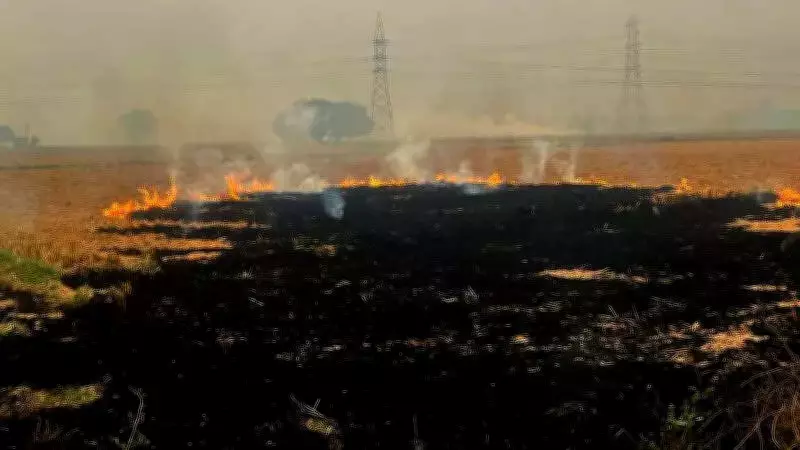
Bhiwani District Administration Implements Comprehensive Action Plan to Curb Stubble Burning
In a decisive move to address environmental concerns, the Bhiwani district administration in Haryana has launched a detailed action plan aimed at preventing incidents of stubble burning across the region. This initiative comes in direct response to directives issued by the National Green Tribunal (NGT) and the Commission for Air Quality Management, highlighting the urgency of tackling air pollution at its source.
Multi-Tier Monitoring Committees Established
Acting on official instructions, Deputy Commissioner Sahil Gupta has spearheaded the formation of multi-tier monitoring committees designed to ensure effective surveillance and enforcement. These committees are structured at four distinct levels to cover the entire district comprehensively.
At the district level, a high-powered committee chaired by the Deputy Commissioner will oversee the entire campaign. This committee includes key officials such as the Superintendent of Police, District Revenue Officer, District Development and Panchayat Officer, Regional Officer of the Haryana State Pollution Control Board, Deputy Director Agriculture, and the Assistant Agricultural Engineer. Their responsibilities encompass coordination, monitoring, and regular review of the anti-stubble burning efforts.

Moving to the sub-divisional level, the Sub-Divisional Officer (Civil) has been appointed as the nodal officer. This committee comprises the Deputy Superintendent of Police, Tehsildar, Sub-Divisional Agriculture Officer, and representatives from the Pollution Control Board. Their role involves regular monitoring and reporting from the field to ensure ground-level implementation.
Ground-Level Enforcement and Farmer Engagement
At the block level, monitoring committees consist of the Naib Tehsildar, Block Development and Panchayat Officer, Block Agriculture Officer, and the concerned Station House Officer or Police Chowki In-charge. These teams are tasked with conducting on-ground inspections to enforce compliance with environmental norms strictly.
The most grassroots level involves village committees, which include ADO/BTM/ATM/supervisors, Patwari, Panchayat Secretary, police representatives, and the Sarpanch or Numberdar. These committees play a crucial role in directly coordinating with farmers, promoting awareness about sustainable practices, and ensuring timely reporting of any violations.
Strict Directives and Accountability Measures
Deputy Commissioner Sahil Gupta has issued clear directives to all committees, emphasizing the need for continuous vigilance and immediate reporting of stubble burning incidents. He has mandated prompt action against violators, with regular reviews at the district level to assess progress. Accountability will be fixed for any negligence on the part of officials or staff, underscoring the administration's commitment to this cause.
The district administration has warned that violators will face severe consequences, including penalties, FIRs, and legal action under the Environmental Protection Act and other applicable provisions. This strict stance aims to deter non-compliance and protect air quality.
Promoting Alternative Stubble Management Practices
In parallel with enforcement, efforts are underway to educate and assist farmers. Deputy Director of Agriculture, Vinod Phogat, stated that farmers are being actively sensitized about alternative stubble management practices. Awareness campaigns are spreading information on the use of machines such as Super SMS and Happy Seeder, along with details about government subsidy schemes designed to make these alternatives more accessible.
This holistic approach combines stringent monitoring with supportive measures, aiming to reduce stubble burning effectively and improve air quality in the region.