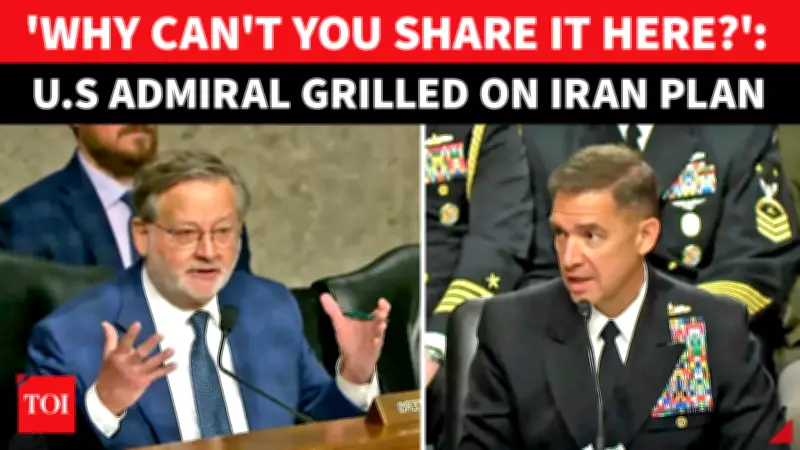
A tense exchange unfolded during a U.S. Senate hearing as Senator Gary Peters pressed CENTCOM chief Admiral Brad Cooper over the military's preparedness for a potential closure of the Strait of Hormuz. Peters questioned why U.S. minesweepers were not pre-positioned in the Middle East despite advance planning and public concerns over limited unmanned mine-clearing capabilities. Referring to the retirement of four minesweepers previously stationed in the region, Peters asked whether the U.S. had weakened its readiness. Cooper declined to discuss operational details in an open session, citing classified concerns, but maintained that the U.S. still possessed 'sufficient' mine-clearance capabilities in the theater.
Background of the Hearing
The Senate hearing focused on U.S. military posture in the Middle East amid rising tensions with Iran. Senator Peters, a Democrat from Michigan, expressed frustration over the lack of transparency regarding the Pentagon's strategy for ensuring freedom of navigation through the Strait of Hormuz, a critical chokepoint for global oil shipments. He specifically pointed to the retirement of four minesweepers that had been stationed in the region, which he argued may have reduced the Navy's ability to counter Iranian naval mines.
Cooper's Response
Admiral Cooper, the head of U.S. Central Command, responded by stating that operational details are classified to protect national security. He assured the committee that the U.S. military maintains 'sufficient' mine-clearance capabilities in the theater, though he did not elaborate on the specific assets or plans. Cooper emphasized that the military continuously assesses threats and adjusts its posture accordingly.

Strategic Implications
The exchange highlights ongoing concerns about U.S. readiness in the Persian Gulf. Iran has repeatedly threatened to close the Strait of Hormuz in response to sanctions or military action. The retirement of minesweepers has raised questions about whether the U.S. Navy has prioritized other capabilities over mine countermeasures. Experts note that unmanned systems are increasingly used for mine clearance, but their effectiveness in the challenging waters of the Gulf remains debated.
Political Reactions
Senator Peters' questioning reflects broader bipartisan concerns about the administration's Iran strategy. Some lawmakers have called for a more transparent discussion of military plans, while others support keeping operational details confidential. The hearing underscores the delicate balance between congressional oversight and operational security.