

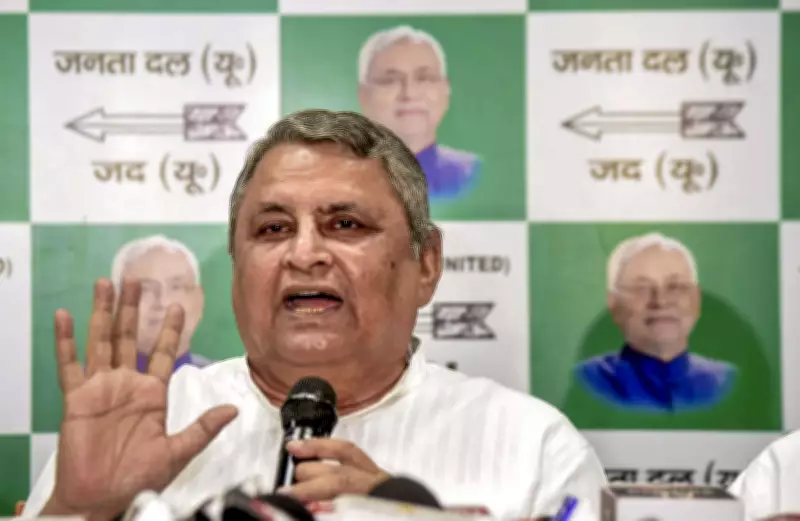
Deputy Chief Minister Vijay Kumar Choudhary on Sunday stated that the Bihar government treats climate change as a serious and sensitive issue, emphasizing that the newly established Bihar Green Climate Fund (BGCF) will play a crucial role in expanding the state's green cover.
Press Conference Highlights
Speaking to reporters at a press conference at the JD(U) office in Patna, Choudhary explained that the fund reflects the government's commitment to tackling climate change and strengthening long-term environmental action. The BGCF, created under the leadership of Chief Minister Samrat Choudhary, aims to support initiatives that will increase Bihar's green cover in the coming years.
According to the Deputy CM, the fund demonstrates how seriously the state government is approaching the challenge at a time when climate impacts are being felt globally and solutions are being debated at international forums.

Revenue Streams for the Fund
Choudhary detailed the proposed revenue sources for the BGCF:
- A 0.25% cess on the total value of bids and agreements across all state works departments
- A 0.5% cess on sand and gravel mining royalties
- A 1% cess on registration fees of new vehicles, with exemptions for electric vehicles
The corpus will also be supported by voluntary contributions from the public and corporate social responsibility (CSR) funding from industries.
Proactive Approach
Calling the government's approach proactive, the Deputy CM said Bihar's efforts to contain climate change were exemplary in the current global context. He recalled former Chief Minister Nitish Kumar's environmental initiatives, particularly the 'Jal-Jeevan-Hariyali Abhiyan' launched in 2019, which he described as a successful model for climate action. Nitish Kumar launched the mission after extensive consultations with legislators, even when many parts of the world were still debating how to respond to climate change.
Choudhary expressed happiness that the present government, led by Samrat Choudhary, continues to work on the principles and methods laid down during Nitish Kumar's rule. He also referred to Prime Minister Narendra Modi's appeal to reduce vehicular usage and limit convoys, urging citizens to adopt small lifestyle changes that collectively can make a significant difference, and asking industrialists to contribute actively to the cause.






