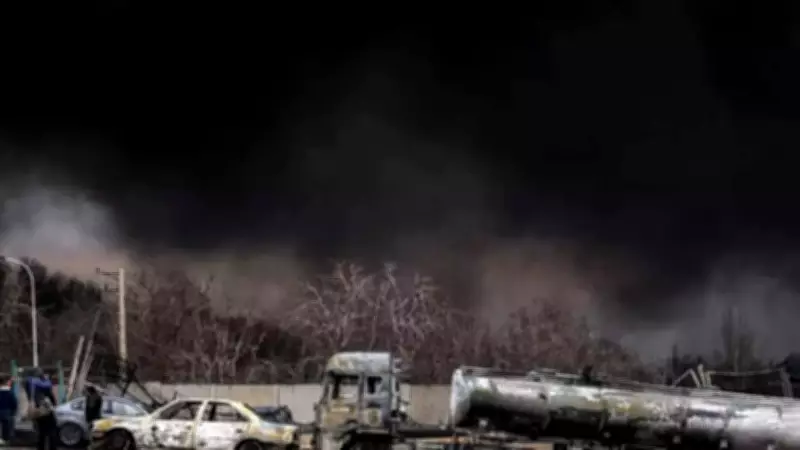
Black Rain Phenomenon Hits Tehran After Military Strikes
In early March 2026, residents of Tehran witnessed a rare and unsettling atmospheric phenomenon following military operations targeting oil storage facilities. What appeared to be dark, oily rain fell across the city, creating widespread concern among the population and emergency officials.
The Tehran Incident: How Black Rain Formed
The sequence of events began with airstrikes on multiple oil installations in the Tehran region. These attacks triggered massive fires that released enormous plumes of thick black smoke into the atmosphere. As rain clouds naturally formed over the city in the following days, something unusual occurred.
Scientific analysis reveals that as water droplets condensed and began their descent through the atmosphere, they passed through the heavily contaminated smoke layers. The raindrops effectively collected and absorbed the suspended particles of soot, ash, and oil residues, transforming into what meteorologists call "black rain." Residents reported seeing dark, sometimes oily droplets falling from the sky, leaving visible marks on surfaces throughout the city.

Understanding the Science of Black Rain
Black rain represents an uncommon atmospheric phenomenon where precipitation appears dark-colored due to exceptionally high concentrations of suspended matter in the air. From a scientific perspective, this occurs when rain becomes contaminated during its passage through heavily polluted atmospheric layers.
The process, known as atmospheric scavenging, involves water droplets collecting particles as they fall through the air. Under normal circumstances, raindrops carry negligible amounts of material. However, when atmospheric contamination reaches extreme levels - as occurred in Tehran with the massive oil fires - the raindrops can accumulate substantial quantities of pollutants, resulting in visibly darkened precipitation.
Primary Causes of Black Rain Formation
Environmental scientists identify several conditions that can lead to black rain occurrences:
- Industrial Pollution: Factories, refineries, and coal-burning facilities release soot and carbon particles that can darken rainwater during precipitation events.
- Wildfires: Large-scale fires generate enormous smoke plumes filled with ash and burnt organic material that rain can capture as it falls.
- Volcanic Eruptions: Explosive volcanic activity releases ash clouds composed of fine particles that can turn rain muddy or dark.
- Oil Fires and Explosions: Petroleum combustion produces thick black smoke containing hydrocarbons and carbon particles that rain can absorb, creating the oily black rain witnessed in Tehran.
Environmental and Health Consequences
The black rain phenomenon carries significant environmental and public health implications that emergency officials in Iran have highlighted as potentially dangerous.
Environmental Impacts:
- Contamination of soil and agricultural land
- Pollution of lakes, rivers, and groundwater sources
- Damage to vegetation and crops
- Disruption of local ecosystems
Human Health Risks:
- Respiratory problems from inhaling contaminated particles
- Skin irritation through contact with polluted water
- Potential exposure to chemical compounds released during fires
- Aggravation of existing respiratory conditions
Following the Tehran incident, residents reported experiencing headaches and breathing difficulties, prompting health warnings from local authorities who indicated the rain could be acidic or otherwise hazardous.
Historical Context and Rare Occurrences
While black rain remains a relatively rare phenomenon, historical records document several significant occurrences. The most famous instance followed the nuclear attack on Hiroshima in 1945, where radioactive materials mixed with atmospheric particles created darkened precipitation. Similar events have been recorded following massive pollution incidents, extensive wildfires, and burning oil fields in various conflict zones throughout history.

The Tehran incident of March 2026 now joins these historical records as a modern example of how military conflict and environmental contamination can intersect to create unusual atmospheric phenomena with potentially serious consequences for both ecosystems and human populations.