

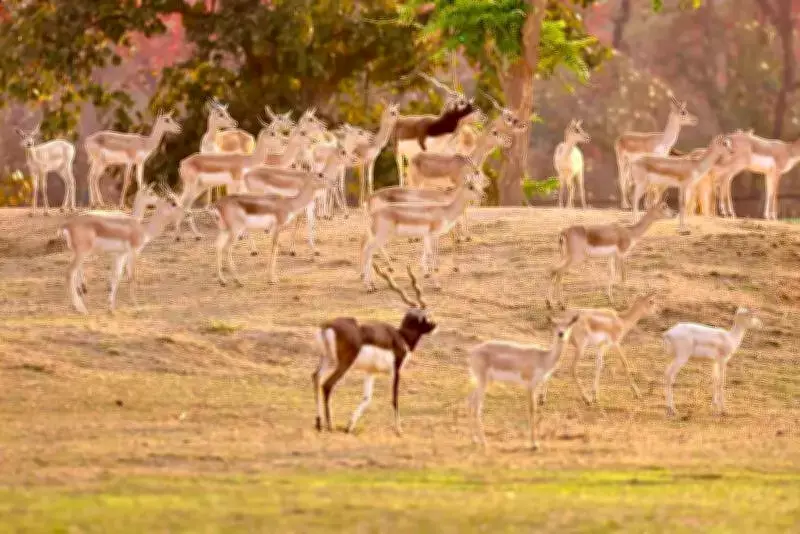
Blackbucks Make Triumphant Return to Chhattisgarh After Near Century-Long Absence
The graceful blackbuck, once completely vanished from Chhattisgarh's landscape, is now steadily reclaiming its historical territory in a remarkable conservation success story. Fresh releases have boosted the wild population to 130 individuals, with approximately 80 more awaiting their turn for freedom from protective enclosures.
A Century After Extinction: The Reintroduction Journey
This significant ecological restoration initiative began in 2018, marking the return of the species to the state nearly a full century after its local extinction. Official forest department records indicate the blackbuck was last documented in Chhattisgarh back in 1927, making their reappearance particularly noteworthy.
The initial reintroduction involved 77 blackbucks released into Barnawapara Wildlife Sanctuary. Of these, 50 were transported from Delhi while 27 originated from Bilaspur's Kanan Pendari Zoo, which had originally acquired its stock from Delhi as well. The animals underwent a careful acclimatization process under scientific management provisions of the Wildlife Protection Act, 1972, before being introduced to their new habitat.

Population Growth Despite Challenges
"While we faced some setbacks during the COVID-19 period in 2021, with approximately 15 blackbucks lost due to various reasons, the population has shown remarkable resilience," explained a senior forest official from Barnawapara Wildlife Sanctuary. "All animals were initially maintained in enclosures for their protection, but dedicated conservation efforts have yielded positive results."
The official further elaborated: "By 2026, we have successfully released 130 blackbucks into the wild. The forest team took special care to ensure the translocation process remained as stress-free as possible for these sensitive animals."
Monitoring and Current Status
The forest department maintains rigorous surveillance of the growing population through multiple methods. A sophisticated PTZ IR camera installed on a strategic watchtower provides continuous monitoring, complemented by daily foot patrols conducted by dedicated forest guards.
Current estimates place the total blackbuck population in Barnawapara at approximately 190 individuals, comprising 130 animals now roaming freely in their natural environment and around 60 still residing in protective enclosures awaiting future release.
Ecological Benefits and Future Plans
The reintroduction serves crucial ecological purposes beyond species preservation. As specialized coarse grass grazers, blackbucks play a vital role in maintaining grassland diversity by controlling the spread of unpalatable grass species. This activity enhances overall grassland productivity, supports higher densities of prey species, and ultimately strengthens the entire food chain for local predators.
Encouraged by this success, the forest department is now preparing to expand the initiative. "We are planning to introduce blackbucks in Gomardha Wildlife Sanctuary located in Sarangarh-Bilaigarh district," confirmed PCCF Arun Kumar Pandey, highlighting the next phase of this conservation program.
The reintroduced blackbucks have successfully integrated with existing herds in the sanctuary, creating a promising foundation for sustainable population growth. Once nearly extinct in the region, these elegant antelopes now roam freely across their ancestral grounds, symbolizing a significant victory for wildlife conservation in central India.






