Bombay High Court Flags Insufficient Monitoring, Forms Panel for Mumbai Air Pollution Oversight
The Bombay High Court has taken a decisive step in addressing the persistent air pollution crisis in Mumbai and Navi Mumbai by forming a high-powered committee. This move comes after the court reviewed previous orders and found that compliance by local corporations and the Maharashtra Pollution Control Board (MPCB) was not satisfactory.
Court Observations on Air Pollution Levels
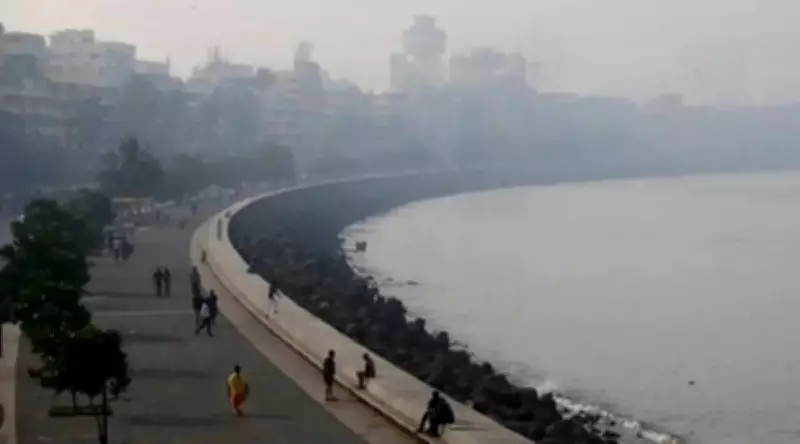
A bench comprising Chief Justice Shree Chandrashekhar and Justice Gautam A Ankhad noted that air pollution levels in Mumbai have not decreased. In fact, during December, the air quality was reported as very severe or unhealthy. The court emphasized that merely filing compliance affidavits is insufficient, as the results indicating a reduction in pollution levels are not evident.
Insufficient Monitoring and Compliance Issues
The bench highlighted several key issues in its observations:

- Air quality monitors were not installed at approximately 477 construction sites and other locations in Mumbai.
- Civic authorities failed to provide details of inspections carried out by their squads, based on a report from a committee of advocate commissioners that inspected nearly 31 sites.
- There is insufficient monitoring by corporations, with 91 squads by the Brihanmumbai Municipal Corporation (BMC) working only on a daily basis and inspecting just one site per day.
The court acknowledged that due to a rising number of dockets and limited time, it may not be able to examine all affidavits filed by the authorities. Therefore, the high-level panel will conduct regular meetings, with civic authorities assisting the committee.
Formation of the High-Powered Committee
The committee will be led by a former Supreme Court judge and is tasked with overseeing compliance with past directives against violators of air-pollution mitigation norms. It will also make recommendations to address the ongoing issues. The bench clarified that the panel would be empowered to issue directions in the form of recommendations, aiming to ensure that residents can live in pure air.
Objections and Suggestions from Civic Authorities
During the hearing, senior advocates representing the Navi Mumbai Municipal Corporation (NMMC) and the BMC raised objections. Anil Anturkar, for NMMC, cited a Supreme Court order to oppose a mechanism for compensating residents affected by air pollution, arguing that a statutory regime already exists. He also suggested that a town planning expert, rather than a medical expert, should be appointed to the panel.
Similarly, S U Kamdar, for BMC, proposed including an expert from IIT Bombay in the committee. However, the bench noted that it had not seen any suggestions or actions from such statutory bodies and stated that the panel could seek assistance from technical and medical experts as needed.
Broader Implications and Future Steps
The court's decision underscores the urgent need for effective monitoring and enforcement of air pollution norms in Mumbai. By establishing this committee, the Bombay High Court aims to bridge the gap between regulatory efforts and tangible improvements in air quality. This initiative reflects a proactive judicial approach to safeguarding public health and environmental standards in one of India's most populous metropolitan areas.