

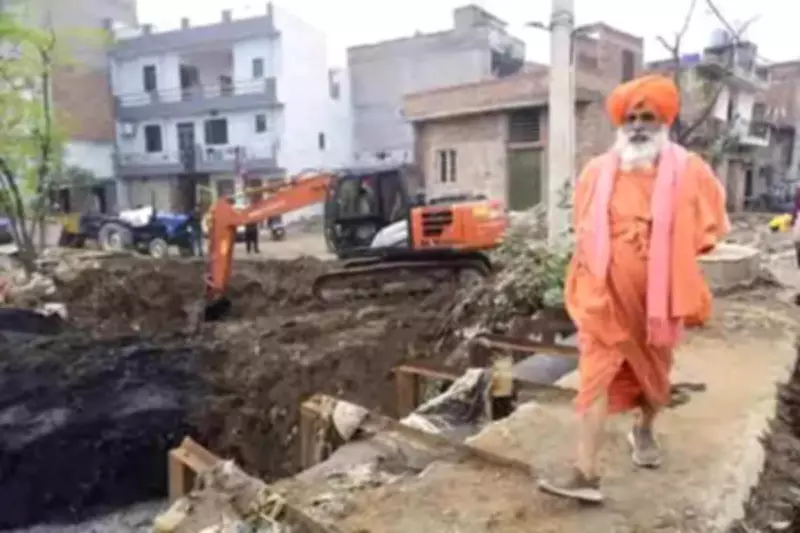
Ludhiana's Buddha Dariya Remains Choked Despite Massive Wastewater Treatment Expansion
In a concerning environmental development, the Buddha Dariya in Ludhiana continues to suffer from severe pollution despite significant expansion in wastewater treatment capacity. A high-level review of restoration efforts reveals that administrative negligence and persistent dairy waste continue to choke the vital waterway, creating a stark disconnect between available infrastructure and actual environmental impact.
Environmentalist Presents Revitalized Restoration Framework
Rajya Sabha member and prominent environmentalist Balbir Singh Seechewal recently presented a comprehensive framework for restoring the heavily polluted river. The strategy specifically addresses the ongoing contamination from industrial runoff and livestock waste that has plagued the waterway for years. Seechewal's approach emphasizes the critical gap between theoretical treatment capacity and practical implementation, highlighting systemic failures in environmental management.
The Persistent Dairy Dilemma
A primary obstacle in the restoration effort remains the dairy complexes of Tajpur and Haibowal. While authorities halted waste disposal from 79 dairies in 2025, cow dung and wastewater from remaining operations continue to flow directly into the drain system. The situation has been exacerbated by significant infrastructure delays, particularly concerning proposed compressed biogas (CBG) plants at both dairy complexes that have yet to become operational.

Authorities are currently engaged in discussions about implementing a crackdown on unlicensed dairy farms operating within and around Ludhiana's city limits. This regulatory action aims to address one of the most persistent sources of contamination affecting the Buddha Dariya's water quality.
Capacity Versus Negligence: The Treatment Gap
Ludhiana's wastewater statistics reveal a troubling paradox between potential and performance. The city generates approximately 650 million litres per day (MLD) of wastewater, while the state government has developed treatment capacity reaching 800 MLD. Despite this 150 MLD surplus in theoretical capacity, significant volumes of untreated water continue reaching the Buddha Dariya.
Seechewal attributes this failure primarily to administrative negligence, though he acknowledges some progress in specific areas. Notably, a 225 MLD treatment plant that previously received only 100 MLD is now processing up to 220 MLD after successful connection of several feeder drains. This improvement demonstrates that technical solutions exist but require proper implementation and oversight.
Flood Protection and Infrastructure Development
Beyond immediate river cleaning efforts, Seechewal has urged the state government to advance a ₹117 crore project to pave an 89-kilometer road along the Satluj river's Dhussi embankment, stretching from Giddarpindi to Phillaur. First proposed in 2023, this ambitious project seeks funding assistance from NABARD and promises dual benefits for the region.
Advocates argue the paved embankment would serve both as a vital transit route for regional transportation and as reinforced flood defense for vulnerable riverside communities. The infrastructure development represents a comprehensive approach to water management that addresses both pollution control and flood prevention simultaneously.
Authorities Reaffirm Commitment to Pollution-Free River
Government authorities have reaffirmed their commitment to achieving a pollution-free Buddha Dariya and are expected to address the technical failures plaguing the current treatment system. The ongoing situation highlights the complex challenges of urban water management, where infrastructure development alone cannot solve environmental problems without proper implementation, maintenance, and regulatory enforcement.
The Buddha Dariya's continued pollution despite expanded treatment capacity serves as a cautionary tale about the importance of holistic environmental management that addresses both infrastructure development and administrative accountability in equal measure.






