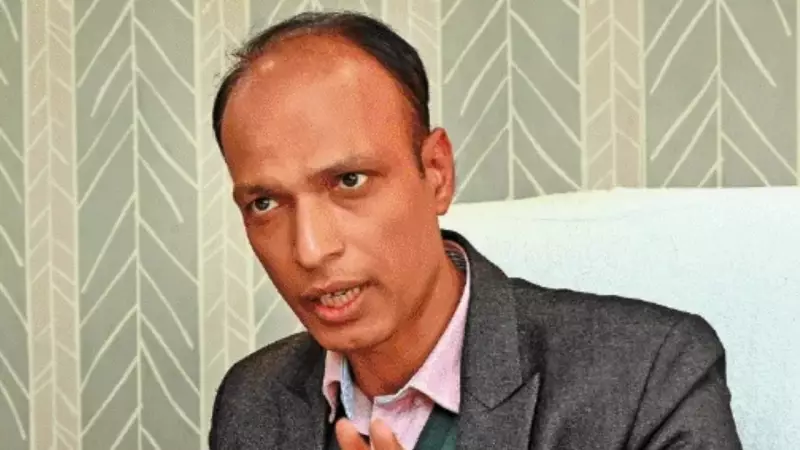
Tarun Kumar Pithode, a 2009-batch IAS officer from the Madhya Pradesh cadre, has officially assumed the role of full-time member secretary for the Commission for Air Quality Management (CAQM) in the National Capital Region. Pithode, who previously served as joint secretary in the Union Ministry of Environment, Forest and Climate Change, steps into the position with a mandate to build on recent gains in the fight against air pollution.
Visible Gains and a New Roadmap
In an exclusive conversation, Pithode highlighted that concerted efforts have led to a visible improvement in Delhi's Air Quality Index (AQI). He noted a drastic reduction in the number of days when the AQI used to shoot beyond 450. Significant progress has been made in curbing stubble burning, with fewer farm fires and a smaller burnt area reported. Furthermore, industries within the NCR are now largely operating on permitted fuels, and legacy waste is being systematically addressed.
Looking ahead, a major initiative is the development of a new emission inventory and source apportionment study for Delhi-NCR, using 2026 as the base year. This study, to be prepared by a consortium including ARAI, TERI, IITM Pune, and IIT Delhi through the CPCB, is expected to be ready by 2027. It aims to refine the Early Warning System and provide more accurate pollution forecasts.

Tackling Industrial and Vehicular Pollution Head-On
Pithode provided specific data on industrial compliance, stating that of the 7,983 industries in the NCR, 7,673 are using approved fuel and the remaining 310 are closed, with verification of their status underway. To control stack emissions, industries have been mandated to install Air Pollution Control Devices (APCD) and Online Continuous Emission Monitoring Systems (OCEMS). Union Environment Minister Bhupendra Yadav has directed that all industries install OCEMS by December 31 of this year.
On the vehicular front, the commission has enforced several key measures. Intercity buses entering Delhi must now be BS-VI, CNG, or electric, a rule with which NCR states have complied. A further directive states that from November 1, 2026, buses with all-India permits will not be allowed into Delhi unless they meet these fuel standards. For commercial goods vehicles from outside Delhi, those with BS-III or below engines are banned within the city.
Additionally, for vehicle aggregators, a crucial rule comes into effect on January 1, 2026: only electric or CNG vehicles can be added to their existing fleets of four-wheeler light commercial vehicles and two-wheelers. No new diesel or petrol internal combustion engine vehicles will be permitted for induction from that date.
Long-Term Vision and Strengthening Monitoring
Beyond seasonal plans like the Graded Response Action Plan (GRAP), CAQM is focusing on a sustainable transition. This includes urging states to formulate robust EV policies and develop supporting infrastructure like charging stations. The commission is also emphasizing the expansion of public transport, specifically electric bus fleets inspired by Delhi's initiative, and improving first- and last-mile connectivity.
For the first time, CAQM will monitor crop residue burning during the Rabi season to prevent wheat stubble burning in summer. The air quality monitoring network is also being expanded, with the number of real-time continuous ambient air quality monitoring stations (CAAQMS) in Delhi-NCR increasing from 84 to 111.
Addressing criticism that CAQM acts mainly as a crisis manager, Pithode defended the commission's role as a regulatory body that ensures coordinated action. He pointed to enforcement actions, including 24,691 inspections by flying squads by December 26, leading to closure notices for 1,609 units. Notices have also been issued to district collectors and SSPs in cases of stubble burning.
When asked when Delhi residents can expect to breathe air meeting national standards for 300 days a year, Pithode expressed optimism. He believes significant improvement is achievable in a relatively short time, predicting clearer skies and more blue-sky days in the next three to four years, barring unfavorable climatic conditions.