The Commission for Air Quality Management has issued a stern warning to pollution control authorities in Delhi and the National Capital Region. The commission identified serious deficiencies in implementing crucial anti-pollution measures under the Graded Response Action Plan.
Major Implementation Gaps Found
During its comprehensive review, CAQM discovered alarming shortfalls across multiple critical areas. The commission examined compliance with both Stage-III and Stage-IV GRAP norms and found implementation gaps ranging from 7% to a staggering 99.6%.
Construction Site Inspections Lagging
Delhi showed particularly poor performance in inspecting large construction sites. The review revealed an average shortfall of 87% during both GRAP stages. This means authorities failed to inspect the vast majority of construction sites as required by pollution control regulations.

Road Sweeping Operations Inadequate
Mechanical road sweeping operations also fell significantly short of requirements. Delhi recorded approximately 70% deficiency in deploying road sweeping machines. This failure contributes directly to dust pollution, a major component of Delhi's air quality problems.
Public Complaints Remain Unresolved
The commission highlighted another critical failure in public grievance redressal. During Stage-III implementation, 47% of public complaints about air pollution remained unresolved in Delhi. This number worsened to 68% during Stage-IV, indicating a deteriorating response system.
CAQM officials stated these lapses demonstrate weak enforcement mechanisms and inadequate complaint resolution systems. The commission termed the widespread non-compliance as serious and unacceptable.
Accountability Measures Ordered
In response to these findings, CAQM has directed the Delhi Pollution Control Committee and other state pollution control boards to take immediate action. Authorities must identify officers responsible for implementation failures and initiate appropriate disciplinary proceedings against them.
The commission emphasized that such accountability measures are necessary to ensure future compliance with GRAP regulations.
Current Air Quality Situation
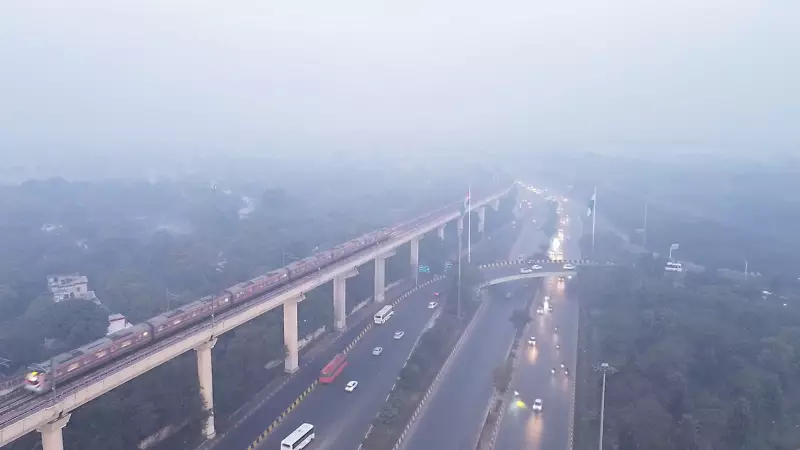
Delhi's air quality remained in the severe category for the second consecutive day on Monday. Official data showed an Air Quality Index reading of 410, slightly improved from Sunday's 440 but still dangerously high.
Neighboring areas showed similar concerning readings:
- Gurgaon recorded very poor air quality with an AQI of 379
- Noida registered severe air quality at 412 AQI
Weather Conditions Aggravate Pollution
Meteorological conditions continue to worsen the pollution scenario. Delhi experienced unusually high temperatures on Monday, reaching 26.7 degrees Celsius. This represents approximately seven degrees above seasonal norms.
The Indian Meteorological Department predicts continued above-normal temperatures over the next four days. Another intense western disturbance is expected to affect Northwest India from Wednesday night.
Weather forecasts indicate possible very light rain or drizzle on Friday, accompanied by strong surface winds. Morning hours are likely to experience shallow to moderate fog over the coming days.
Scientific Assessment of Air Quality
The Indian Institute of Tropical Meteorology provided concerning data about atmospheric conditions. Delhi's ventilation index is expected to remain well below the favorable threshold of 6,000 m²/s in the coming days.
Based on current meteorological patterns, IITM predicts Delhi's air quality will remain in the very poor category until Thursday. The outlook suggests very poor to poor air quality conditions may persist for the next six days.
These findings come at a critical time when effective pollution control measures are most needed. The combination of implementation failures and unfavorable weather conditions creates a challenging environment for air quality improvement in the National Capital Region.