The Commission for Air Quality Management (CAQM) has taken a significant step by revoking Stage 3 of the Graded Response Action Plan (GRAP) across the entire Delhi-National Capital Region (NCR). This decision, announced on Sunday, comes as a direct response to the marked improvement in the region's air quality over the past few days.
Why the Curbs Were Lifted
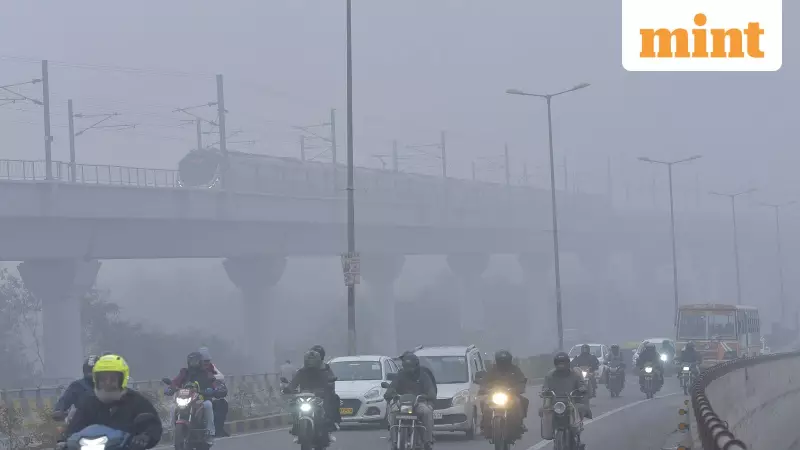
The decision to roll back the stringent Stage 3 restrictions was based on a comprehensive review of the prevailing air quality scenario and meteorological forecasts. The commission noted that the Air Quality Index (AQI) in Delhi had shown a consistent improving trend. The forecasts from the Indian Meteorological Department (IMD) and the Indian Institute of Tropical Meteorology (IITM) also did not indicate any likelihood of the air quality deteriorating to the 'Severe' category in the coming days.
This positive shift is attributed to favorable wind speed and direction, which have aided in the dispersion of pollutants. Consequently, the sub-committee of the CAQM decided that ongoing actions under Stage 1 and Stage 2 of GRAP would be sufficient to manage the situation, making the more severe Stage 3 measures unnecessary for now.

What Restrictions Have Been Removed?
The revocation of GRAP Stage 3 means the immediate lifting of several key bans that were impacting daily life and economic activity in the capital region. The most notable relaxations include:
- Construction and Demolition Activities: The blanket ban on all construction and demolition work across the NCR has been lifted. However, strict adherence to the specific dust control norms outlined in the Central Government's dust management guidelines remains mandatory for all project sites.
- Vehicle Restrictions: The prohibition on the operation of BS-III petrol and BS-IV diesel four-wheelers in Delhi and the adjoining districts of Gurugram, Faridabad, Ghaziabad, and Gautam Budh Nagar has been removed. These vehicles can now ply on the roads without the GRAP-3 imposed constraints.
It is crucial to understand that while Stage 3 is revoked, measures under Stage 1 ('Poor' AQI) and Stage 2 ('Very Poor' AQI) of the GRAP remain actively enforced. These include ongoing efforts like mechanized road sweeping, water sprinkling, and a strict ban on garbage burning.
Context and Future Vigilance
The CAQM had initially invoked Stage 3 of the GRAP on January 14, 2024, when the AQI in Delhi breached the 400 mark, plunging into the 'Severe' category. The GRAP is a set of emergency measures designed to be implemented progressively as air quality worsens. Stage 3 is triggered when the AQI is projected to hit the 'Severe' range (401-450).
The commission has emphasized that the situation will be closely monitored. Authorities are prepared to take prompt decisions on re-imposing restrictions if the air quality shows signs of significant deterioration again. The focus remains on dynamic and proactive management of pollution levels based on daily AQI readings and scientific forecasts.
This move brings relief to the construction industry and commuters affected by the vehicle bans. However, environmental experts caution that the underlying causes of winter pollution in the Indo-Gangetic plains persist. The improvement is largely due to favorable weather, and sustained long-term gains will require continued enforcement of existing laws and a focus on permanent solutions to curb emissions from vehicles, industry, and other sources.