Death Ball Sponge Discovery Reveals Ocean's Hidden Carnivorous Life
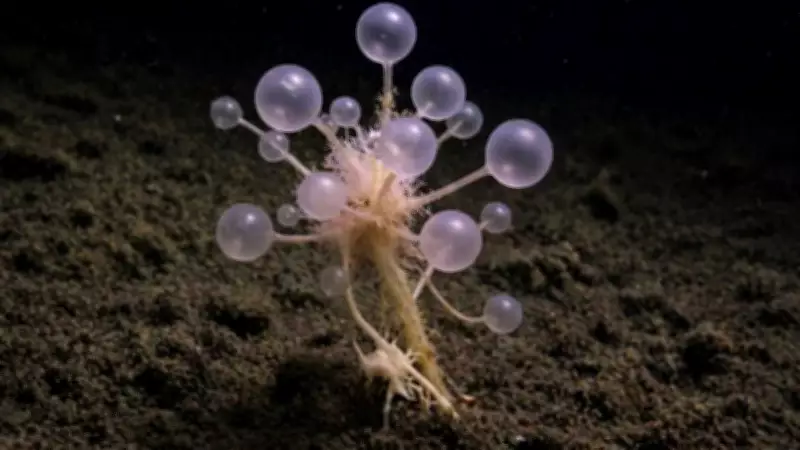
Newly discovered organisms continue to underscore just how little humanity understands about life in the vast oceans. A prime example is the recent identification of a new type of sponge that actively hunts and consumes other animals, dubbed the "death ball sponge", found in the remote Southern Ocean. This finding challenges long-held assumptions about marine biology and deep-sea ecosystems.
Expedition Uncovers Carnivorous Sponge in Southern Ocean
The death ball sponge was discovered during a deep-sea exploration mission off the South Sandwich Islands, conducted by the Nippon Foundation - Nekton Ocean Census. Using advanced remotely operated vehicles, researchers explored trenches, volcanic regions, and ocean floors at depths of thousands of meters. This flagship mission, part of the Ocean Census initiative, collected nearly 2,000 specimens, with many already confirmed as new species to science.
The results align with prior findings, such as those in the Oceana 2025 Marine Discoveries report, which indicated that a significant proportion of marine species remain unknown and are steadily being uncovered through ongoing ocean exploration.

Unique Feeding Mechanism and Structure
Unlike most sponges, which passively filter nutrients from water, the death ball sponge, belonging to the Chondrocladia genus, exhibits a carnivorous feeding style. It captures prey, typically small organisms, using fine hook-like structures called microspines. After ensnaring its target, the sponge directly consumes the nutrients, a strategy likely adapted to deep-sea environments where food particles are scarce in the water column.
Observations from the Ocean Census program suggest that such predatory adaptations are more common in low-nutrient zones than previously thought, revealing new insights into survival mechanisms in extreme habitats.
Southern Ocean: A Hotspot for New Species
The death ball sponge is part of a broader trend of new species discoveries in the Southern Ocean. Recent expeditions have confirmed numerous novel organisms, including crustaceans, corals, and starfish. So far, only about 25% of collected specimens have been fully analyzed, predicting that many more species will be identified as research progresses. This highlights the vast unexplored nature of marine ecosystems, particularly in deep-sea regions.
Advanced Technology Enables Deep-Sea Exploration
Initiatives like the Schmidt Ocean Institute's "Searching for New Species in the South Sandwich Islands" expedition demonstrate how technological advancements are revolutionizing ocean exploration. Utilizing deep-sea oceanographic tools and in-situ imaging services, scientists can now study areas previously inaccessible due to ice cover or extreme depths. These technologies have unveiled hidden ecosystems, providing direct visual evidence of biodiversity in uncharted ocean territories.
Implications for Deep-Sea Biodiversity
The identification of the death ball sponge illustrates the remarkable adaptability of life under harsh conditions. In environments where food is scarce, organisms evolve unique survival strategies, such as transitioning from filter feeding to predation. The Southern Ocean, one of Earth's least-explored regions, harbors many undiscovered species, especially in its deep-sea zones.
As technology advances and research intensifies, more species like the death ball sponge are expected to be discovered, enhancing our understanding of ocean life and its resilience. This ongoing exploration not only expands scientific knowledge but also emphasizes the critical need to protect these fragile and poorly understood marine habitats.