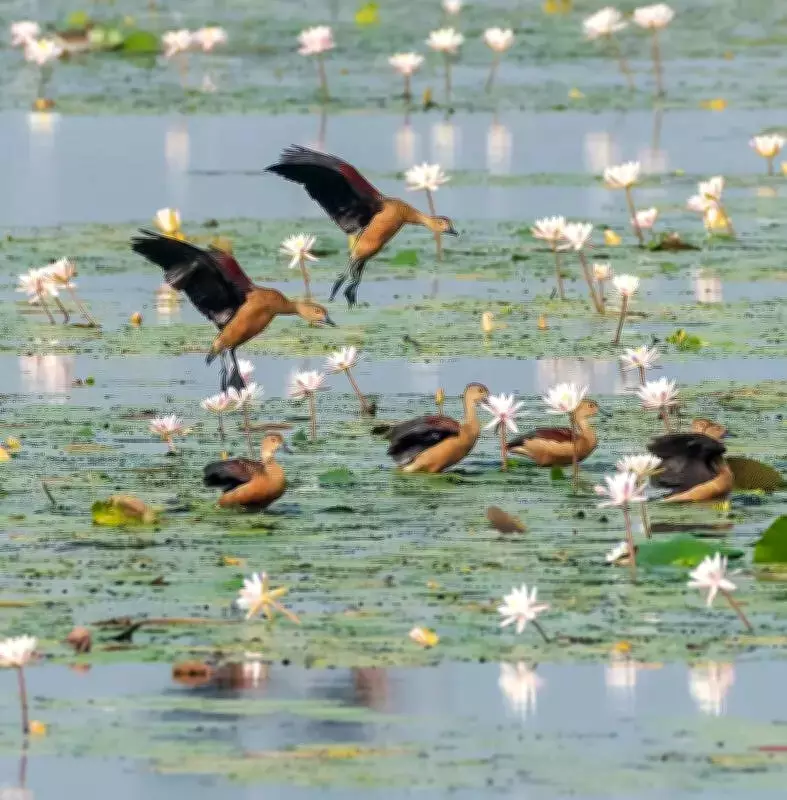
Cattle Egret Population Sees Dramatic Drop in Annual Tamiraparani Waterbird Survey
The latest Tamiraparani waterbird count (TWC) has revealed a concerning and sharp decline in the number of cattle egret birds, which were previously found in abundance during the 2025 survey. While 3,495 cattle egrets were recorded in 2025, only approximately 900 birds were identified this year, marking a significant reduction. However, no specific reason has been attributed to this alarming decline at this time.
Overall Bird Count and Species Diversity in the 16th Annual TWC
The 16th annual Tamiraparani waterbird count was conducted from January 23 to 25, meticulously recording 21,091 wetland birds belonging to 69 distinct species across 68 irrigation tanks in the districts of Tirunelveli, Tenkasi, and Tuticorin. This represents a slight decrease compared to last year's count of 23,753 birds from 71 species, highlighting some fluctuations in avian populations.
Tuticorin district emerged as a critical hotspot, accounting for 51% of the total bird abundance and an impressive 80% of species diversity this year. The highest concentration was observed at Kadambakulam in Tuticorin district, with 2,292 individuals of 45 species, though this was down from 3,724 individuals from 37 species last year. Other notable sites included:

- Velur Kaspa with 1,804 birds and 39 species
- Perungulam with 1,531 birds and 39 species
- Gangaikondan in Tirunelveli district with 1,232 birds and 32 species
- Melputhukudi Sunai with 1,217 birds and 35 species
Insights from Coordinators and Key Species Highlights
M Mathivanan, the coordinator of the count, provided crucial insights, stating, "Since the cattle egret species was found in lower numbers, the overall count also reduced. The exact reason for this is not known. We need to observe in the coming years to understand this trend better."
Among individual species, the little cormorant recorded the highest numbers with 2,579 individuals, followed by the Eurasian coot (2,155), the migratory whiskered tern (1,148), glossy ibis (1,107), pheasant-tailed jacana (1,095), and the migratory barn swallow (1,093). Mathivanan emphasized that more than 36% of the recorded birds were migratory species, utilizing the central Asian flyway. This vital route connects breeding grounds in northern Eurasia with wintering wetlands in south Asia, including India.
He added that a total of 8,912 migratory birds were recorded, including species such as the near threatened black-tailed godwit, and migratory duck species like the bar-headed goose, northern pintail, garganey, and Eurasian wigeon. Active breeding was observed in several irrigation tanks in Tirunelveli district, featuring species such as spot-billed pelican, black-headed ibis, glossy ibis, oriental darter, Indian shag, little cormorant, and Asian openbill.
Critical Habitats and Pressing Threats to Wetland Ecosystems
Mathivanan highlighted the importance of these irrigation tanks, stating, "Irrigation tanks across these districts function as vital habitats for wetland birds and collectively support nearly 100 bird species, of which more than 30 are migratory, that arrive from different parts of the world."
However, he also pointed out several ongoing threats that continue to affect these critical habitats. These include:
- Solid waste dumping
- Liquor consumption along tank bunds and bathing ghats
- Invasive plant and fish species
- Sewage intrusion in urban tanks
These issues pose serious risks to waterbird habitats and require urgent interventions. Mathivanan warned, "The loss or degradation of these wetlands would disrupt international migratory routes. Therefore, we must prioritise protection, restoration, and sustainable management of irrigation tanks to safeguard these ecosystems."

Organizational Efforts Behind the Waterbird Count
The count was a collaborative effort, jointly organised by the Agasthyamalai Community Conservation Centre (ACCC) in Manimutharu, the District Science Centre in Tirunelveli, Nellai Nature Club, Pearlcity Nature Society in Thoothukudi, and the Tamil Nadu Science Forum in Tenkasi. This partnership underscores the community and scientific commitment to monitoring and conserving wetland bird populations in the region.