Karnataka's Goa-Tamnar Power Transmission Project Faces Major Hurdles as Centre Flags Forest Clearance Deficiencies
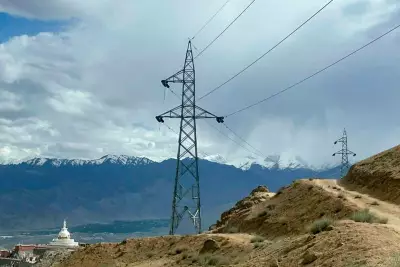
In a significant development that could delay a crucial interstate power infrastructure project, the Union Ministry of Environment, Forest and Climate Change (MoEFCC) has identified substantial deficiencies in Karnataka's proposal for the controversial Goa-Tamnar power transmission project. The ministry's regional office in Bengaluru has sought additional information and clarifications from the Karnataka forest department, potentially stalling forest clearances essential for the project aimed at strengthening power supply to South Goa.
Critical Documentation Gaps and Procedural Lapses
During a review conducted last week, MoEFCC officials noted that Karnataka failed to submit the mandatory recommendation of the Project Screening Committee (PSC) as required under the Van (Sanrakshan Evam Samvardhan) Rules, 2023. Furthermore, the state proposal lacked crucial recommendations from both the deputy conservator of forests (DCF) and chief conservator of forests (CCF) of Belagavi, despite a significant portion of the project passing through the ecologically sensitive Western Ghats under the Belagavi forest circle.
The proposed diversion of 32 hectares of land within the Kali Tiger Reserve (KTR) presents another major obstacle. MoEFCC has directed Karnataka to secure clearance from the standing committee of the National Board for Wildlife before proceeding. Additionally, the Centre has requested details of any pending court cases related to the project, adding another layer of scrutiny to the already complex approval process.

Project Background and Strategic Importance
Envisaged in 2015 by the Union Power Ministry, the interstate power transmission line represents a critical infrastructure project designed to ensure reliable electricity supply to Goa, which currently depends heavily on the western grid. The 77-kilometer transmission line stretches from Narendra near Dharwad to Xeldem in South Goa, facilitating the exchange of 1,200 megawatts of renewable energy between Karnataka and Goa.
The ambitious project requires 174.652 hectares of forest land across three districts: Belagavi, Dharwad, and Uttara Kannada. Of this total, approximately 32 hectares constitutes protected forest land within the environmentally sensitive Kali Tiger Reserve, making the clearance process particularly challenging and subject to heightened scrutiny.
Compensatory Afforestation Land Issues and Inconsistencies
The ministry has raised serious concerns regarding inconsistencies in the compensatory afforestation (CA) land identified by Karnataka. Officials noted that while the state claimed 16 hectares of degraded forest land (DFL) at Varav-Nagalavi in Dharwad, the government submitted a site suitability certificate for only 10 hectares, creating uncertainty about the availability of the remaining 6 hectares.
Satellite imagery analysis revealed further complications. Examination of 50 hectares of DFL land at Gunjal village in Gokak showed plantation activity already underway, prompting the Centre to seek clarification on whether this land was previously earmarked under another scheme. Additionally, satellite images indicated agricultural fields on the proposed 100 hectares of CA land at Chandur and Tummaraguddi, raising questions about potential encroachments that the state government must address.
Vegetation Density Concerns and Verification Requirements
Contrary to Karnataka's claims that identified CA parcels were degraded, Geographic Information System (GIS) analysis conducted by MoEFCC revealed dense vegetation on most of the proposed sites. Out of nine patches of supposedly degraded land, seven showed thick vegetation cover, contradicting the state's assessment.
In response to these findings, MoEFCC has issued specific directions requiring Karnataka to reverify canopy density across all identified CA lands. The ministry mandates that all land patches identified for compensatory afforestation must have canopy density less than 0.4. If this value is exceeded, the forest department must identify alternative lands for CA purposes, potentially requiring significant revisions to the state's proposal.

The comprehensive scrutiny by the Union environment ministry highlights the complex balancing act between infrastructure development and environmental conservation, particularly in ecologically sensitive regions like the Western Ghats. As Karnataka works to address these deficiencies, the timeline for the crucial Goa-Tamnar power transmission project remains uncertain, with potential implications for energy security in both states.