

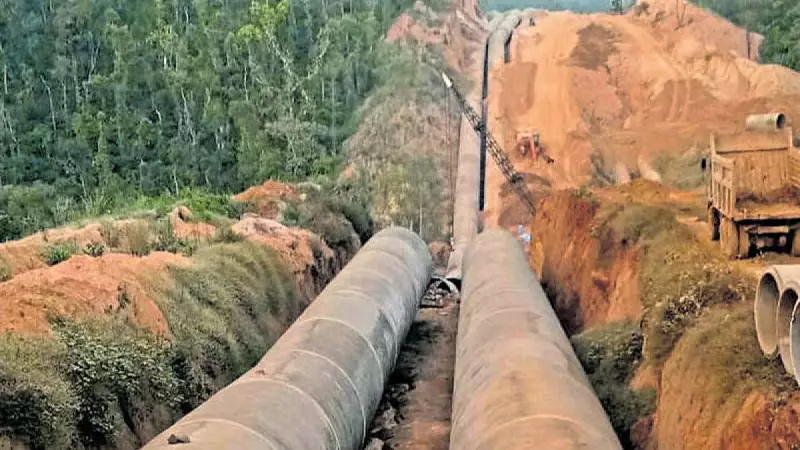
The Ministry of Environment, Forest and Climate Change (MoEF) has firmly rejected the Karnataka government's explanation regarding serious environmental violations in the controversial Yettinahole project. The decision comes after the state failed to justify the use of hundreds of acres of forest land without obtaining mandatory clearances for diversion.
What are the Yettinahole Violations?
The environmental violations at the heart of this dispute concern the unauthorized use of substantial forest land for the Yettinahole diversion project. Official records indicate that hundreds of acres of protected forest area were utilized without securing the necessary environmental clearances from the appropriate authorities.
This represents a significant breach of India's environmental protection laws, particularly the Forest Conservation Act. The project, designed to divert water from the Yettinahole stream to drought-prone regions, has been mired in controversy since its inception due to ecological concerns.

Financial Implications and Project Delays
The ongoing regulatory issues have resulted in substantial project delays, leading to a worrying escalation in costs. What began as a carefully budgeted initiative has now become a financial burden for the state, with project costs increasing significantly due to the extended timeline and compliance requirements.
These delays have not only impacted the state's finances but have also affected the intended beneficiaries in water-scarce regions who were expecting relief from the project's completion. The continued uncertainty surrounding environmental approvals has created additional hurdles for project implementation.
Government Response and Next Steps
The Karnataka government had submitted a detailed explanation attempting to justify the forest land usage, but the MoEF and climate change panel found the arguments insufficient. The rejection signals that federal environmental authorities are taking a strict stance on compliance matters, regardless of state government positions.
This development, reported by Chiranjeevi Kulkarni on November 8, 2025, highlights the growing tension between development projects and environmental conservation in India. The state government must now decide whether to appeal the decision, seek fresh approvals, or modify the project scope to address the environmental concerns raised by the central authorities.
The situation underscores the critical importance of following proper environmental clearance procedures before initiating projects that affect forest lands and ecological sensitive zones across India.






