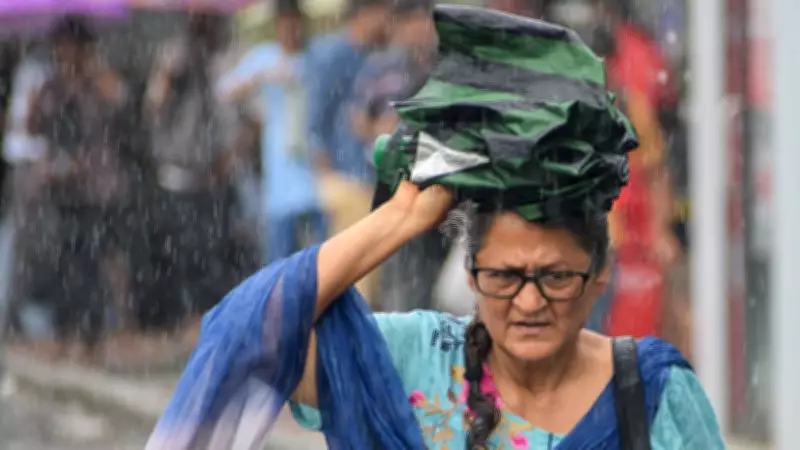
Chandigarh's January Rainfall Soars: 69% Excess, Third Highest in 14 Years
Chandigarh experienced a remarkably wet January in 2026, with rainfall figures placing it among the most significant winter precipitation events in recent history. According to the monthly weather report released by the India Meteorological Department (IMD), Meteorological Centre, Chandigarh, the city recorded 63.6 mm of rainfall during the month. This amount represents a substantial 69 per cent excess over the normal rainfall of 37.6 mm for January, categorizing it firmly in the excess rainfall bracket.
Historical Context and Ranking
An in-depth analysis of IMD data spanning the last 14 years reveals that January 2026 stands out as the third wettest January since 2013. Only two other years surpassed this level of precipitation: January 2022, which saw an extraordinary 207.7 mm, and January 2017, with 137.0 mm. This ranking underscores the rarity of such high rainfall in Chandigarh during the winter months, especially when contrasted with several years in the same period that witnessed either deficient rainfall or near-dry conditions.
Sharp Contrast with Recent Winters
The data highlights a stark contrast between January 2026 and the preceding winters of 2024 and 2025, both of which recorded negligible to deficient rainfall, as per IMD records. IMD officials have pointed out that this variability reflects high inter-annual fluctuations in winter rainfall patterns. Over the years, there have been instances of sharp deficits alongside intense precipitation events, largely attributed to active western disturbances affecting north India.

Temperature Trends and Anomalies
In addition to the rainfall, temperature data from January 2026 also presented notable deviations. The highest maximum temperature reached 26.3 degrees Celsius on January 23, significantly above the average maximum temperature of 17.5 degrees Celsius for the month. This made January 2026 one of the warmer winter months in terms of daytime temperatures over the past decade. Conversely, nights remained cold, with the lowest minimum temperature dropping to 2.8 degrees Celsius on January 13. The average minimum temperature for the month was 6.7 degrees Celsius, which aligns closely with recent winter averages but remains above historic extremes recorded in earlier decades.
Causes and Environmental Impact
IMD attributed the excess rainfall primarily to repeated western disturbances that impacted north India throughout January. These weather systems brought sustained precipitation, contributing to the high totals. Officials noted that the rainfall has had positive environmental effects, including improved soil moisture levels and enhanced groundwater recharge. This comes as a welcome relief after back-to-back dry winters, offering some respite to the region's water resources and agricultural sectors.
The combination of excess rainfall and temperature anomalies in January 2026 underscores the dynamic and changing nature of winter weather patterns in Chandigarh, with implications for local climate resilience and water management strategies.