Chandigarh Grapples with Severe Weather Havoc: Children Injured, Infrastructure Damaged
Persistent heavy rainfall accompanied by intense winds has wreaked havoc across Chandigarh and its adjoining areas, leading to multiple incidents of property damage and personal injury. The unstable weather conditions have severely disrupted normal life in the region, highlighting concerns over infrastructure safety and administrative preparedness.
Roof Collapse in Manimajra Injures Three Children
One of the most alarming incidents occurred in Manimajra, where the roof of an aged residential structure collapsed during the torrential downpour. Three children, aged between 12 and 14 years, were inside the house at the time of the collapse. Prompt action by local residents ensured they were quickly shifted to a nearby medical facility for treatment.
Medical reports indicate that two of the children are in stable condition, while the third has sustained serious head injuries. This critically injured child was subsequently referred to the Government Medical College and Hospital (GMCH) in Sector 16 for advanced care. The incident has raised urgent questions about the structural integrity of older buildings during extreme weather events.

Widespread Damage from Uprooted Trees and Power Disruptions
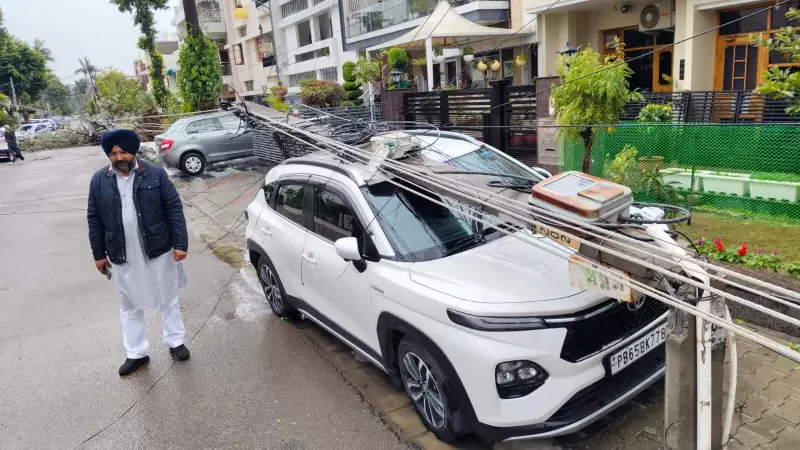
The storm's ferocity was evident in the widespread uprooting of trees across Chandigarh and Mohali. In Sector 32, a falling tree struck a moving two-wheeler, resulting in injuries to the rider. Additional tree falls were reported in Sector 35-B and various parts of Mohali, where they damaged houses, vehicles, and created significant traffic obstructions.
A particularly severe situation unfolded on the Chandigarh–Mohali road near Sectors 39 and 40, where multiple trees fell simultaneously, bringing vehicular movement to a near standstill. The fallen trees also caused power supply disruptions in areas including Tribune Colony and Sector 29, as electricity poles were brought down. Civic teams have been mobilized to clear debris and restore essential services.
Infrastructure Failures and Safety Concerns
Adding to the distress, a section of the false ceiling collapsed at GMCH in Sector 32. Fortunately, no injuries were reported as the area was unoccupied at the time. However, this incident has further intensified concerns regarding the safety of public infrastructure during such weather emergencies.
Residents have voiced strong criticism over what they perceive as a lack of administrative readiness. R K Garg, a Chandigarh resident and president of the Second Innings Association, emphasized that repeated warnings from Resident Welfare Associations about vulnerable trees have largely been ignored. "Fallen tree branches blocked roads across several sectors, disrupting traffic and delaying emergency services, including ambulances," he stated. Garg argued that protecting urban greenery must be balanced with public safety through proper planning and clear departmental accountability.
IMD Issues Thunderstorm and Hail Alert
The India Meteorological Department (IMD) has recorded intermittent rainfall along with thunderstorms in Chandigarh over the past 24 hours. Weather conditions included periods of mist and haze, followed by spells of rain and thundershowers during the early morning hours. IMD officials noted that wind speeds increased significantly during the storm, contributing to the extensive damage observed.
In response to the ongoing unstable weather, the IMD has issued an alert for thunderstorms and possible hail in parts of the region. Residents are advised to remain cautious as these conditions are likely to persist. The department's warning underscores the need for heightened vigilance and preparedness among the populace and authorities alike.
Community Calls for Systematic Preparedness
The recent weather events have starkly exposed the city's vulnerabilities, transforming the 'City Beautiful' into a scene of disorder. Residents argue that despite submitting memoranda highlighting at-risk trees, there has been little concrete action beyond routine assurances from authorities. The absence of clear responsibility for maintenance failures has left citizens at risk with each passing storm season.

As Chandigarh recovers from this bout of severe weather, the focus shifts to implementing scientific pruning practices, conducting regular tree audits, and establishing unambiguous accountability mechanisms. Ensuring public safety while preserving the city's green cover remains a critical challenge that demands immediate and sustained attention from all stakeholders.