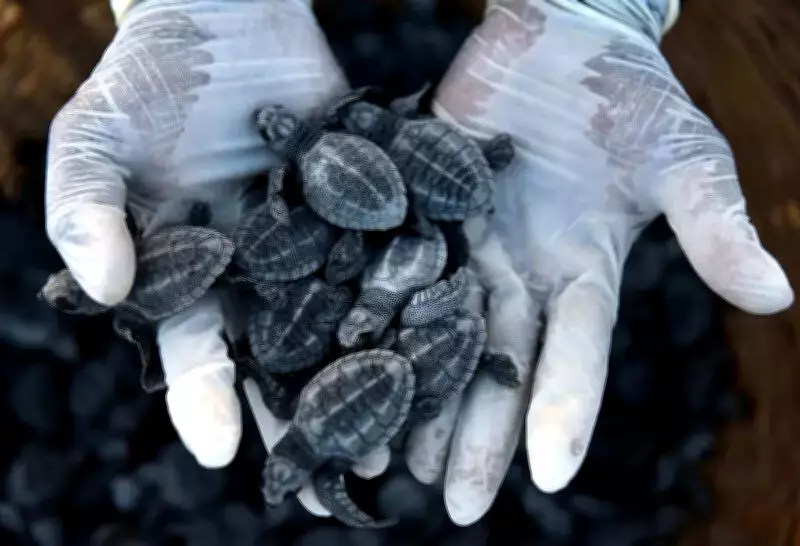
Chennai Celebrates Release of 46 Olive Ridley Turtle Hatchlings Amid Conservation Success
In a heartening development for marine conservation, wildlife officials in Chennai have released 46 Olive Ridley turtle hatchlings from nests nurtured at the forest department's Besant Nagar hatchery during the ongoing nesting season. The hatchlings emerged from a clutch of 94 eggs, and officials anticipate that the remaining young turtles will break free of their shells within a day, with more likely to follow suit in the coming days.
State Forest Secretary Highlights Sustained Protection Efforts
State forest secretary Supriya Sahu described the emergence as a positive milestone, underscoring the sustained efforts being made to protect the vulnerable Olive Ridley turtles along Chennai's coastline. So far this season, authorities have identified 209 nests across the city's beaches, yielding 24,531 eggs that were carefully collected and relocated to hatcheries. This strategic move aims to shield the eggs from predators, high tides, and human disturbances, ensuring higher survival rates.
Encouraging Trends in Neighboring Districts
Encouraging trends have also been reported from neighboring Tiruvallur district, where Pulicat's beaches recorded 93 nests containing 10,664 eggs. Chennai wildlife warden Manish Meena noted that these numbers reflect the growing success of conservation interventions and increased community participation. Officials recalled that just a few years ago, the discovery of wild nests along the Pulicat seashore was a rare and noteworthy event, with hatchlings from only a couple of nests managing to reach the sea on their own.

Reduced Mortality and Enhanced Patrols Drive Gains
Conservationists attribute this season's gains to a marked reduction in the mortality of nesting turtles, particularly during their journey to shore. About 10 days ago, forest staff and volunteers collected more than 2,000 eggs from 18 nests along Elliot's and Marina beaches. This clear indication suggests that adult turtles are reaching the coastline without being ensnared in trawlers or abandoned fishing gear, known as ghost nets. Such hazards historically contributed to high mortality, directly affecting nesting numbers and reproductive success.
Intensified Patrolling and Enforcement Measures
Over the past two nesting seasons, February has consistently seen a surge in identified nests compared to earlier years. Conservationists link this trend to intensified patrolling and stricter enforcement of fishing restrictions within the prohibited five-nautical-mile zone. Joint patrols by forest and fisheries departments are deemed crucial and must continue until the end of the nesting season to further curb turtle deaths.
Nightly Beach Patrols and High Survival Rates
From November to March, volunteers and forest personnel conduct nightly beach patrols, relocating eggs to protected hatcheries where survival rates exceed 90%. These sustained efforts are steadily turning Chennai's shores into safer breeding grounds for one of the ocean's most threatened inhabitants, showcasing a model of effective wildlife conservation through collaboration and vigilance.